Yoga in Spain – A report from Ali

DCIM102GOPRO

I am currently in Granada (Spain), renewing my India visa, and have started doing preliminary interviews of yoga participants. This test study is in preparation for my Masters on the subject of ‘Yoga spirituality and consumerism in New Zealand’s Yoga Industry’.
 So far, I have chatted to four different people (all women – two British, two Americans) and got some great insights into where they think spirituality fits into yoga as a consumable product.  All ‘informants’ were enthusiatically engaged in the subject and were relaxed having a stranger approach them and ask them questions. These initial test results are heartening, informative and also give me confidence that the process of interviewing people in NZ will be fruitful.
If any yoga students are willing to be interviewed in March 2016 please email me at sadhanayoganz@gmail.com I would really love to chat with you about your experiences!

Helping yoga teachers in New Zealand

I have finally completed my submission to ACC to reduce Yoga Teacher levy fees to a more reasonable level. Yoga teachers are currently charged $1.37/$100 earned (comparatively Dance teachers are charged $0.26c). This work has probably taken me in total over 100+ hours of time and it is now finally in the hands of ACC. Let’s hope this Karma Yoga for the NZ Yoga Community has been worth it!

Dear Ali,
Thanks for your submission
Thanks for playing a part in shaping the ACC Scheme. We have received your submission and really value your feedback.
We want the Scheme to continue to transform and evolve as you do, so we depend on your feedback to tell us whether your business has changed, your activities are different, or how the proposals may impact you.
The ACC Board reviews all of the submissions that we receive during consultation, and your feedback can influence the final recommendations we make to the Minister for ACC. We will come back to you to let you know what our final levy recommendations are.
Once the consultation period ends, the Minister for ACC will receive the Board’s final recommendations and consider feedback from other government agencies. Final decisions are made by Cabinet.
We will make all this information available for you on our website http://www.shapeyourACC.co.nz
In the meantime, if you have any further queries, please don’t hesitate to email us at levyconsultation@acc.co.nz

Thanks again for getting involved in this year’s levy consultation.

Ashram Life – Report from Ali in India

Dear Yogis,
I thought I’d catch you up with my life at the Naga Sannyās Ashram, near Barsana, India.

DCIM102GOPRO
As you can probably imagine, the routines and rhythms of ashram life tend to follow familiar patterns. After morning bath there is chai made with milk from local cows. After chai there is some type of work: painting the mandir, sweeping the floor, making a fence, tending to the garden and for me computer work (preparing my Masters Application).

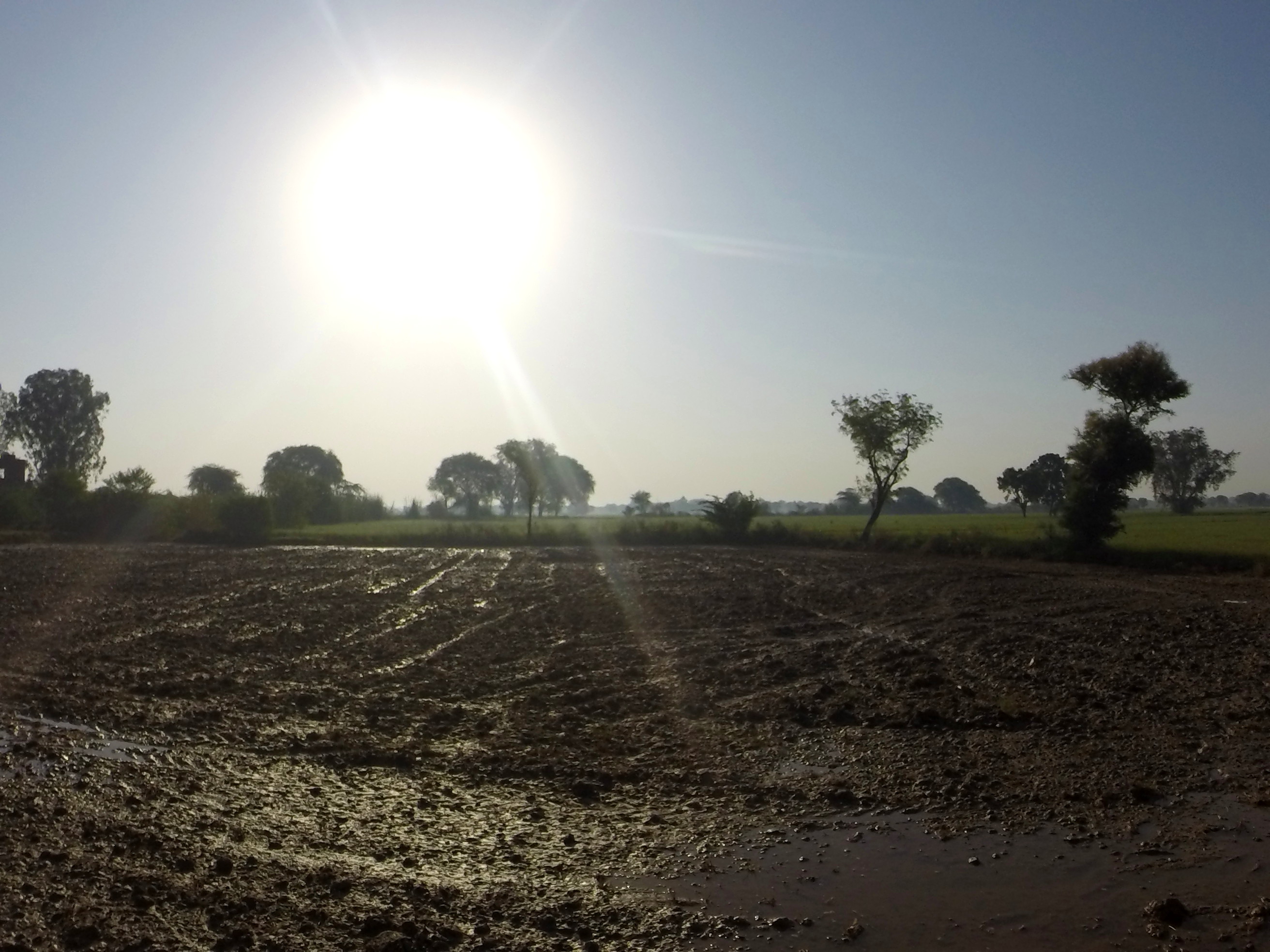
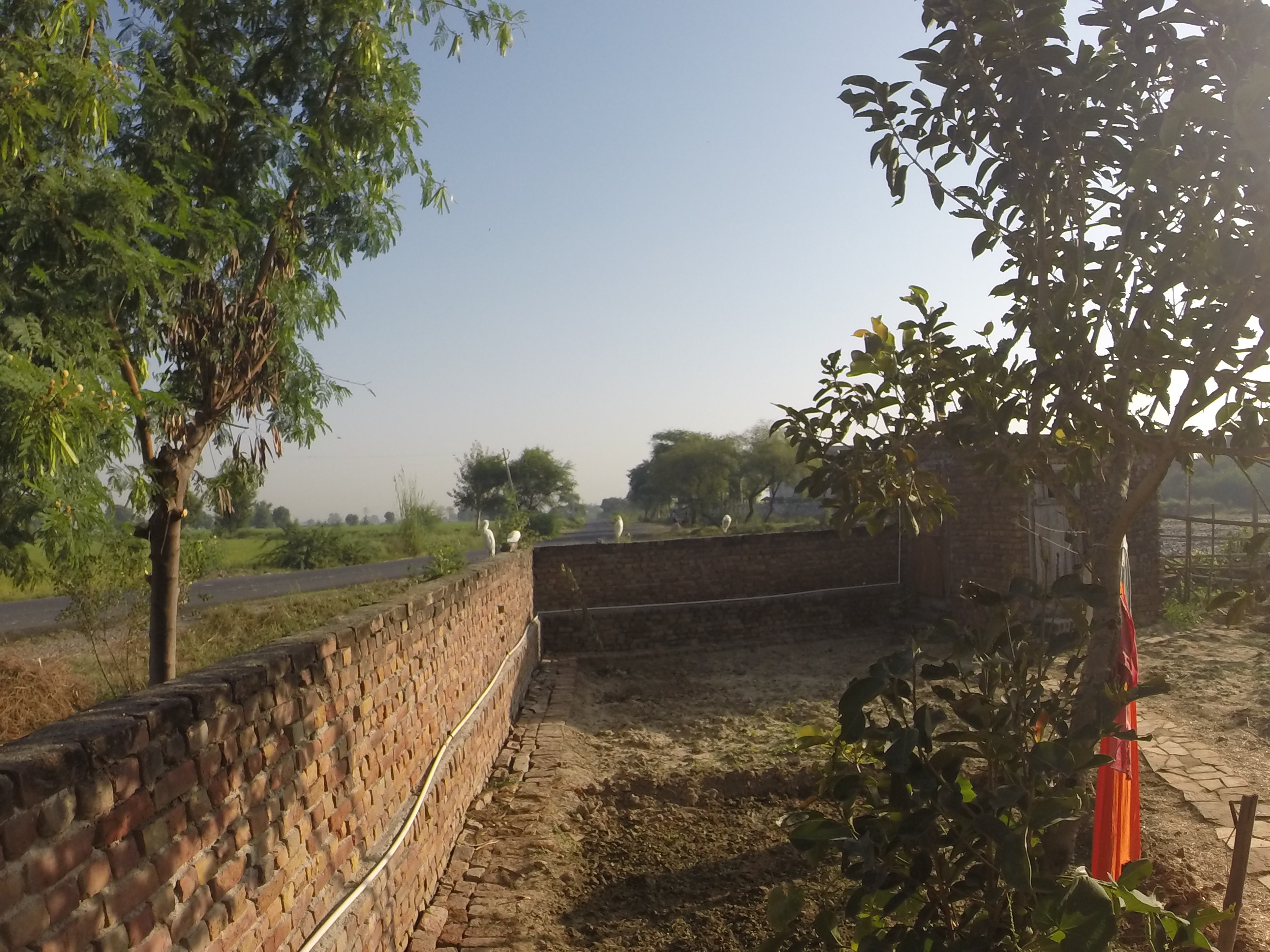
Yesterday morning after ablutions (6am) I collected flowers to decorate the mandir. Selecting red hibiscus and frangipani, I spied two peacocks pecking through the chaff in the cleared field behind the ashram. Little kingfishers sat on the electric cable. White herons and little pipers pecked through freshly irrigated soil. The scene was quite idyllic. Later I found a peacock feather beside the mandir, which I gave to Guruji – he in turn offered it to a picture of his Guru Grandfather.

DCIM102GOPRO

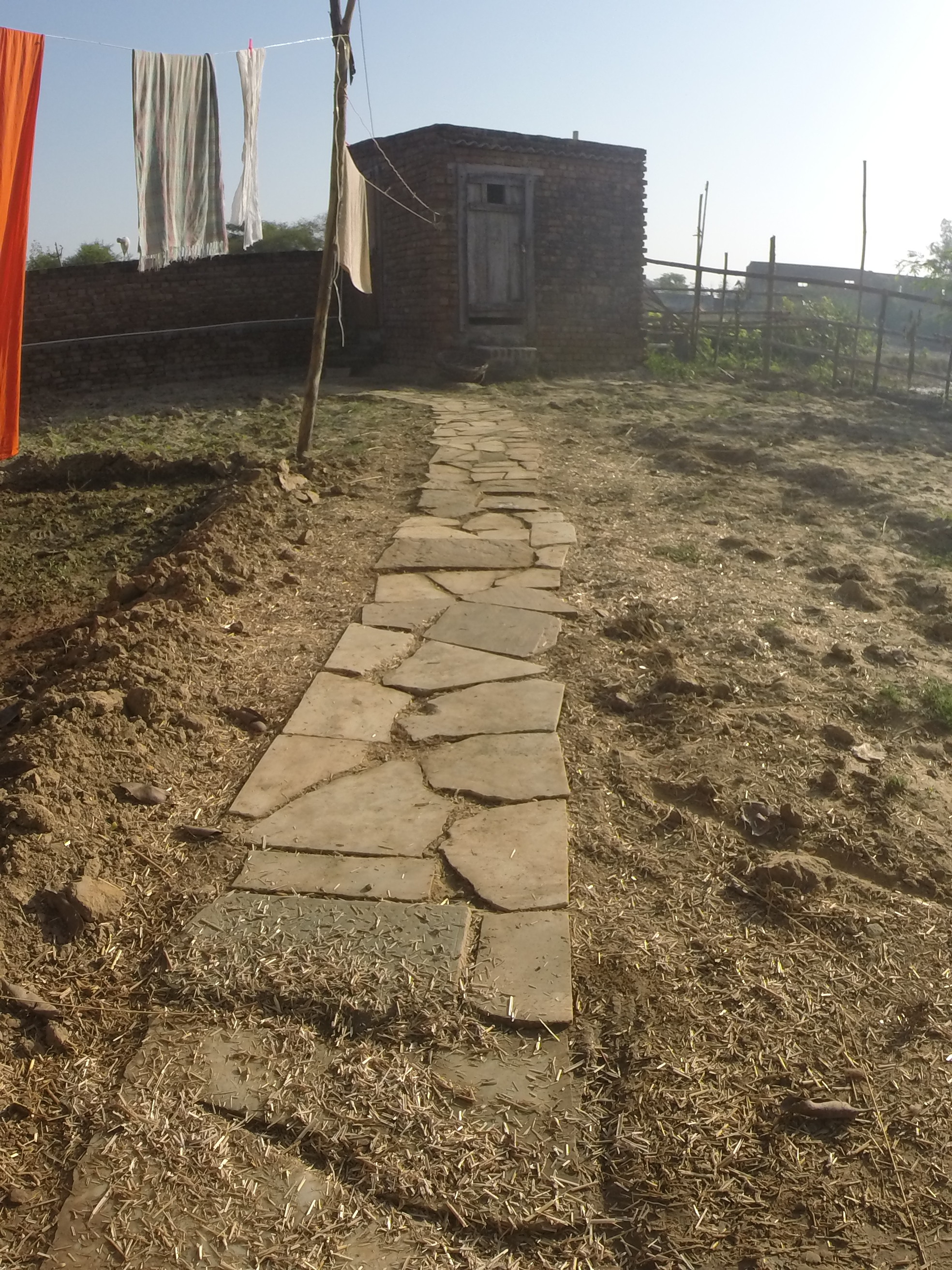
I have just completed making a path from the main part of the ashram to the outhouse bathroom using cracked marble and local stone. I brought over a little spirit-level from New Zealand, which kept the integrity of the path intact, and used underlying clay to make mortar, wedging chopped hay to bind the grout. All the gardening equipment purchased from our Yoga Challenge donations – posted by the lovely Terese – has been well used. Guruji is enamored with the hand saw which cuts through fresh wood like knife through bread.

DCIM102GOPRO
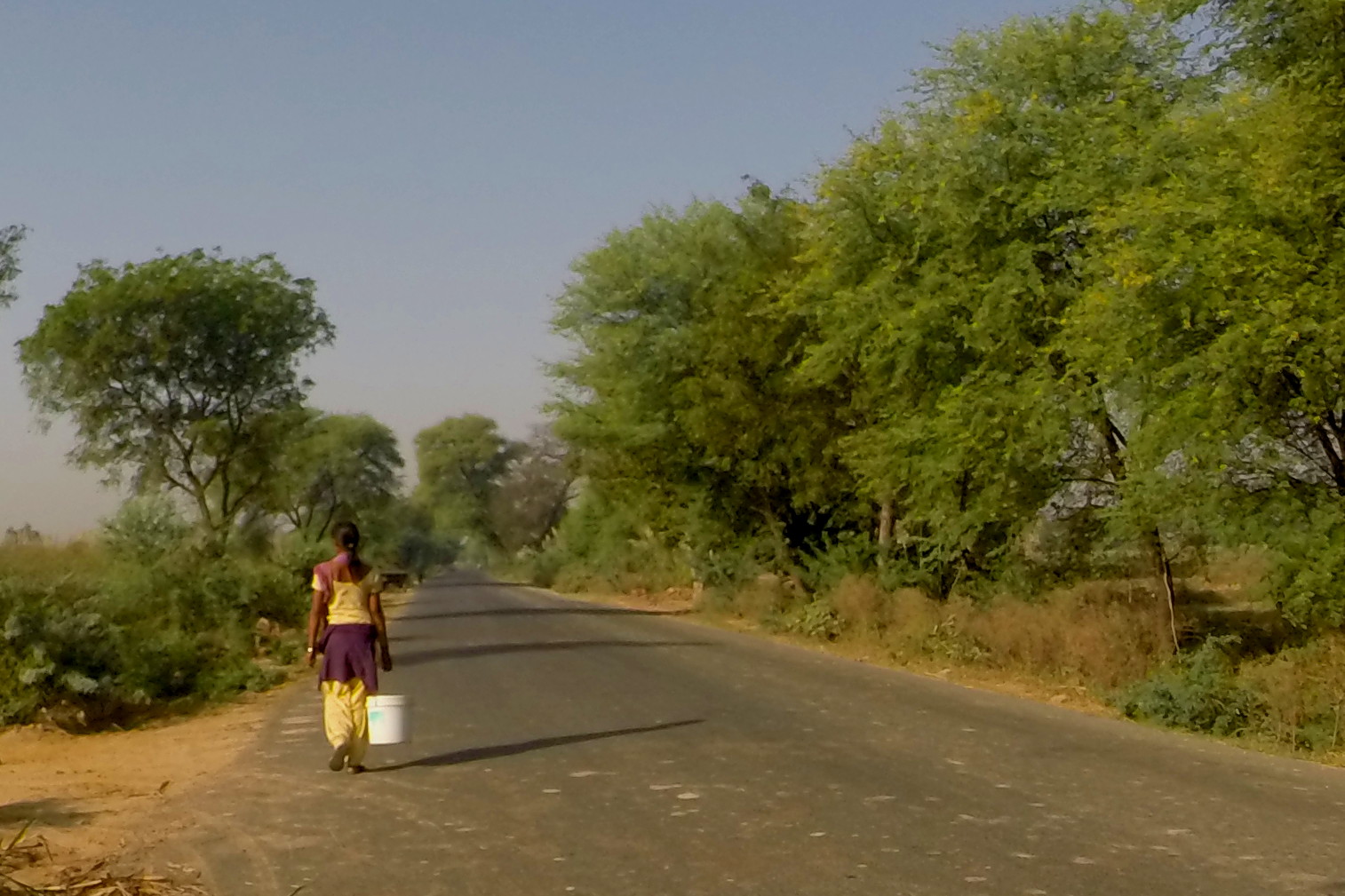
The garden is currently supporting spinach, coriander, tomato, aubergine. I monitor the watering of the garden. First, I am trying to get everyone into the habit of recycling the water they use for washing chai cups and general hand washing by catching water in a bucket, which I throw onto the soil. Then, there is also the overflow from the water tank on the roof, which is now piped directly into the garden plot.

DCIM102GOPRO

We eat our main meal around 12 o’clock sitting in the kitchen on mats on the floor. Lunch is often comprised of roti and loki (long squash) from the garden, or veges from the market. There is also locally produced ghee, which is collected every Monday, and pickles made by Guruji to add flavour to each meal. The other day I made pasta with a tomato and chilli base, and fried grated potato patties cooked in ghee until golden brown. My ‘Western food’ was relatively well received.

DCIM102GOPRO
After lunch from 1pm-3pm is rest time. Keeping up with my afternoon naps is a real pleasure. Then I get up and do some more work, followed by a second wash. This is when I wash my clothes by hand.
Recently I have made friends with the cow man who brings his milk cows and buffalo along to graze in the late afternoon. There is a lovely young brown cow that I have taken a fancy to. Also I think the cow man finds it entertaining to have a western woman sadhu fawning over his cattle.

DCIM102GOPRO
Every evening we do the aarti ritual at the resident mandir. This is the time I think about sending prayers and blessings to people back home. After aarti we sit by the fire, which is a good mosquito repellent. The evening meal consists of a glass of milk, which I having been adding honey brought over from duty free.
Actually, the animal nightlife is quite fascinating here at the ashram. The wall behind the dhuna is patrolled by five or so large geckos. They are drawn to the varied insect population, which is in turn drawn to the 60 watt light bulb.

I normally go to bed at 9 pm and practice asanas in my quiet room

It is a simple life!
Yet, it astounds me as I gaze each night atthe broad arm of the Milky Way which stretches north to southhow the universe and life on our little blue planet seems to revolve along in a relatively ordered way. Chaos, which seems to be the domain of tectonic forces and human passions, almost seems absent from the perpetual flow of the night sky and our journey within it. Sometimes I watch satellites arc slowly across the sky. Sometimes I see shooting stars and wonder if they are just space junk burning up in the atmosphere … then I wonder if I should be less cynical and make a wish instead.Most of the time I am peaceful.
Hope life is treating you well and giving you everything you deserve.
Deep respect and loving care from rural India,
Ali (Yogini in residence)

Ali asks: What is Yogic Spirituality?

yoga

To me, yogic spirituality means having the self-discipline to lead a sattvic life, strictly avoiding eating meat and refined or processed foods. It means maintaining a strict routine of body cleanliness, washing before every class, eating clean food, wearing clean clothes.

Yogic spirituality also means that I lead a simple life, avoiding indulgent purchases and compulsions, avoiding the type of privileged behaviors that comes with corporate mindsets and high wages.

This purification of mind and body allows me to develop the sensitivity and self-awareness to be considerate of other’s suffering, to practice kindness and compassion. It means being mindful of my actions and choices, rather than relying on auto-pilot responses or culturally ingrained directives to influence my routines.

This mindfulness also allows me to choose to minimalise my impact on the environment. It allows me to take an ethical position in terms of my consumption and purchases.

Yogic spirituality requires effort and denial of selfish impulses, which is why does not seem popular. However, this de-cluttering of my life allows me to form subtle relationships with the universe and the systems and beings within it.

Yoga spirituality helps me to maintain dignity in truth!

This

Sadhu Life -with Ali

sadhu 2  Ali reports from India:

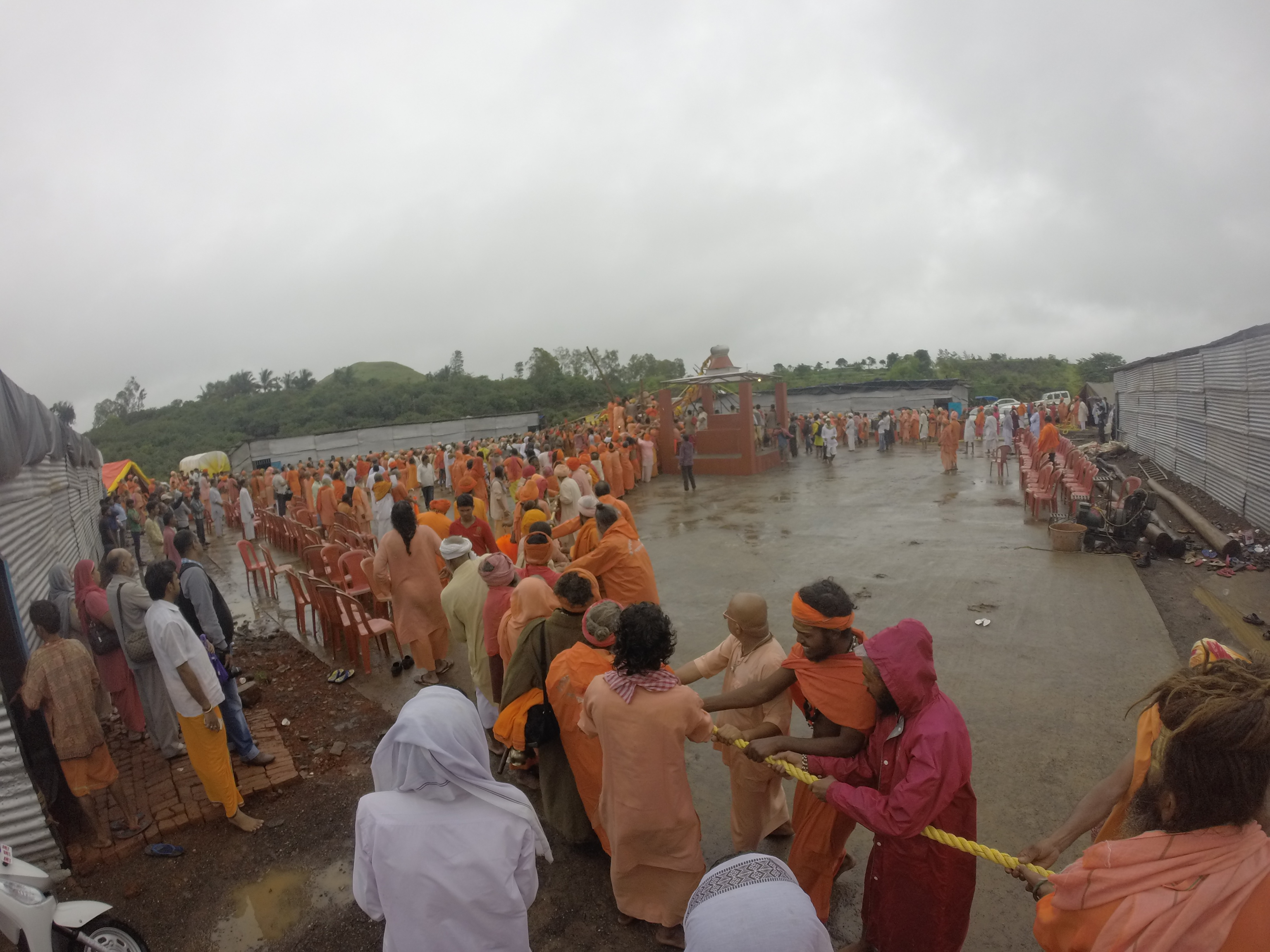
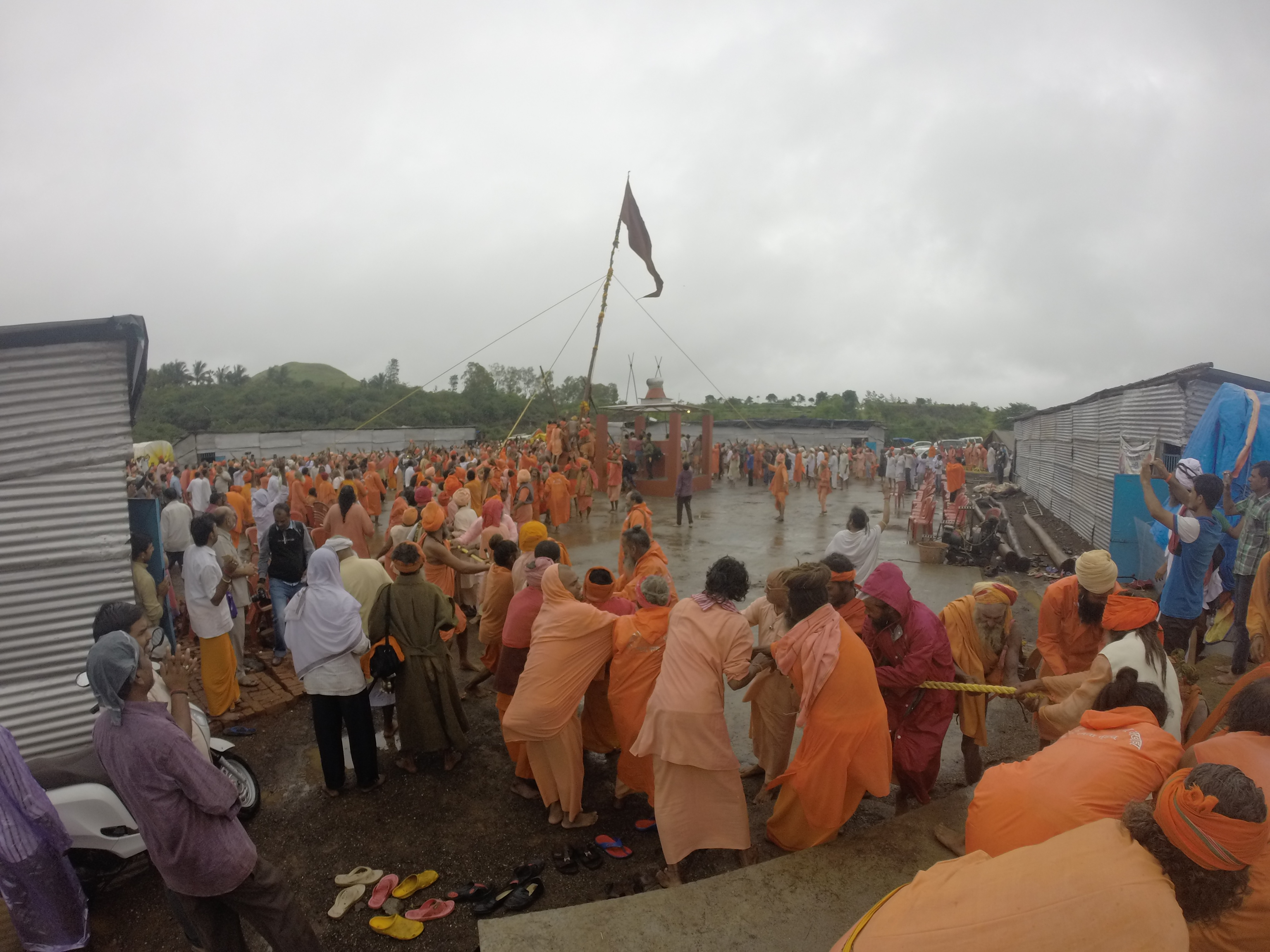
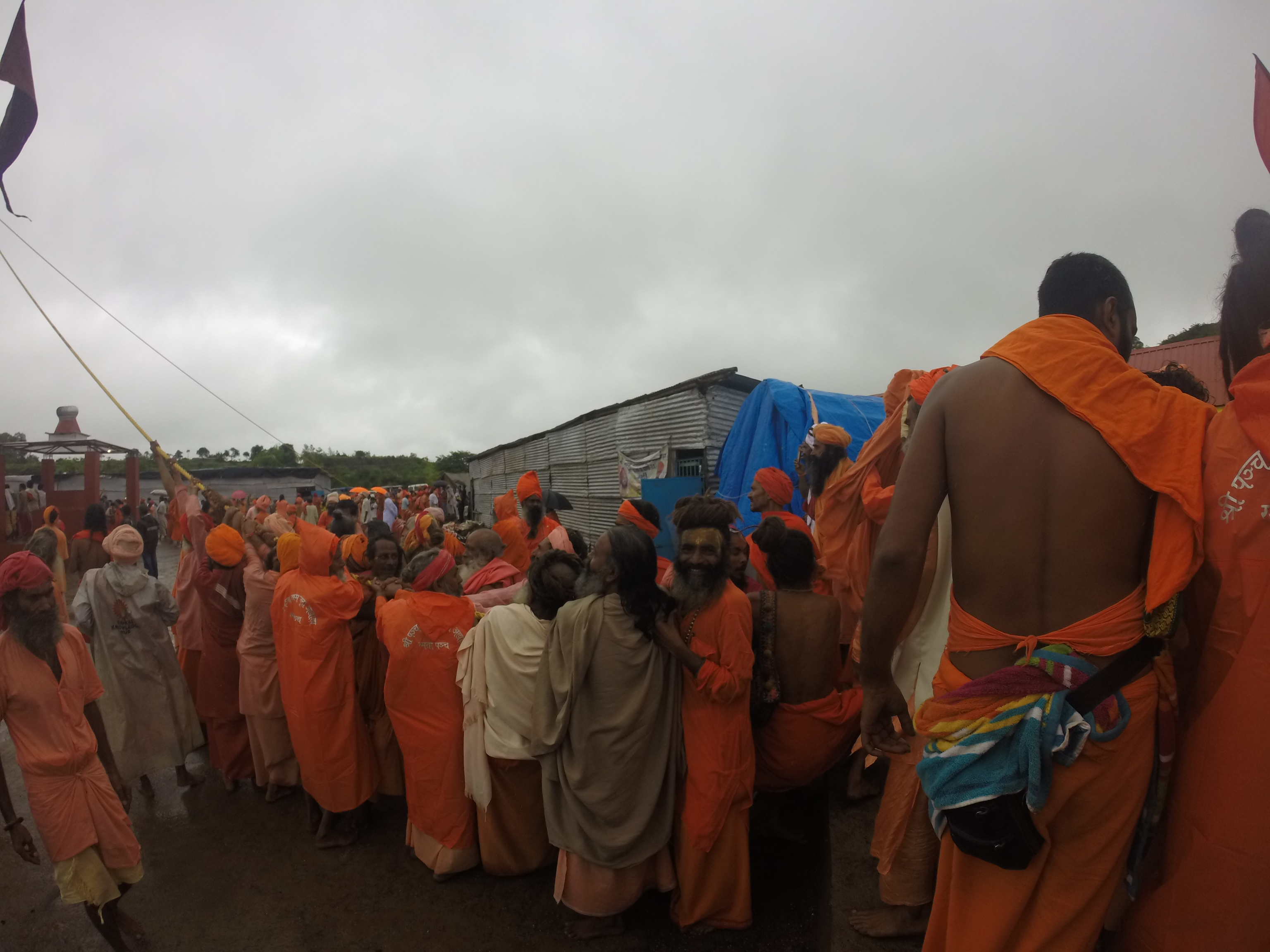
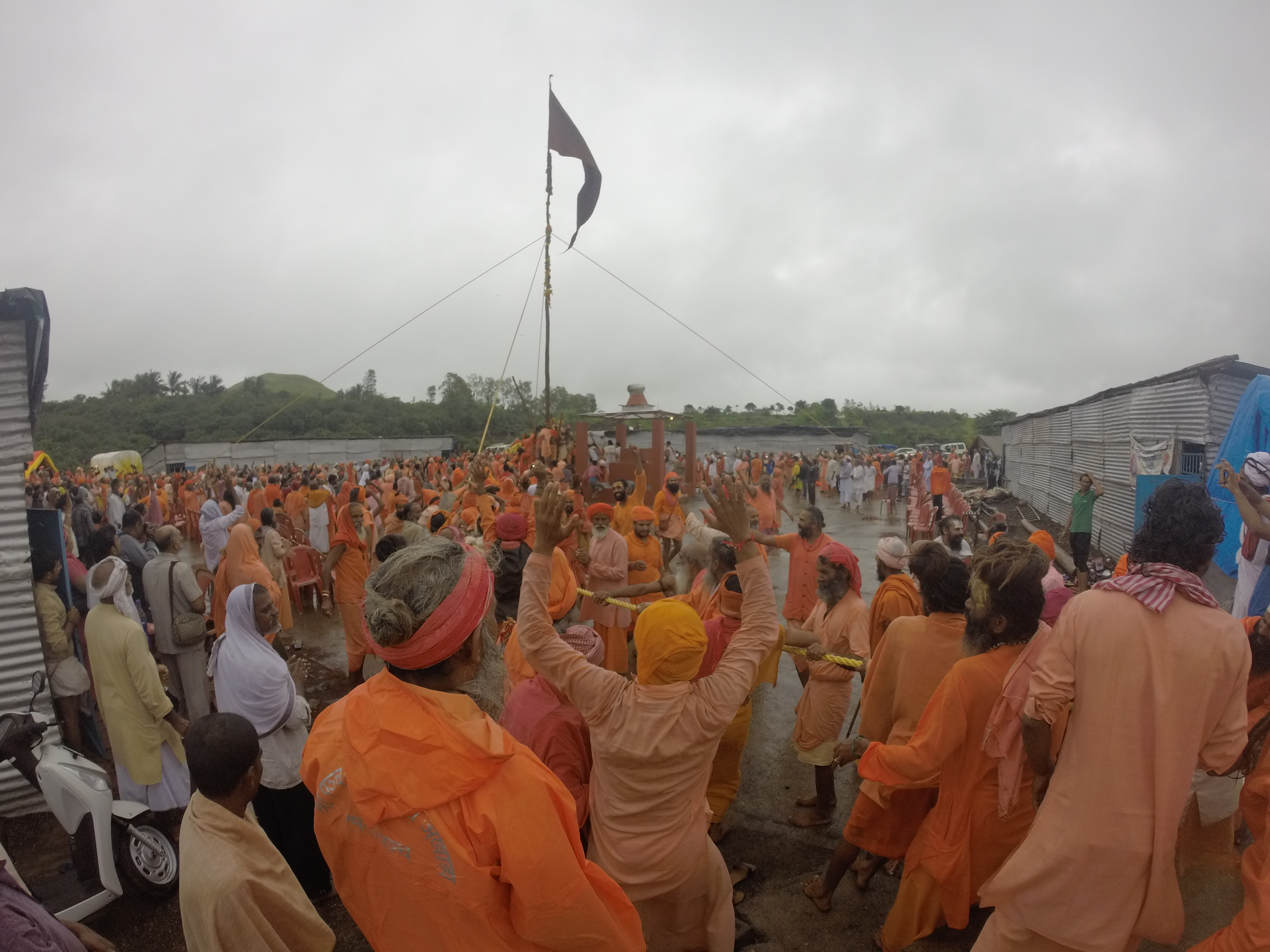
Everyday we sit at the fire (dhuna) of naga baba Akandanand Saraswati. He is a bit of a rock star sadhu but very good humored. Sadhu life is a mix of discipline and ritual.

Flags fly, fires burn, wood turns to ash (basmi) and this ash is rubbed into the naga baba’s skin. When the chillum is about to be lit the sadhu calls Alak! The days roll into night!

Peace and calm at Kumbha Mela – 2015

Leading the simple life in India is a rest for the soul …

Sadhana Yoga's avatar Yogini Ali

Yesterday we walked up to the mountain side temples of Trikambakeshwar. Sheer cliffs lead up to the temples of Gangadwar. Such an amazing view. Big walk!

try 6try7

The rhythms of sadhu life in India are peaceful, simple and fluid. I have taken to it like a duck to water, going with the flow.

try 4  try 5

Blessings to all my dear students. Hope your yogic journey is progressing well. Om Namo Narayana!


View original post

Welcome message from Valentina

Val nataraj

Dear Yoga Community,

I am so pleased to have stepped into a head teaching role here at Sadhana Yoga, Miramar, and would like to take this opportunity to let you know a little about myself.

In 2009 I graduated from the Deep Yoga Mastery of Life Teacher Training Program in San Diego, California, joining the Yoga Alliance Organization.

I have continued to study and deepen the practice of Yoga alongside many well-known teachers travelling around the US and Mexico.  I am also a massage therapist and Reiki level I practitioner.  I have studied Hatha, Kundalini, Vinyasa, Karma and Bhakti Yoga, among other eastern discipline like Tai chi and Qi gong.  My yoga style combines these practices emphasizing asana, pranayama and mantra.

During my classes I encourage you to seek you own unique creative yoga expression safely, guided by my instructions. Every student is important to me and I look forward to practicing together during class.

I am very excited to be offering new classes:

Surf Flow: suitable for surfers, athletes and outdoorsy people.

Yogalates: a combination of core strengthening poses from Yoga & Pilates

Yin Flow: gentle and restorative

Please stay tuned for a new schedule online coming soon.

I appreciate your continued support through my transition to Sadhana Yoga, as undertaking the financial risks of a new business can be challenging.  However, I am happy with this new venture and confident that we can continue to build and strengthen the yoga community in Miramar.  I would like to take this opportunity to invite you all to our first COMMUNITY CELEBRATION, which will take place August 30th  from 4-6pm , and bring your friends and loved ones.

Hari bol everyone!

Valentina

Guru Purnima Teaching 2015 – by Ali

full moon rising 2

Guru Purnima Teaching – by Ali

 “If Yoga is 99% practice and 1% theory, I want to hone in on that 1%.” – Ali

The Guru Full Moon (Guru Purnima – Friday 31st July, 2015) allows us to take part in spiritual teachings, opening ourselves up to more meaningful yogic conversations. This is especially relevant since the ‘true purpose’ of Yoga is seldom talked about in classroom settings, or social media circles.

From my personal experiences, having taught thousands of Yoga classes, it seems that silence in the classroom is more highly valued than philosophical discussions. Likewise, physical activity seems more valued than group inter-activity. My attempts to engage yoga students in philosophical conversations have often resulted in us skimming the surface. I get the funny feeling that most students want to stretch their bodies, not their bodies of yogic knowledge! Unfortunately, however, lack of knowledge also leads to lack of awareness (avidya).

“avidya clouds our awareness and stops us being our true authentic selves.”

Although Patañjāli’s classical instruction – Yogaś-chitta-vrtti-nirodhah (which loosely means, yoga reduces mental fluctuations) – may be at the root of modern classroom reserve, one of the primary aims of Yoga practice, according to Patañjāli (YS 2.1-2.9), is to free ourselves from the five kleshas (ignorance, ego-consciousness, pleasure-seeking, aversion, and fear). Yoga is meant to deepen awareness of our ‘true nature’, as a cosmically centred being. The Yoga teacher’s discourse is an important part of that process.

In modern-day contexts, however, Yoga teachers’ vocabularies seem to be limited to a handful of standard slogans, such as: ‘go with the flow’, ‘Namaste’, and ‘breath into the heart’. It is less likely that teachers will say “surrender your ego-identity to the universal divine,” or “free yourself from your negative karma, which amasses from consumer desires and base urges.” While time constraints may contribute to these minimalized mantras, a general lack of philosophical engagement leads me to ask specific questions.

Has Yoga become a consumer product that must meet customer demands? Or, is there room for truth (satya) and honest discussion in our Yoga teaching spaces? Can philosophical conversations and different opinions hold meaning within wider Yoga circles? Or, should discussions on yogic spirituality be limited to specialist workshops and in-group gatherings (satsang)?

“Yoga Philosophy, Tantric Yoga, Mythic symbolism, Guru Devotion, Mantra invocation … Is there any room for yogic spirituality in present-day Yoga?”

In addressing these questions, it is important for us to realise that countries like New Zealand, which are largely secular (which are largely secular, meaning there is a distinct separation between faith practices in the public sphere and religiosity in the private sphere), expect people to keep their spiritual views to themselves. The only exception to spiritual privatization is on days such as Guru Purnima, or International Yoga Day, where members of local yoga communities can openly engage in spiritual discussions and group performances in shared spaces. Fortunately, these special events give Yoga students the opportunity to participate in more engaged teachings.

“Be grateful for what you take for granted”

My personal aim over the next 18 months is to conduct an ethnographical study of Yoga in New Zealand (through the MA programme at Victoria University), to find out more about the diversity of yoga teaching  in Aotearoa. This study will involve interviews with students and teachers alike, so hopefully I will get a chance to compile a comprehensive study by interviewing a wide range of yoga disciplines.

For Guru Purnima  (10:42pm Wellington time) I would like to open up a discussion on Patañjāli’s Yoga Sutras 2.2-2.3:

YS 2.2: avidya asmita rāga dveṣa abhiniveśa pancha kleśa

  • avidya – ignorance and lack of insight
  • asmita – ego and identification with the temporary image of self
  • rāga – desire and addiction to pleasure-seeking habits
  • dveṣa – dislike of change because we fear pain and suffering
  • abhiniveśa –  anxiety around death and clinging to false hope
  • pancha kleśa – these are the five afflictions

YS 2.3: avijja  kshetramutthatresham  prasupthanu vicchinirodhaaraanam

  • When ignorance is removed, the remaining four [kleśa] are destroyed.

These sutras remind us that ignorance should be firmly uprooted to stop other kleśas restricting our personal development.

The platform is now open for you to have your say …