“If Yoga is 99% practice and 1% theory, I want to hone in on that 1%.” – Ali
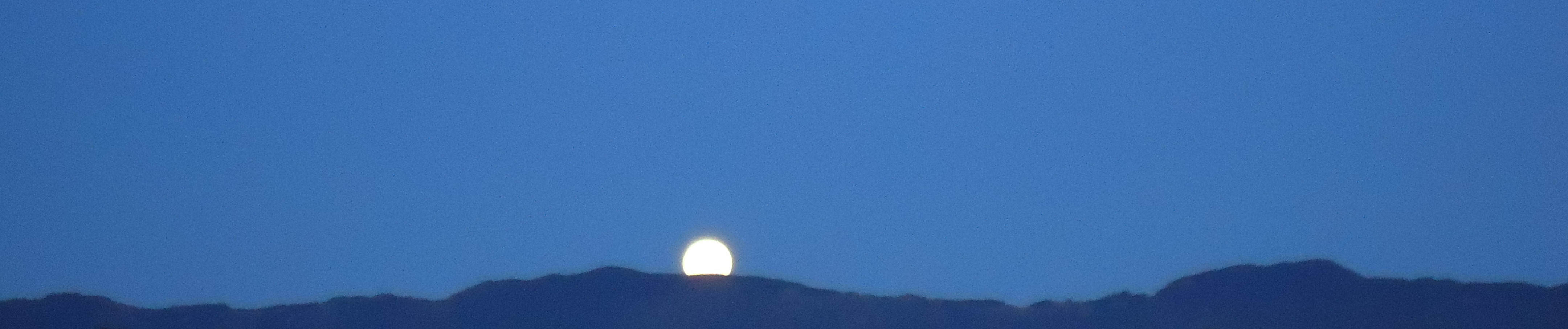
The Guru Full Moon (Guru Purnima – Friday 31st July, 2015) allows us to take part in spiritual teachings, opening ourselves up to more meaningful yogic conversations. This is especially relevant since the ‘true purpose’ of Yoga is seldom talked about in classroom settings, or social media circles.
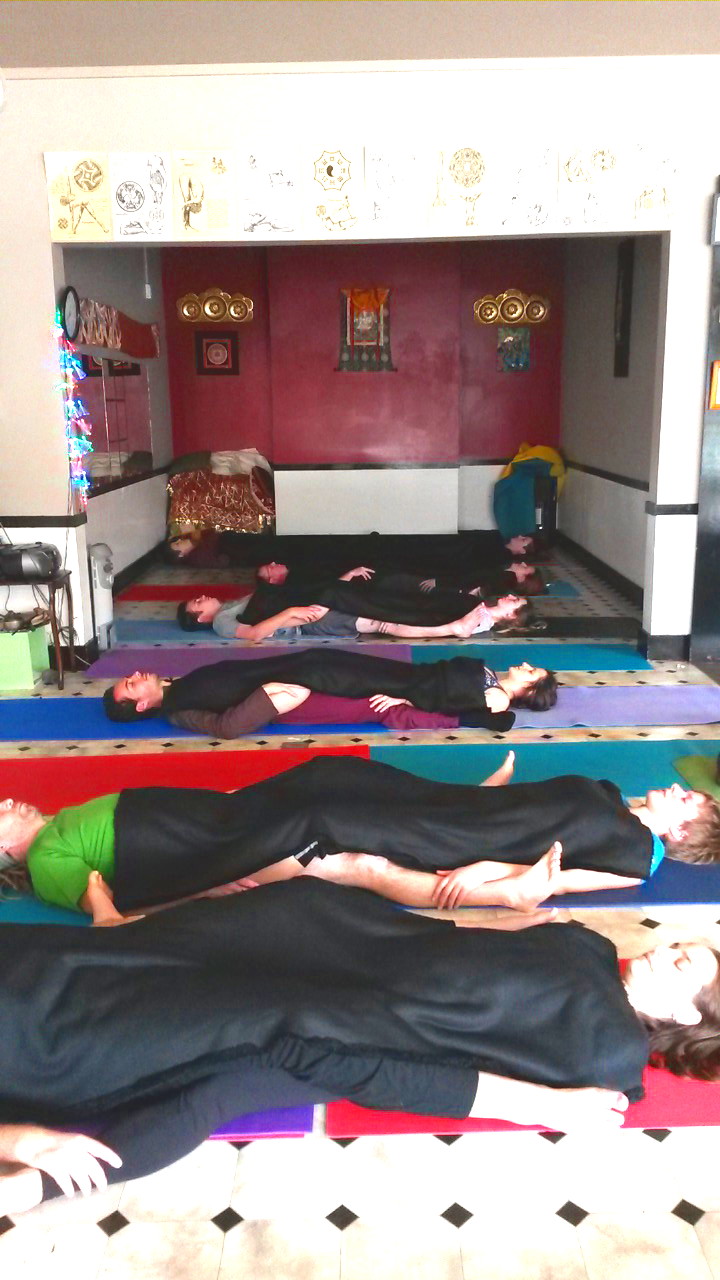
From my personal experiences, having taught thousands of Yoga classes, it seems that silence in the classroom is more highly valued than philosophical discussions. Likewise, physical activity seems more valued than group inter-activity. My attempts to engage yoga students in philosophical conversations have often resulted in us skimming the surface. I get the funny feeling that most students want to stretch their bodies, not their bodies of yogic knowledge! Unfortunately, however, lack of knowledge also leads to lack of awareness (avidya).
“avidya clouds our awareness and stops us being our true authentic selves.”
Although Patañjāli’s classical instruction – Yogaś-chitta-vrtti-nirodhah (which loosely means, yoga reduces mental fluctuations) – may be at the root of modern classroom reserve, one of the primary aims of Yoga practice, according to Patañjāli (YS 2.1-2.9), is to free ourselves from the five kleshas (ignorance, ego-consciousness, pleasure-seeking, aversion, and fear). Yoga is meant to deepen awareness of our ‘true nature’, as a cosmically centred being. The Yoga teacher’s discourse is an important part of that process.
In modern-day contexts, however, Yoga teachers’ vocabularies seem to be limited to a handful of standard slogans, such as: ‘go with the flow’, ‘Namaste’, and ‘breath into the heart’. It is less likely that teachers will say “surrender your ego-identity to the universal divine,” or “free yourself from your negative karma, which amasses from consumer desires and base urges.” While time constraints may contribute to these minimalized mantras, a general lack of philosophical engagement leads me to ask specific questions.
Has Yoga become a consumer product that must meet customer demands? Or, is there room for truth (satya) and honest discussion in our Yoga teaching spaces? Can philosophical conversations and different opinions hold meaning within wider Yoga circles? Or, should discussions on yogic spirituality be limited to specialist workshops and in-group gatherings (satsang)?
“Yoga Philosophy, Tantric Yoga, Mythic symbolism, Guru Devotion, Mantra invocation … Is there any room for yogic spirituality in present-day Yoga?”
In addressing these questions, it is important for us to realise that countries like New Zealand, which are largely secular (which are largely secular, meaning there is a distinct separation between faith practices in the public sphere and religiosity in the private sphere), expect people to keep their spiritual views to themselves. The only exception to spiritual privatization is on days such as Guru Purnima, or International Yoga Day, where members of local yoga communities can openly engage in spiritual discussions and group performances in shared spaces. Fortunately, these special events give Yoga students the opportunity to participate in more engaged teachings.
“Be grateful for what you take for granted”
My personal aim over the next 18 months is to conduct an ethnographical study of Yoga in New Zealand (through the MA programme at Victoria University), to find out more about the diversity of yoga teaching in Aotearoa. This study will involve interviews with students and teachers alike, so hopefully I will get a chance to compile a comprehensive study by interviewing a wide range of yoga disciplines.
For Guru Purnima (10:42pm Wellington time) I would like to open up a discussion on Patañjāli’s Yoga Sutras 2.2-2.3:
Just wanted to say a big thank you to you for making my introduction to yoga so special. I wish you well on your adventure and will be interested to follow what you are up to, though I’m not on facebook. Id love to go to India but not this year so hopefully more trips will happen next year.
Best wishes
Marie Anstiss
Ali,
Thank you for all you have done for me over the years. I cant believe sometimes how much my body confidence and awareness has grown.
Have a wonderful time away and I look forward to coming back to your classes when you return.
Love Miranda xx
Dear Ali
You are a very important person in my life and I am really going to miss you. You have been a guide, a teacher and a friend. Through your teachings I have grown and…
If you haven’t yet tried Valentina’s classes, pop down to the studio this week and get into the flow. Three of Ali’s most dedicated students have reported back to say Valentina is the perfect replacement, and they all totally love her classes!
Ali will be back Monday 27th July for a final week of teaching before heading off to India. She would love to say goodbye in person and see everyone before she leaves.
Just wanted to say a big thank you to you for making my introduction to yoga so special. I wish you well on your adventure and will be interested to follow what you are up to, though I’m not on facebook. Id love to go to India but not this year so hopefully more trips will happen next year.
Best wishes
Marie Anstiss
Ali,
Thank you for all you have done for me over the years. I cant believe sometimes how much my body confidence and awareness has grown.
Have a wonderful time away and I look forward to coming back to your classes when you return.
Love Miranda xx
Dear Ali
You are a very important person in my life and I am really going to miss you. You have been a guide, a teacher and a friend. Through your teachings I have grown and developed in so many ways over the past year. Before coming to yoga and meeting you, I was living a life with my eyes closed. Now I feel I am finally awake and on the right spiritual path.
I wouldn’t be where I am today if it wasn’t for you. I know that I am now on the path I should be heading, and also know there will be a lot more changes and challenges to come. You leaving Wellington is just one of these.
The test for those of us left behind will be to continue in our self-development, without you encouraging us along each week. You said to write down how I felt, so here is a thought I had when walking along the ridge …
Logically I know this [departure] is not abandonment, or you are not leaving my life, but emotionally it feels a bit that way. So I feel sad.
In my long-term vision, I guess I saw you and the yoga studio still in Miramar for many years to come. I have never been one for joining groups or becoming part of any community. It just has never been my thing. However, at Sadhana yoga it was different. I felt it was a community I wanted to be part of and going to yoga or attending meditation sessions was something I looked forward to.
I know you are very special to so many people in this yoga community and you will be deeply missed. I have appreciated every little and big thing you have done for Tahlia and myself, both in NZ and in India. And for everything you have done I want to say thank you.
However, you have given so much, to so many people over the years and now it is time to look after yourself. I hope that in India you can rejuvenate and recharge and find peace and balance. Guruji will be very happy to have you there with him, and that, makes me smile.
Please let me know if there is any way I can help you in your preparations to move over the next few weeks.
Love Kim xxx
♥ ♥ ♥
There is no place I would rather be [on Guru Purnima]. I’m looking forward to being able to officially see you off with joyous blessings and be able to spend Guru Purnima with my Guruji.
I’m honoured and excited to be considered a cheli. My shoulders pull back and my head lifts with pride and reverence when I reflect on that. Part of repaying and honouring what you have given me is to do my best to grow further along the path you have lit for me, relying more on myself than you as you take your pathway to India again. If I don’t, I am more a dependant than a true student. I’d like to think that when you return I have evolved further, honouring you as well as myself.
Warmest thoughts
Srimala Maree
♥ ♥ ♥
Dearest my greatest teacher,
I am not surprised to receive this email. I have felt this coming on since I rejoined earlier this year and I am so happy for you, it’s fantastic news and we will all be here keeping ahi kaa (the home fires burning) until your return. We will miss you very much but are warmed that you are going to seek wonderful new adventures, information, nourishment.
You have set me up and transformed my life, a debt I will never be able to repay and I am so greatful. I have a stronger clearer mind, body and spirit due to the gifts you have in healing, I cannot imagine there could be any greater calling in life that to serve and heal others. The yoga challenge created space for a very special whānau of like minded people whom I adore and love a great deal, its brought such richness to my life.
Valentina is a fine replacement, I enjoyed her vibe and energy in a few classes recently, she has a warm and loving heart and will be well supported in your absence … I’ll work on meditation in your absence! xxx T.
♥ ♥ ♥
Morning Ali,
So great that you have brought Miramar yoga to a sustainable place where you can trust others to take the reins while you go off yonder to India!
On Friday 17th July, Ali will be heading to Aussi to visit her family. The wonderful Valentina Turri will be covering a number of classes in Ali’s place. Please support Sādhana Yoga (and Ali) by coming to Valentina’s wonderful classes.
At the end of this coming week, the classes schedule runs as follows:
Sunday 19/7 @ 9.30-11am –will run as normal
Monday 20/7 @ 7.30pm-8.30pm (no 6pm class Monday 20/7)
Tuesday 21/7 @ 12.30-1.30 — will run as normal(no 7.30pm class Tuesday 21/7)
Wednesday 22/7 @ 7.30-8.30 — willrunasnormal(no 6pm class Wednesday 22/7)
Thursday23/7 @ 6.00pm-7.10pm & 7.30-8.30pm (both classes will run)
Valentina graduated from the Deep Yoga Mastery of Life Teacher Training Program, completing her certification in 2009. She continues to study and deepen her practice of Yoga, alongside many well known teachers. She is registered as a Yoga Teacher with the Yoga Alliance at the 200-hrs level. She has also studied Hatha, Kundalini,Vinyasa, Karma and Bhakti Yoga, among other disciplines.
The yoga style she teaches is a combination of all the practices above with strong emphasis on asana, pranayama and mantra.
Valentina is originally from Verona, Italy. She began her world travels at age 19, lived in San Diego for the past ten years, and has recently immigrated to
New Zealand.
Yoga has helped Valentina to find balance in mind, body, and soul. She has been able to extend this holistic practice to her students, of all abilities and experience levels.
Now she has stepped into a head teaching role at Sadhana Yoga, Miramar and looks forward to offering a new range of classes – such as Surf & Vinyasa Flow (suitable for surfers, athletes and outdoorsy people), and Yogalates (a combination of core strengthening poses from Pilates and Yoga). She will be filling in for Ali’s regular classes when she is away.
She welcomes you on her journey … Let’s give her a warm welcome back!
The full moon rise on Guru Purnima allows us to contemplate our layered identities by ritually enacting our dedication to the Guru. At this time, the moon is both a formula and a vehicle of transmission.
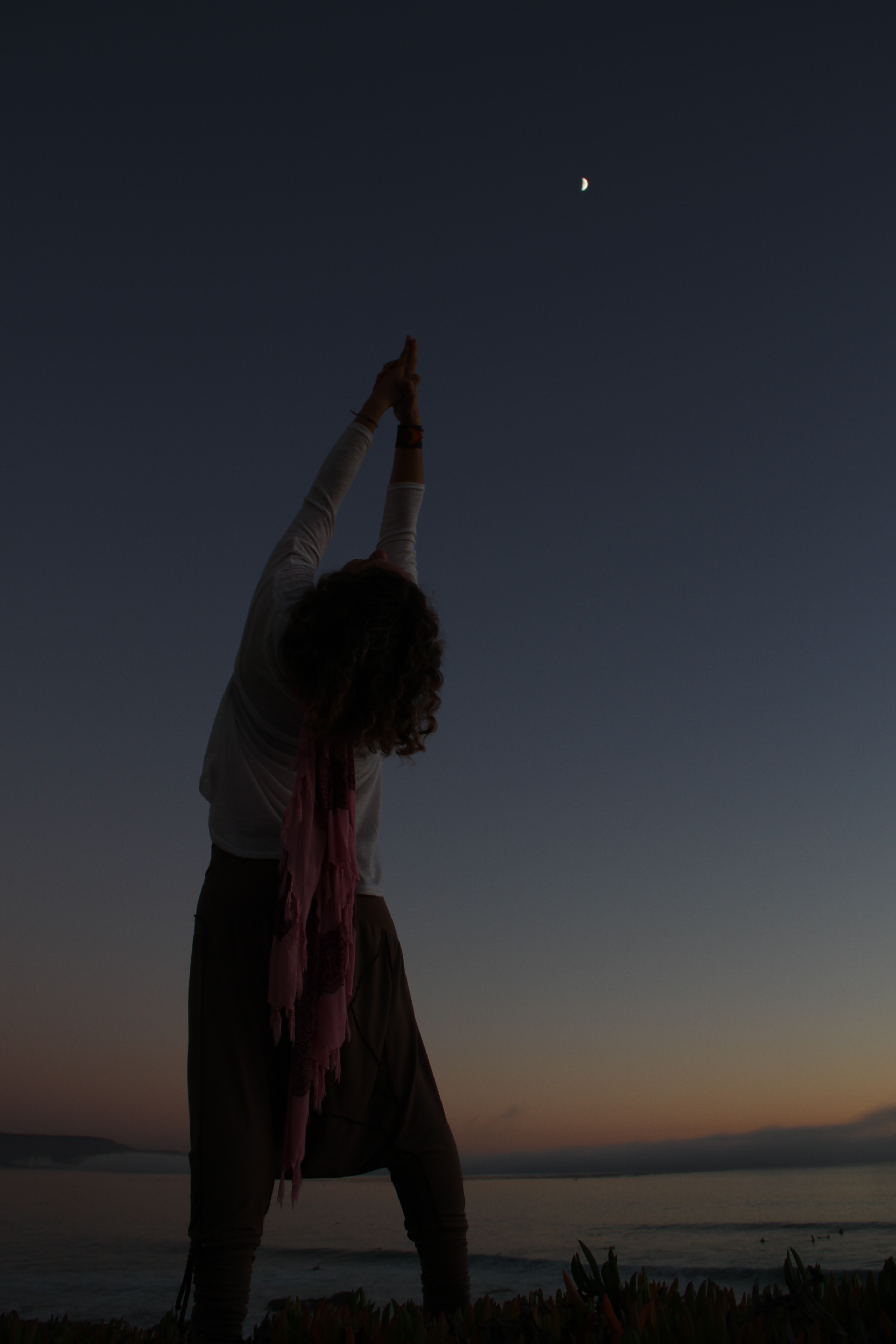
As we observe this special full moon, we are given an opportunity to set aside our material dependencies and connect with the vital fluidity of the moonlight, as reflection of the Guru’s grace.
During contemplation, the moon disc becomes a dynamic symbol, focusing our love and gratitude for all the inspirational teachers throughout time. The moon also helps transmit the Gurus’ blessings worldwide.
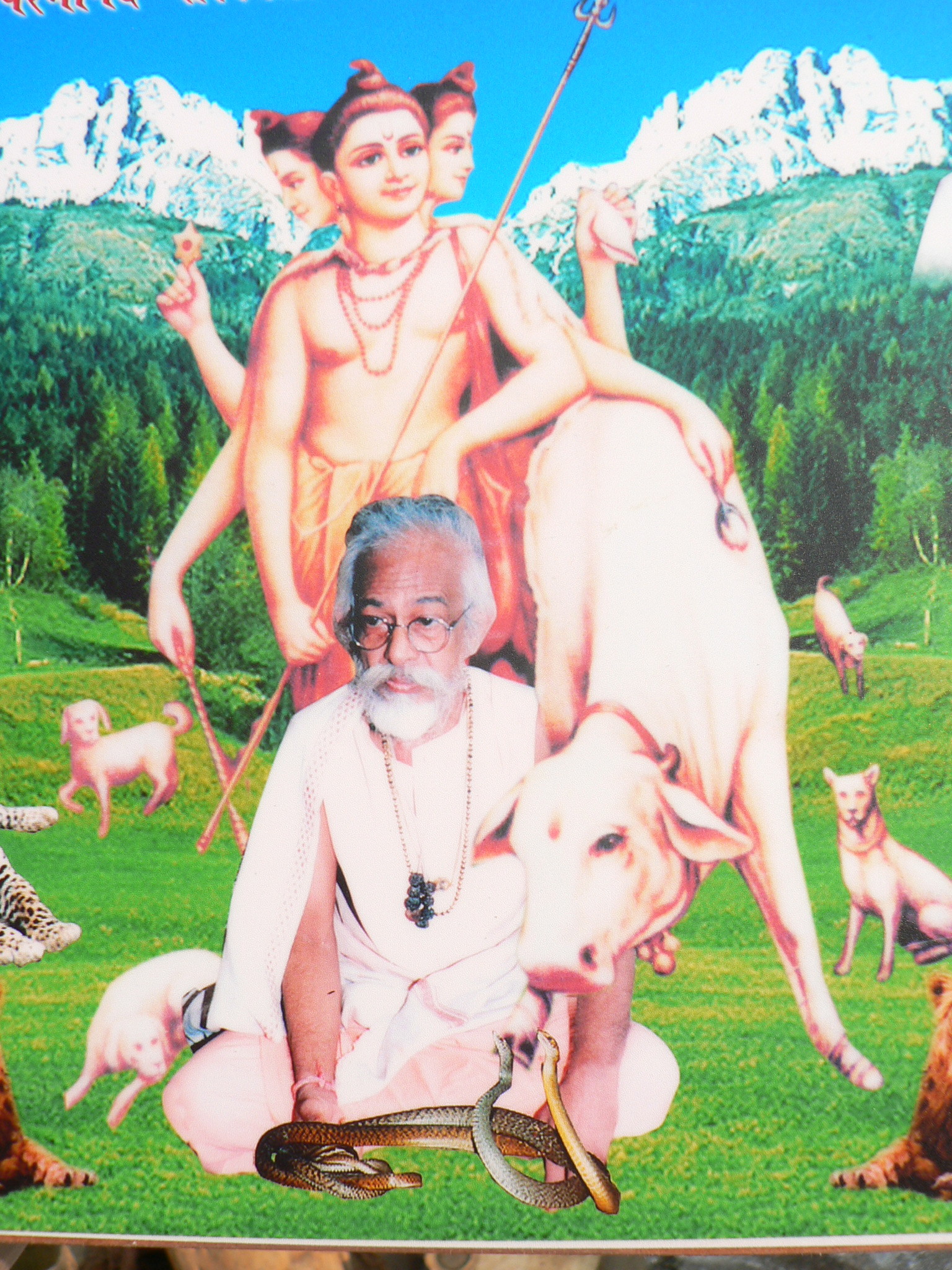
The archetypal Guru works on different dimensions, revealing the ‘inner guru’ within the devoted student. In this Guru Purnima formula, we reimagine ourselves merging with the light of the archetypal Guru, ideally through the moonlight: 1) the archetypal guru, Śiva, taught the secret knowledge of yoga to his first student, Pārvati; 2) Pārvati…
Guru Purnima (‘Guru Full Moon’) is a special celebration occurring once a year. The ‘Guru Full Moon’ allows students around the world to develop an ‘attitude of gratitude’, paying respects to long-standing yoga teachers, Gurus, and spiritual helpers.
All yoga students have an opportunity on this day to visit their favourite yoga teacher or Guru on Guru Purnima. Students traditionally pay respects for what they have learned, and show appreciation for the lessons and help offered by the teacher over past years.
Things people do on Guru Purnima:
Make an offering to their Guru or yoga teacher
Offer sattvic food to holy people, or yoga community
Sit in audience of the teacher or guru
Meditate on clearing the spiritual path for the coming year
Receive blessings by the guru
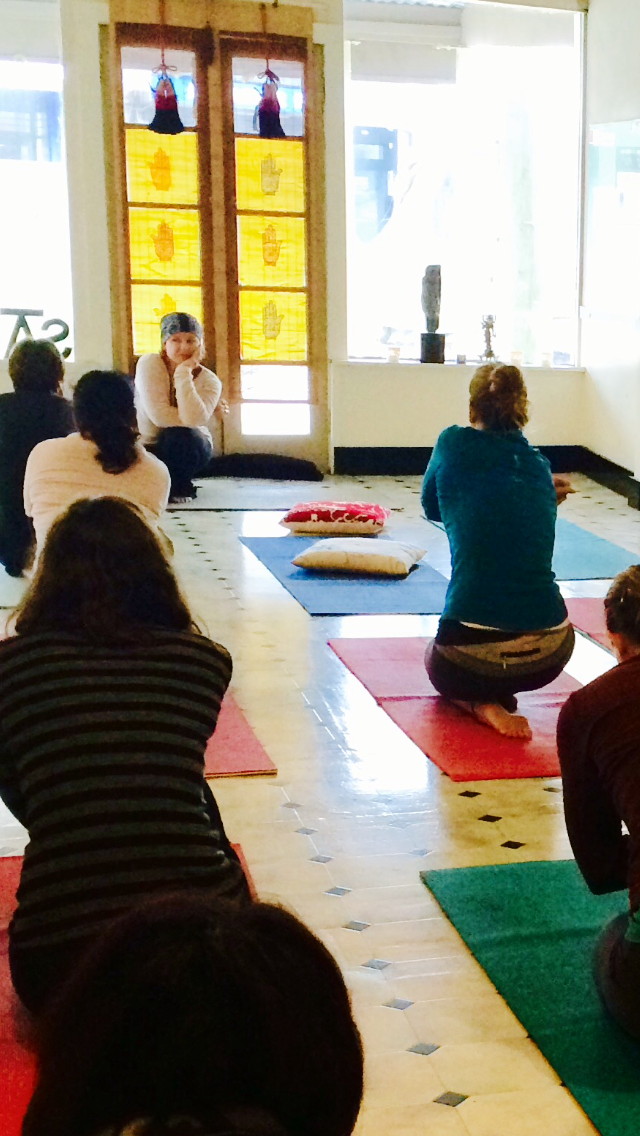
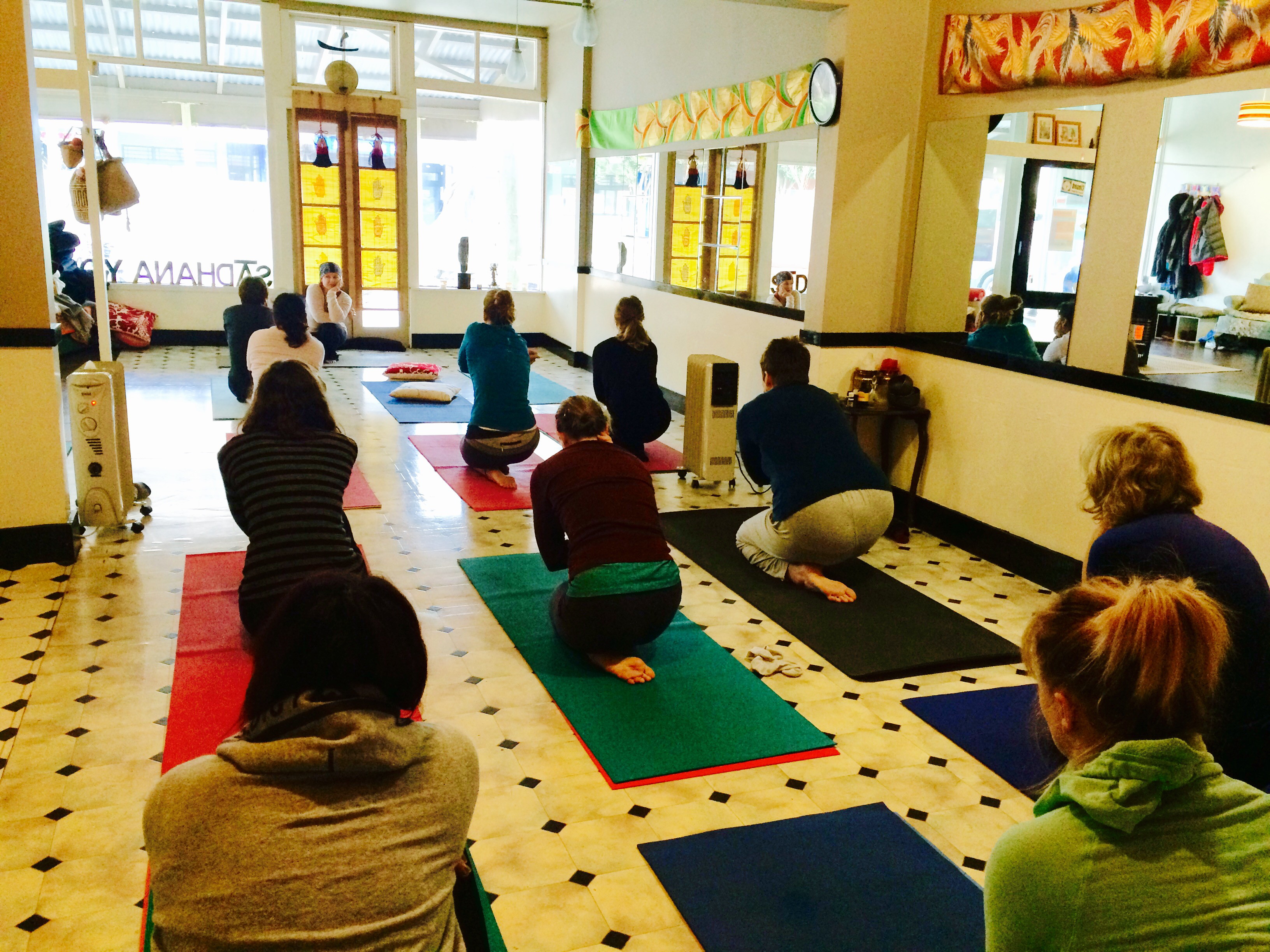
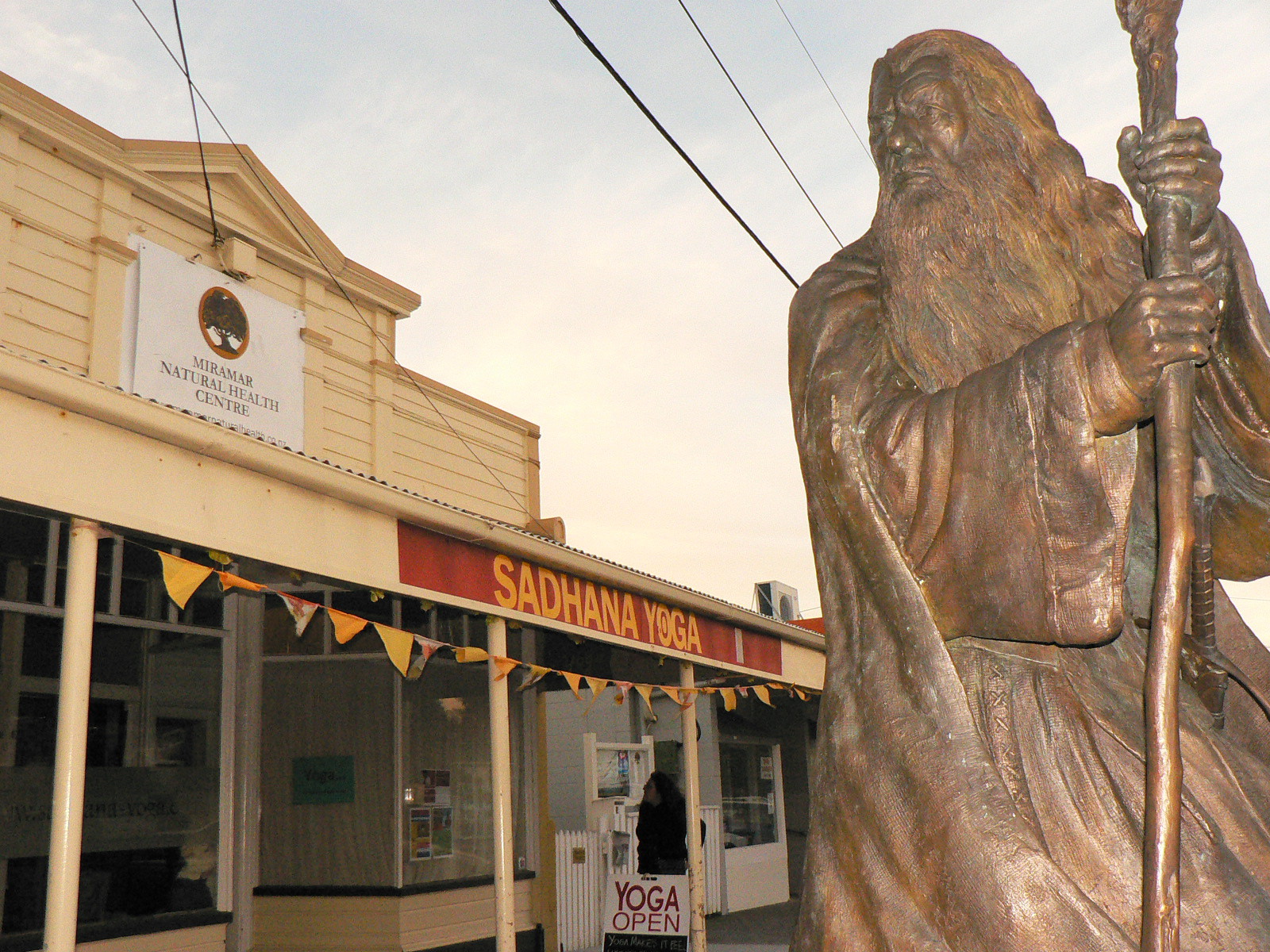
Join Ali at Sadhana Yoga – 9 Park Road, Miramar – for a special Guru Purnima celebration. Ali will be at the studio from 3pm – 7.30pm on Friday 31st July, offering satsang to anyone who wants to drop by. This is your chance to spend time with a teacher who has diligently served the yoga community of Miramar for over 8 years, and has been a fierce advocate of the Wellington Yoga Community.
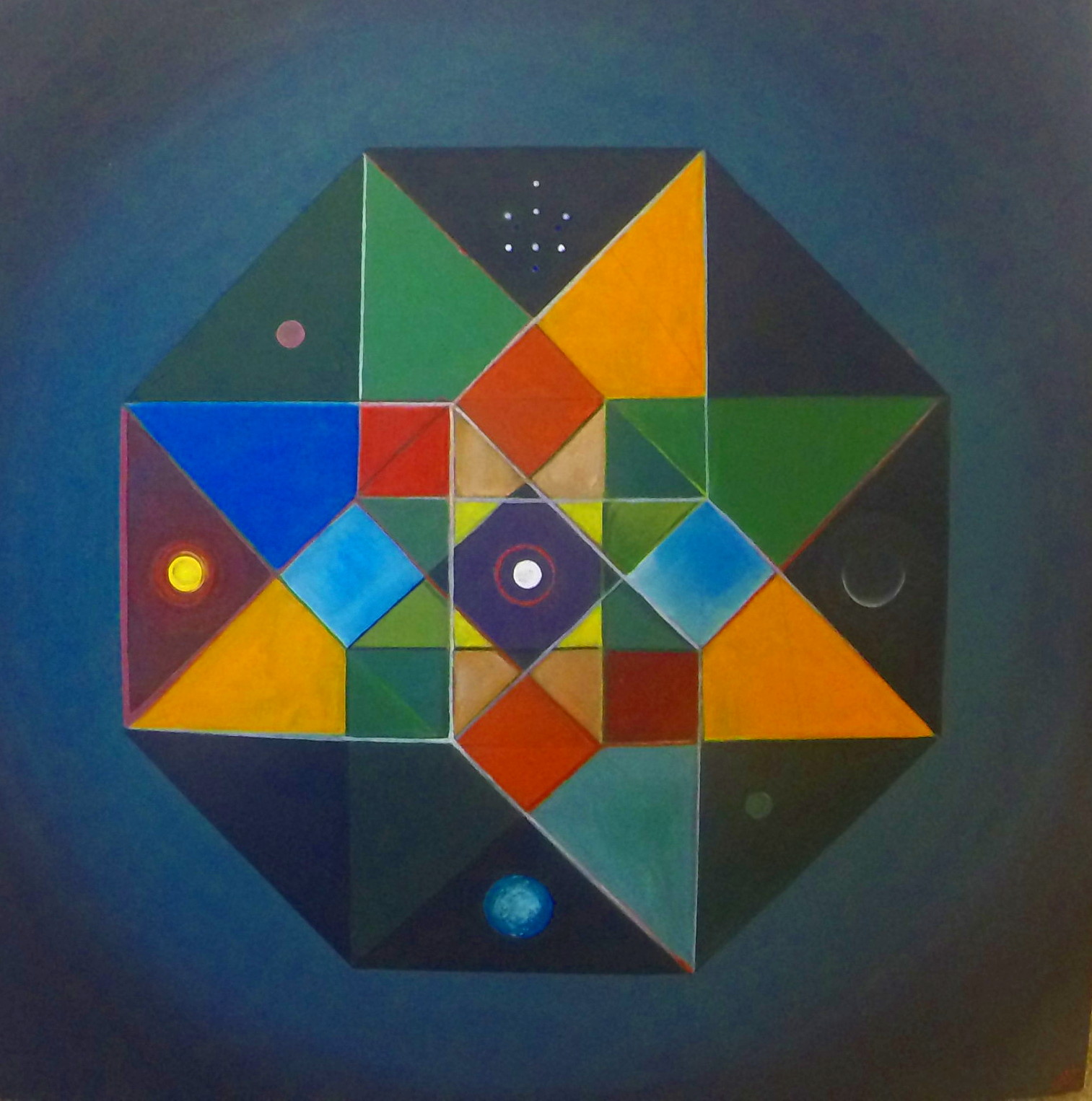
Accessing the 7 Dimensions of Yogic Being —- by Ali —
Dear students, this teaching coincides with a special triangulation of events: 1) Matariki – the Māori New Year – celebrating the rise of Pleiades in the dawn skies – June 19th; 2) the Winter Solstice – the shortest day of the year, celebrates the returning of the sun from the Northern Hemisphere – June 21st; 3) the UN’s very first International Yoga Day – June 21st 2015 – bringing sādhana, the spiritual practice of yoga, to the attention of millions of people around the world.
This unique timing offers each of us the chance to realise our extraordinary potential as self-aware yoga practitioners in Aotearoa.
In particular, this special conjunction of events acts as a time-gate or portal, so we can look back at what we have experienced over the last year, and envisage what we aim to do in the next year. The timeline between the last Matariki Solstice and the next helps us redefine our long-term focus and commitment within the global yoga community. Matariki, the Solstice and International Yoga Day will forever be a trilateral ‘marker’ bringing together the yoga community of Aotearoa.
Teaching outline:
Scientists generally agree that dimensions are part of our perceptional reality.This teaching looks at how we can access and integrate different dimensions of our being, by looking at the world of possibilities beyond our ordinary 3-dimensional reality. Accordingly, I will illustrate and explain the perceptual realities of the 4th and subsequent dimensions in relation to our Yoga practice
0 dimension of yogic being
The zero-dimension is a single point in space. We often use a dot to symbolize this point of singularity. Interestingly, scientists tell us that the super-conscious matrix of 10th dimension is the same geometric formula to 0-D. This means that there is a full circle of dimensions in a single dot!
In yogic metaphysics the dot is called bindu or dṛṣṭi. For example, bindu is the ‘dot’ over the Oṃ symbol. The dṛṣṭi, on the other hand, is a single point of focus.
The bindu, or dot, represents the meditative silence that continues after the sound of Oṃ fades. Likewise, dṛṣṭi helps us develop single-pointedness by limiting the distracting power of Māyā’s illusion. In other words, the dot reduces multiplicity to a single point in space.[1]
Patañjāli’s Yoga Sutras state that integrated yoga practice (sādhana) helps to stop mental fluctuations, “Yoga Chitta Vritti Nirodha.” This means that meditation (the 7th limb of yoga) can help to still, focus, and quieten the mind.
Patañjāli’s 8 limbs of Yoga
· Yamas (5 moral restraints)
· Niyamas (5 spiritual practices)
· Asana (physical postures)
· Pranayama (breath control)
· Pratyahara (withdrawal of the senses)
· Dharana (deep concentration)
· Dhyāna (meditation)
· Samādhi (absorption in super-consciousness)
By diligently practicing the 8 limbs of yoga we eventually arrive at a state of super-conscious absorption. In Sanskrit this is called samādhi. One-pointed concentration helps us fast-track super-consciousness by focusing on a single point in space. When we focus on one point (for example: the brow, crown, heart, the end of the breath) we experience one-pointedness. This point is the perfect tool for meditation.
The 1st dimension of yogic being
In science, the first dimension is represented by a single line. The first dimension has length, without any width or depth.
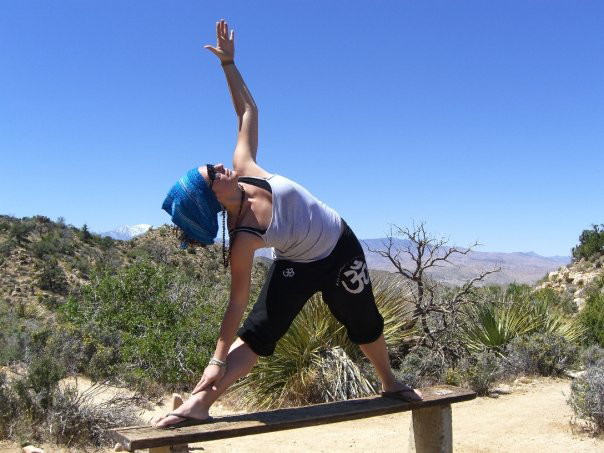
In yoga, we can think of the first dimension within the context of yoga postures (asanas). For example, we can think about the vertical alinement of our hands in triangle pose (utthita trikonasana). Or, we can concentrate on our postural alignment of the spine (suṣumṇā) in seated poses (like sukhasana). We can also consider the length and alignment of our stance in poses like Warrior 2 (vīrabhadrāsana). 1-D measurements are a helpful tool in yoga.
Furthermore, the line, or first dimension of yogic being, can make us aware of yoga lineages. For example, my teacher and my teacher’s teachers are linked to my students through my teaching lineage. That means yoga students are connected to a long line of teachers.
Interestingly, 1-D measurements, often comply with quantum ratios. For example, a single line, or measurement, can be used to measure the proportions of our yoga body. Golden ratios, like the Fibonacci sequence, also make up the fabric of the multidimensional universe. Moreover, each additional dimension comes about by the adding a 90˚ angle. This means the universe is made up repeated patterns of fractal geometry. The yoga body can harmonize with fractal geometry when we become adept at aligning ourselves through the different planes of existence
The 2nd dimension of yogic being
The second dimension has length and width but no depth. Flat images represent a two-dimensional reality. This means, our second dimensional reality incorporates symbols, logos, slogans, Facebook pages, smart phone apps etc. These flat surfaces suggest a more complex reality, yet in actual face they lack intrinsic depth. You can’t smell the perfume bottle in the advertisement. You can’t reach out and touch a body part on a dating ap. More importantly, because images can be edited, filtered and digitally enhanced, they may also represent a false reality.
2-D images maybe highly aesthetic and beautiful, yet there may be no real substance behind the image facade. These shallow flat-world 2-D experiences leave plenty of room for interpretation, ego-consciousness and deception. The ‘selfie’ is the perfect example of the self in an idealized 2-D reality.
Even though smartphone apps and Facebook pages can offer multiple split-second snapshots of digital reality, our dependence on new technology may also prevent us from being adaptive and responsive in our lived 3-D and 4-D realities. The more that people in the modern world becomes reliant on flat-screen and touch-screen experiences, the easier it is for us to be mindless ‘sheep’ fed a constant stream of addictive illusion. Thousands of people might ‘like’ an aesthetically pleasing asana, on their touch-screen smartphone, but these 2-D realities do not express the deeper reality behind, around, and away from that image.
The 3rd dimension of yogic being
The third dimensional reality has relative length and width, and it also has depth. This is the reality most of us are accustomed to through the feed of our primary senses: sight, hearing, smell, taste, touch and cognition (6 senses).
Yet, our perceptional 3-D reality also has limitations. Our sensory interpretations are often encoded with cultural biases, resulting in preconceived notions of conditioned dualisms: mind-body, inner-outer, left-right, earth-sky, past-future, front-back etc. For example, many indigenous cultures see the past as being ahead and the future behind. From this point of view, we move ahead looking back to the past.
Luckily, yoga helps strengthen our minds by harmonizing and guiding us to deeper more subtle experiences. However, the deposits of samsara (lived experiences) keep crowding in, blocking the multiple lenses of perception. Unless we spend time clearing the mind through meditation, and deepen our relationship with our subtle bodies, sensory overload in inevitable.
Although three-dimensionality provides us with a spatial relationship to Earth and stars, these become heightened at special times like Matariki and the Soltices. Through these time portals we can start to see the cyclical patterns of lived time of the fourth dimention. Because we can easily forget what we were doing this time last week, let alone this time last year, special events create an imprint on our episodic memory, enhancing our temporal cognition.
The 4th dimension of yogic being
The fourth dimension is commonly through of as time. Time is used as a measure to help us to plot our position in the universal space. More specifically, our 3D spatial co-ordinates along the space-time continuum make up part of our 4th dimensional reality. An easy way to think about our 4-D existence is imagining pipeline of collective experiences, or a wormhole travelling through time.
The more we distanced ourselves from our 3D reality, the more we gain a clearer perspective of our 4D reality. By recreating a bird’s eye view of our life journey, let’s say through time-lapse footage charting our journey between A-B // we start to create a pipeline experience of our four dimensional being. Simply put, to experience our 4-D timeline we need a fixed A and B-point. For example, Matariki to Matariki is the perfect way to illustrate the pipeline (or wormhole) of time. To envisage a 4-D composite of yourself, we begin by charting the thread of your life journey between two fixed points in time.
However, because each new dimension adds a 90˚ angle, the 4-D body is not actually a straight line but rather a spiral, or helixical sequence in fluid space-time. This means that our 4-D lived-experiences work like a spiraling pipeline moving through space like a coil. As we revolve around on Earth, our circadian clock of day-night follows the seasons of the sun, as years become decades and lifetimes. We could simplify this 4-D self by calling it the ‘mortal coil’, spiraling through cosmic space-time.
This is why calendrical markers like Winter Solsitce, and celestial markers like Matariki, help us orientate ourselves within a past-future continuum. This striangulation of time acts like a shared portal, giving us time to reflect over the past year, and contemplate future possibilites of the next year. Everyone here can take this idea of the 4-D pipeline and apply to our yoga practice.
Be aware, however, the 4D self is not above being influenced by causal effect. For example: 1) personal choices and habitualized routines will affect future possibilities; 2) the influences of others and environmental conditions will sway us as well; 3) unexpected events and chance happenings also have an impact on our lives. These things impact upon us and influence the timelines and cycles of our possible futures. Sometimes, these effects radically change our trajectories, or life path, so it is important to be aware.
The 5th dimension of yogic being
The fifth dimensional self can be considered as a field of numerous possibilities. For example, we can think of the 5-D self as a network, or matrix with numerous possibilities, which can change according to our viewpoint of perspective.
All possibilities along all the probable timelines extending out from our lifeline may be thought of as the 5th dimension self. So rather than having a single 4-D timeline, the 5-D reality branches out in fractal potentials. Think about stepping out of our conditioned lives. Just for a moment imagine our childhood ideals of being an astronaut, our adolescent fantasies of reaching stardom, the wasted opportunities of our misspent youth, our adult ambitions or achievements, all of these threads are interwoven into a matrix of being. The 5-D self is not about who we are NOW, but who we are becoming, who we have been, and peoples’ impressions of our potential, which has been shaped by shared experiences.
Also, because we don’t have the current capacity to travel back through time we can’t see all the trajectories that these imagined possibilities might have taken, or where we might have ended up should we have chosen a different path. Theoretically however , the fifth dimensional self does have a type of record imprinted in the dark matter of deep space. Some people call this the akashic record, and it can be accessed through dreams, meditation, and special healing practices.
Also, we can enhance the possibilities of our full potential by sharing in the field of collective consciousness. Although our 5-D self is strongly influenced by localized effects (such as our health, our family contacts, our societal involvement, our tribal status, our national identity, government policies, and environmental factors etc.), we also need to remain sensitive to future possibilities, honing our instincts and intuitions to pick up on morphic resonances and adaptive responses. What this means is, to achieve our full potential in the 5-D future, our network pipelines need to be free of obstruction. If our life journey is not in harmony with its environment things quickly break down and fall apart.
We can start to access the blueprint our full potential by mind-mapping, practicing contemplation and meditation, by brain-storming and through participating in think-tanks. Imagine if you had the brightest university students designing your optimal future using algorithms based on a full computation of all your dreams and potentials. Imagine what you could achieve if you had helpers on all levels of being networking to help us fulfill our 5-D potential. This is what it is like to be fully supported by the six dimensional universe.
The 6th dimension of yogic being
In the six dimensional universe, all the possible versions of everyone and everything, within all possible timelines, become actualized. We become a living blueprint operating within the vast matrix of our super selves. This means that the individual unites with its cosmic potential. This concept is sometimes referred to as ‘Cosmic Consciousness’, the ‘Universal Spirit’ or the god-self. Enlightenment practices, like devoting your life to spiritual existence allows the 6-D god-self to exist in a world of endless possibilities.
Numerous yogic, tantric and religious texts tell us that to reach this place we must practice meditation or dhyana. By liberating the mind from all disturbing thoughts, desires, and distracting emotions we reach a state of self-realization.
Through 6-D liberation, we become free from conditioned experiences and negative self-beliefs. We serve only our highest potential. We become free of karma and attachments. We align ourselves with our ‘god-mind’ and see everything as sharing the same cosmic blueprint.
As we practice our special meditation, we visualize healing old pain and being empowered by our multi-dimensional consciousness. We open up to all possibilities. We become sensitive to our full potential. We remove the restrictions of time and ride the slipstream vibration of OM. We remove limitations and accept ourselves as we are. We weave positive relationships to those around us who help support our quest. We contemplate the idea of self-mastery which is harmonized with our most fullfilled life purpose.
The dot is the brow or heart focus (0-D)
Our spine is aligned (1-D)
Our seat or foundation is set (2-D)
We engage in mudras of hands, tongue, eyes (3-D)
We look back, forward, inward, upward through time (4-D)
We consider our full enlightenment potential (5-D)
We integrate with our cosmic consciousness (6-D)
Enjoy your meditation!
[1] Various scholars of South-east Asian religions use the term bindu to support ideas within the complex metaphysics of Śiva-Śakti. See Beck, 1993: 82; White, 1996: 139; Rigopoulos, 1998: 173; Urban, 2001: 168, fn. 112; Flood, 2006: 126; Munoz: 2011: 126; Clark Ruff, 2012: 108-11; Mallinson, 2007: 28.













 NZ Yoga Centre - AOTEAROA
You must be logged in to post a comment.