
Day 37 – Yoga Challenge

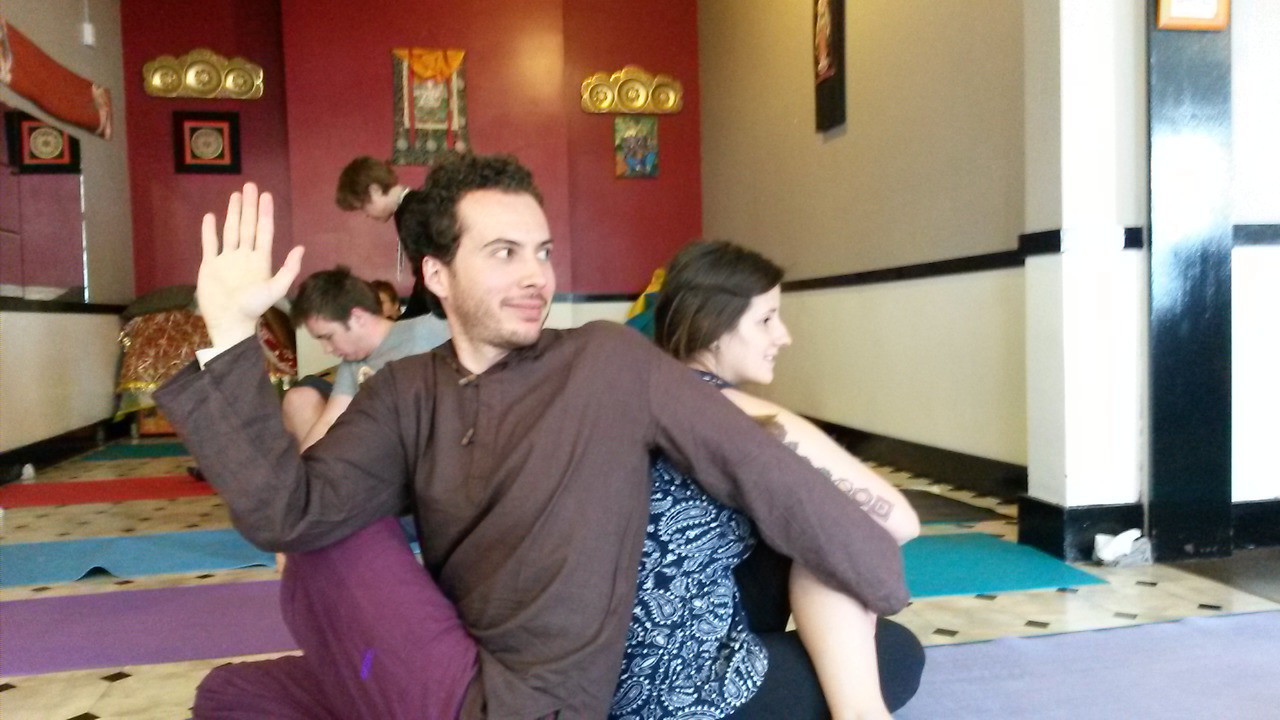
— Maree shares with us … “As our challenge comes to a close each of us has spent time reflecting on what the challenge has taught us and brought us. One of the most special and unexpected gifts provided by the challenge shone brightly for me especially last night as I sat amongst the golden company of six of the other yogini’s at our sattvic Sunday banquet.”

potluck food usepotluck fortune cookiespotluck tamarind use

Maree continues …  “Amongst the irreverence, boisterous conversation and lively debate were true moments of personal vulnerability and honesty which were met by tenderness and support from the group.  It’s one of the joys of this challenge and more specifically this very special group of individuals – a slow unwrapping of ourselves over the weeks, revealing ourselves when we have felt the need or want in a safe circle of true respect.  It hasn’t been a contrived ‘confessional’ or  compulsory ‘group share’. It has simply been a beautiful and natural development for which I am grateful.  Each of us has found treasure in one another and thus in ourselves.  Aroha to you all xx.”

Thanks to Simone and Maree for photos


Day 36 – Yoga Challenge

 — Debrief

Today we had a special debrief  session, looking at the likes and dislikes of the 40 Yoga Challenge. This debrief helped shape the possibilities of future Yoga Challenges.

Jen liked:

  • karma yoga (being more proactively engaged in the wider community)
  • dietary changes (cutting out meat, refined and processed foods)
  • 2 hours of silence and mindfulness meditation

Jen found challenging:

  • The extra time and money needed to organise and maintain a sattvic diet within a family

Maree liked:

  • Eating no meat, or refined flour, sugar or processed foods
  • Finding sugar replacements
  • karma yoga (being more proactively engaged in the wider community)
  • Journaling and keeping a record of day to day events

Maree found challenging:

  • Having to do yoga daily, on top of working and running a family

Annabelle liked:

  • The group support, and social environment
  • The fact that members of our yoga community worked collectively

Annabelle found challenging:

  • Karma yoga (being proactively engaged in the wider community)
  • Taking time to be silent and introspective for a two hour session

Terese liked:

  • Everything!

Terese found challenging:

  • Silence and stillness for meditation

Andy liked:

  • The company of Challenge participants
  • Taking time to be self-viewing
  • The rule-based element of the Challenge

Ali liked:

  • The collective social environment within our yoga community
  • Helping others learn about the discipline involved in leading a yogic lifestyle

Ali found challenging:

  • The mundane reality of being a yogini in suburbia
  • Working 40 days straight
  • Keeping up with the yoga journal on top of writing/ organising blog posts

All our super yogis agreed that this sort of immersion would work much better in a retreat or ashram environment. Maybe in the future we will run this sort of programme again in a lodge or accommodation somewhere more natural, whether in  New Zealand, Thailand, or India

As a side note: deposits collected from Challenge participants (who strayed a little off path) has gone toward provisions for Ali’s Guru’ji’s ashram, in the rural outskirts of Mathura/ India. With some karma yoga, planting and gardening the Barsana Ashram is an ideal place for future yoga immersion.

DCIM100GOPRO DCIM100GOPRO

DCIM100GOPRO DCIM100GOPRO

Day 34 – Yoga Challenge

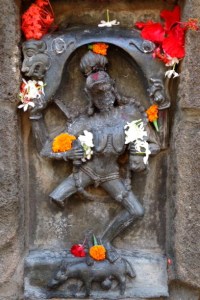
yogini 1yogini 2yogini 4

Part of our Yoga Challenge requires us to read and research yoga topics. Ali looks at modern and historical representations of YOGINĪS.


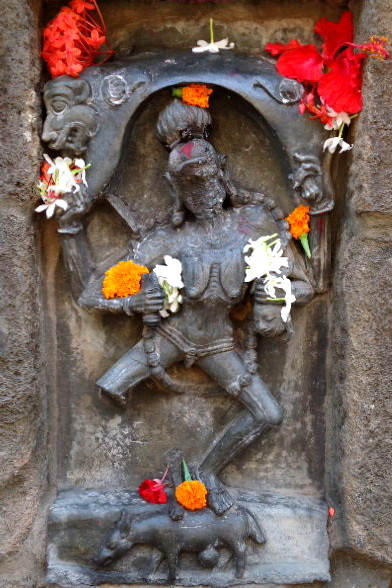
yogini 5yogini 7yogini 8

WHAT IS A YOGINĪ?

A yoginī is term used for a female Yoga master. Although she may have a well-established physical practice, yoginīs are often devoted to mystical and spiritual yoga practices.

In spiritual contexts, yoginīs are  devoted to the principle of the Divine Feminine and are regarded living receptacles of Goddess energy (shakti). This abundant energy allows living yoginīs to act as intermediaries between the supernatural agency of Goddesses and yogic/ tantric practioners.

Tantric texts of the Kaula cult depict sixty-four semi-divine Yoginīs, belonging to four anthropomorphic categories: beneficent, wrathful, birdlike, or animal-faced.

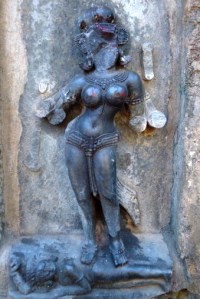
Although it is not well documented in popular literature, many yoga postures (āsanas) share symbolism with the ‘mounts’ that yoginīs stand on.  The Sixty-Four Yogini Temple at Hirapur, Odisha has yoginīs dancing on different animals, such a camel (uṣṭrāsana), cobra (bhujaṅgāsana), frog (bhekāsana), and corpse (śavāsana). These are also popular yoga poses.

WHAT DOES A YOGINĪ TEACH?

As veteran Yoga teachers, yoginīs endeavours to pass on their insights and life experiences to pupils. Experienced yoginīs also have an intimate knowledge of Tantric rituals, and can give teachings on sacred sexuality. In addition, yoginīs may conduct special meditation retreats and empowerment ceremonies.

HOW DOES A YOGINĪ BEHAVE?

Yoginīs transcend the limitations of social constructs. She may be fierce and wrathful, and will have no hesitation challenging untruths and deception.

The yoginī works outside of the confines Western social norms, Hindu Orthodoxy, and misogynist traditions, which have often stereotyped  yoginīs as devouring, sexually promiscuous women interested in occult practices.

While yoginīs may have knowledge of natural magic and weather spells,  this is not of primary interest.

WHAT ELSE DOES A YOGINĪ DO?

As a living embodiment of Shaki, yoginīs are multi-faceted beings. A yoginī is a women who has raised her Kuṇḍalini, and has an in-depth knowledge of the cakra system. Some  yoginīs have psychic abilities, special powers (siddhis), and can predict the future. In this regard the yoginī may also be a shaman and a healer.

Yoginīs will often spend time visiting Yogini temples, making offerings at the feet of fierce deities such as Chamunda, Durga and Maha Kali.

Some yoginī temples in India are circular, roofless sanctuaries, such as the Sixty-Four Yogini Temple at Hirapur, Odisha. Other yoginī temples in Nepal have natural thermal energy and surrounded by nature. All yoginī temples have a special power within them.

yogini temple 2 yogini temple

For further information on Yoginis please read Ali’s essay titled:

Matsyendranāth: Champion of the Yoginīs

Day 33 – Yoga Challenge

DCIM100GOPRO

— Reflections on a conversation with a Rabbi  — by Ali Hale Tilley

I am but a small raft

In an endless sea of wisdom

Searching for ‘Truth’

In the shimmering stars and migration paths of birds

Clouds in the night sky whisper universal secrets

Filling the fabric of the Self setting sail

The small raft in this short poem represents the relationship between the spiritual teacher and student.  The student can use the teacher’s words as a type of rudder.

The sea of wisdom is the vastness of human thoughts and beliefs: past-present-future. Peak experiences elevate feelings, while self-doubt creates troughs that bring learning.

The Truth is the source of all mystery, often depicted as the Holy Mother, Heavenly Father, Prophet, or Word from a holy book. Yet, Truth is open to interpretation and corruption.

Shimmering stars indicates spiritual illumination that oscillates between the brilliance of spoken words and peaceful darkness of silent introspection.

Migration paths of birds suggest movement, journey, spiritual flocks, group formations, and the determination of the individual to follow a chosen course. 

Clouds are part of the past narrative, where the faith of a New York Rabbi was tested and the Universe spoke to him in words that were inaudible yet profound.  Clouds also signify visions and the imagination.

The fabric of the Self represents the material universe, which contains all matter and sub-particle matter. In yogic philosophy, the material universe is called prakriti or Maya.

The Self setting sail indicates the Inner Self is a navigator that holds onto the teacher’s understandings of universal secrets to navigate the empty Void. The Void is unstated in the poem and yet is filled with potential. The student navigates the Void through diligent practice, eventually becoming the teacher.

Day 32 – Yoga Challenge

free 2 feeding the poor 3

— Ali reports on: ‘Free Yoga, ‘koha’ classes, karma yoga, and dāna’

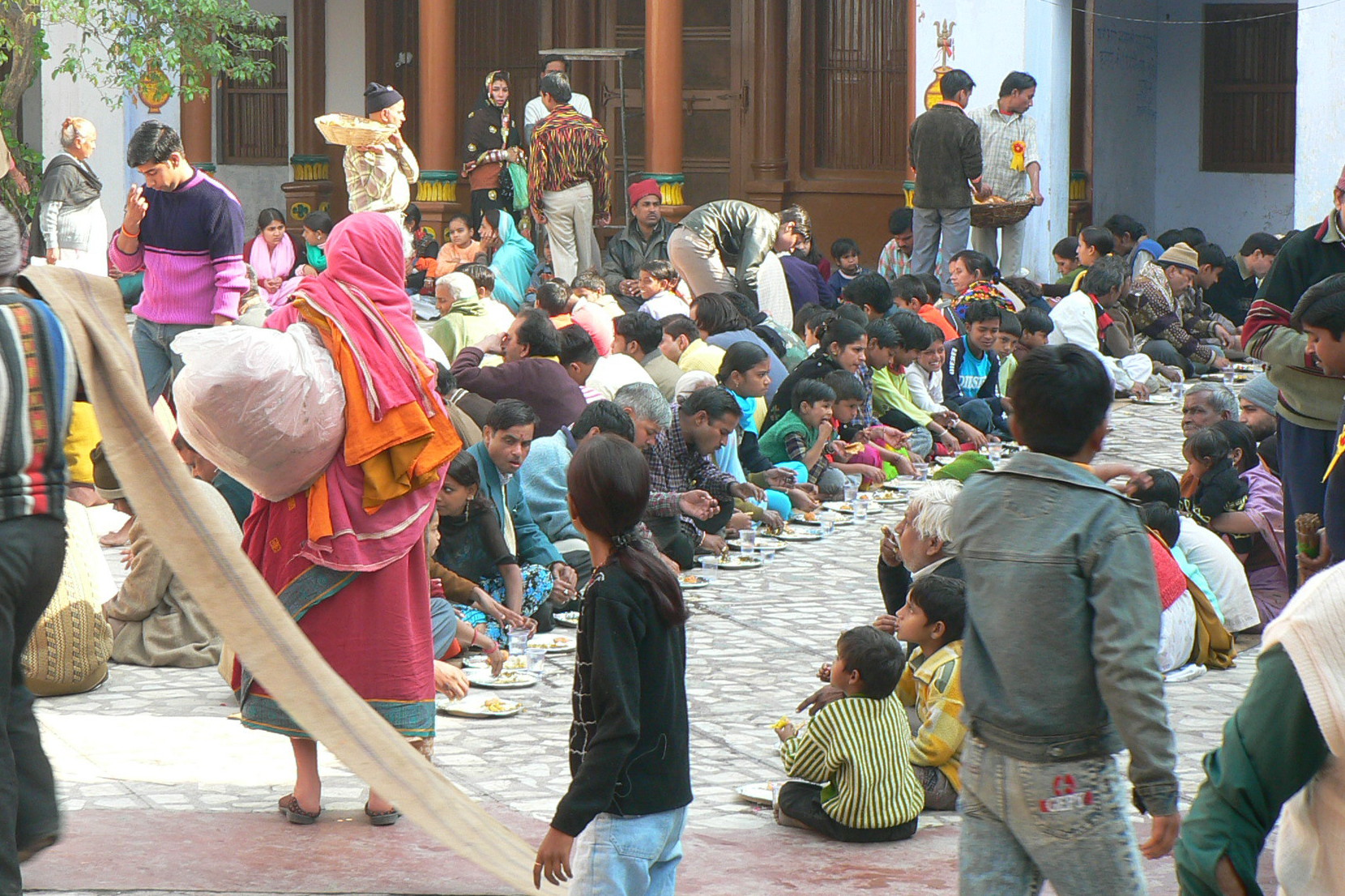
Dāna is the name given to any affordable charitable act in South-east Asian traditions. The act of generosity, such as giving food, or providing monetary support to a worthy cause, is considered to be a noble practice, and is one of the ‘six perfections’  (pāramitās).

Likewise, karma yoga (selfless service), performed without any expectation of something in return, is believed to positively influence a person’s character and life purpose.

Here in Aotearoa, the term ‘koha’ functions a similar way to dāna. Koha traditionally means a “gift, present, offering, donation, or contribution,” customarily given by visitors to marae leaders. A ‘koha’ helps support and enrich indigenous communities.

However, recently in New Zealand’s Yoga communities, ‘koha’ classes have become an opportunity for students to get yoga classes for cheap or free. This free-riding not only corrupts the integrity of NZ Yoga, it also undermines the value of hard-working teachers.

Unfortunately, because modern Yoga practices have been subject to cultural sanitization, secularization and globalization, many students have developed a “I’ll take whatever I can” attitude, without thinking about the real costs to the Yoga community.

Many Yoga teachers in Wellington are expected to contribute free classes, extra time, and value-added services with little flowing back outside the basic cost of class fees.

Fortunately, our recent Crowdfunding exercise has shown that many yoga students in Miramar are willing and able to give extra from the goodness of their hearts.

See: https://sadhanayoganz.com/crowdfunding/

Likewise, our successful ‘Abundant Sunday’ initiatives earlier in the year showed that generosity can become an important part of a Yoga community. Community generosity means that everyone benefits. Today, a number of students at Sadhana Yoga bring in essential oils, fresh food, and offerings so that everyone can share.

See: https://sadhanayoganz.com/2015/02/08/abundance-sunday/

Giving back to your Yoga community by offering koha or dāna’is not just part of our Yoga Challenge, or limited to the generous few of Sadhana Yoga Miramar, it is also an enriching part of our Yoga community as a whole.

As Swami Sivanananda says:

Karma Yoga is a great leveller. It removes all illusory distinctions and differences. It leads to unity and to a feeling of oneness. It removes idleness and inertia. It gives you good health.

Let’s make 2015 the Year of Giving Generously! 

101_Graphic_36_Thermometer

Day 31 – Yoga Challenge

face

—Ali discusses the duality of ‘pure’ and ‘impure’:

One of India’s mystic philosophers, Abhinavagupta (c. 950 – 1020 AD) states: “Impure is what has fallen away from consciousness: therefore everything stays pure if it has achieved identity with consciousness.”

Consciousness means: the state of being acutely aware of your own thoughts and surroundings, and the thoughts and feelings of living beings collectively.

In terms of sattvic eating, therefore, pure food is fresh, live, organic, wholesome and eaten with good intention. Whereas, impure food is packaged, lifeless, processed, refined, and is often eaten as an automatic response to hunger or cravings.

Likewise, Yoga done consciously in an environment that is cool, calm, sanctified, with no shoes, and a clean body, etc.; may be regarded as more pure than doing Yoga in a secular environment, like a gym or workplace, where there are lots of mental distractions.

Although tantric yogic practices often follow a type of ‘non-dualism’ that transcends conventional ideas of pure and impure, Abhinavagupta clearly indicates what is pure and impure:

“Whatever is destitute of life should be considered as impure.”

This is a simple guideline for a leading a Yogic lifestyle.

For more on this subject see:

Raffaele Torella https://www.academia.edu/12178795/Purity_and_impurity_in_nondualistic_Śaiva_Tantrism

Crowdfunding

Crowdfunding

101_Graphic_36_Thermometer

Everyone at yoga seems to enjoy all the free extras: gourmet teas, essential oils, hot blankets, chocolates, tiger balm foot rubs, blended oils on the brow, scented tissues eye masks etc. Treats feel nice, right?

Yet, all these extras cost extra money on top of consistently high outgoings.

BE PART OF A CROWD FUNDING EXERCISE

People who put money in the koha jar can help cover some of the additional expenses: i.e. T leaf t – $110, essential oils – $90, tiger balm $10, extra electricity & gas – $140.

However, I am hoping to raise between $360 – $1660 to keep the studio running as normal over the next 2 months.

HOW CAN YOU HELP?

The good news about having your own Yoga Centre in Miramar is that there are no additional parking costs, no mat-hire or blanket-hire expenses, no traffic jams into the city. The bad news for my business is that expenses in Miramar continue to rise.

MORE PEOPLE GIVING A LITTLE, GOES A LONG WAY …

crowd funding 4

Here is how you can help:

  • Throw a couple of bucks in the koha jar next time you are in class.
  • Put $15 extra in Sadhana Yoga’s bank account and you will get a big thank you on my website and Facebook page
  • For larger contributions you will get a special thanks on our forthcoming Crowdfunding Poster, and on the Sādhana Yoga website and Facebook page

The generosity experiment starts here:

Sādhana Yoga – ANZ BANK – 01-0504-0163452-00

Here is the bank account for you to place your generous contributions. Thanks to:
  • *Jo Davidson *
  • Nicolette L
crowdfunding 3
Your help has been greatly appreciated.

Ali

Day 30 – Yoga Challenge

Banksy art by Banksy

Struggles of the Challenge,  by Simone:

“Whatever you set out to achieve ensure you question any obstacle. Work out a way to overcome it. Reflect on what you have done so far. Where there is a will there is always a way to move past the wall and learn from it.”

Simone continues:

The Yoga 40 Day Challenge is called a challenge for a reason. All the yogi’s have learned valuable things about lifestyle, and have managed to change habits, creating positive new habits. However, the Challenge also presented me a struggle I needed to work through.

They saying ‘hitting the wall’ means facing an obstacle that is overwhelming.

As a tramper/hiker I have had many challenges on 3-4 day trips. For example: I’ve hit brick walls on day two of a hike wondering how far away the hut is, and if will I make it. I’ll stop and want a break because my legs are feeling sore and my energy is low. But if I stop for too long my body will cool down and it will be harder to get going again. Friends will tell me to just keep going. If I keep putting “one foot in front of the other” I eventually get to the hut and achieve what I set out to do. Also, it means the rest of the group have lit the fire and boiled water for a hot drink by the time I arrive.

Similarly, when we were about halfway through this Challenge, I struggled with an obstacle that could have made me give up. Yet, I also recognised that a struggle can be a physical or mental. So I had to decide if the wall physically existed (meaning it was almost impossible to continue), or if it was more of a mental state (where we think “I just can’t manage this”). For me it was a mental state.

On this particular occasion, after a long day’s work, I felt mentally exhausted (I am an IT help desk person, taking numerous phone calls to help solve customers’ issues). I hadn’t broken a leg. Instead, I had started thinking “I’m just too exhausted … I just want to rest and not carry on …”

Because, I had successfully completed all the aspects of the Challenge during the first two weeks, I had to stop and think, “do I really want to give up everything I have achieved  up until this point?” “What has made me suddenly hit this wall or obstacle?”

I realised my obstacle was all excuses: “I’m too tired to do yoga today, I don’t have any energy, I just want to do my knitting, I’ll write in the diary tomorrow, I didn’t get enough sleep. I’m just going to go bed and not bother about continuing.” This is how I realised the ‘brick wall’ didn’t actually exist.

If I wanted to complete this Challenge I needed to walk right through these non-existent mental obstacles and do all these great things that have being improving my wellbeing. All I needed to do was put one foot in front of the other, pick up my diary, and set aside time in my routine for completing it. A big part of this Challenge is maintaining motivation. I have all my fellow yogis doing the Challenge along side me, and also my fiancé does not want me to give up. If I gave up I wouldn’t be able to say I achieved it. Would that feel right? Within the week, my renewed motivation and positive mind frame kept me on track.

I certainly do not want to become lazy after this Challenge. I still want to do yoga every day and eat well for my health. I want to display the qualities that the Challenge is teaching us.

Day 29 – Yoga Challenge

Potluck 5 potluck 3

Why is ethical eating important at this time?

 SATTVIC VEGETARIANS ARE POTENTIALLY MORE:

  1. WATER CONSCIOUSBeing vegetarian is far less impactful on the world’s urgent need for water conservation. Whereas, a UN world water report states that it takes up to 15 000 liters of water to produce 1 kg of meat. http://www.un.org/waterforlifedecade/food_security.shtml
  2. HEATH CONSCIOUS New Zealand is in the grip of an obesity epidemic. More than half of New Zealand adults are now overweight or obese. Eating more vegetables is an important step to increasing good health. Around 1 in 5 cancers are linked to eating diets high in meat. http://www.sciencemediacentre.co.nz
  3. ECO CONSCIOUS Meat eaters have a large ecological footprint. The impacts of monocrops like corn and grain, grown to feed cattle, impact on climate change through greenhouse gas emissions and soil degradation. A UN Environment Program’s (UNEP) states that a diet without meat is crucial for easing global issues of food and fuel shortages. http://unesdoc.unesco.org/images/0021/002154/215492e
  4. MONEY CONSCIOUS Western diets high in saturated fats costs public health systems through negative health effects. The estimated cost of obesity in New Zealand is $135 million per year. Vegetarianism is less costly for the tax payer.
  5. BODY CONSCIOUS Meat has chemicals (such as hypoxanthine, inosinic acid and guanylic acid) that stimulate the central nervous system with chemical structures comparable to caffeine in coffee or cocoa. This means that meat may  have similar addictive affects as coffee.
  6. ANIMAL CONSCIOUS The yogic principle of nonviolence (ahimsa) directly applies to the non-harming of animals. Eating meat involves eating dead animals.
  7. GENDER CONSCIOUS For millions of families in Australasia the daily habit of eating meat has been presented as inherently patriarchal and imperialist. The ‘feed the man meat’ advertising campaigns of the 80’s and 90’s reinforced the apparent ‘right’ of traditional Western men to be served ‘meat and 2 vege’ by amenable wives. This in turn reinforced gender stereotypes.
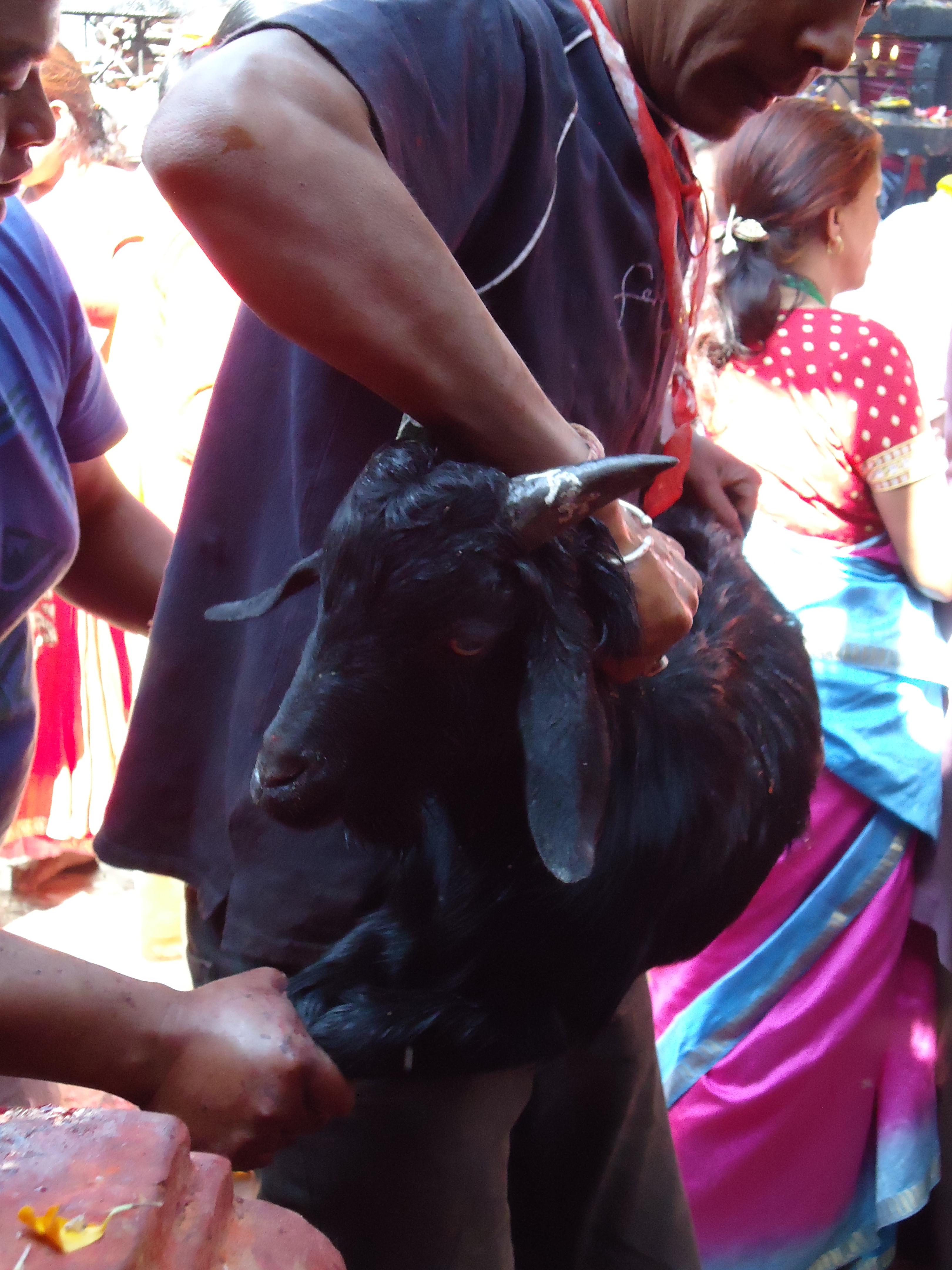
  8. COSMIC CONSCIOUS You can offer sattvic vegetarian food to a deity and receive it back as prasad (a blessed offering infused with good karma). Although, in some religions people ritually sacrifice animals as sacraments, this idea seems to disgust many Western people who prefer to buy their meat innocuously presented in a plastic coated tray at the local supermarket.  

goat

If you eat meat and practice yoga, sit quietly and ask yourself if are you ok with contributing more to global droughts, cultural obesity, bowel cancer, food shortages, soil degradation, higher taxes, hyper-active children, privileged patriarchy, and animal violence than your vegetarian colleagues?

If the answer is no, then a sattvic vegetarian diet has numerous benefits and can be satisfying,  delicious and nutritious. The proof is in the pudding!

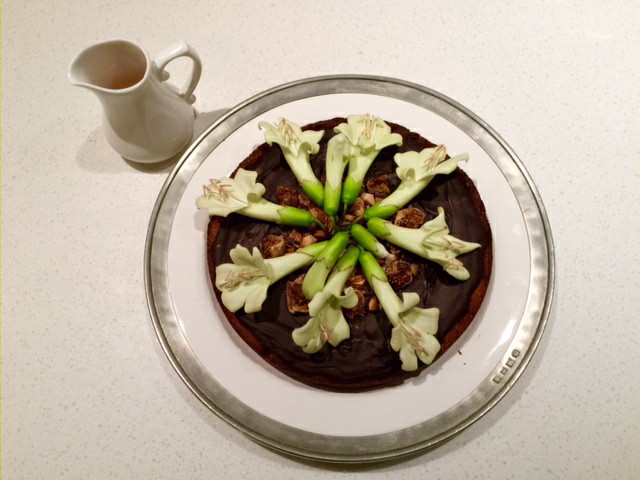
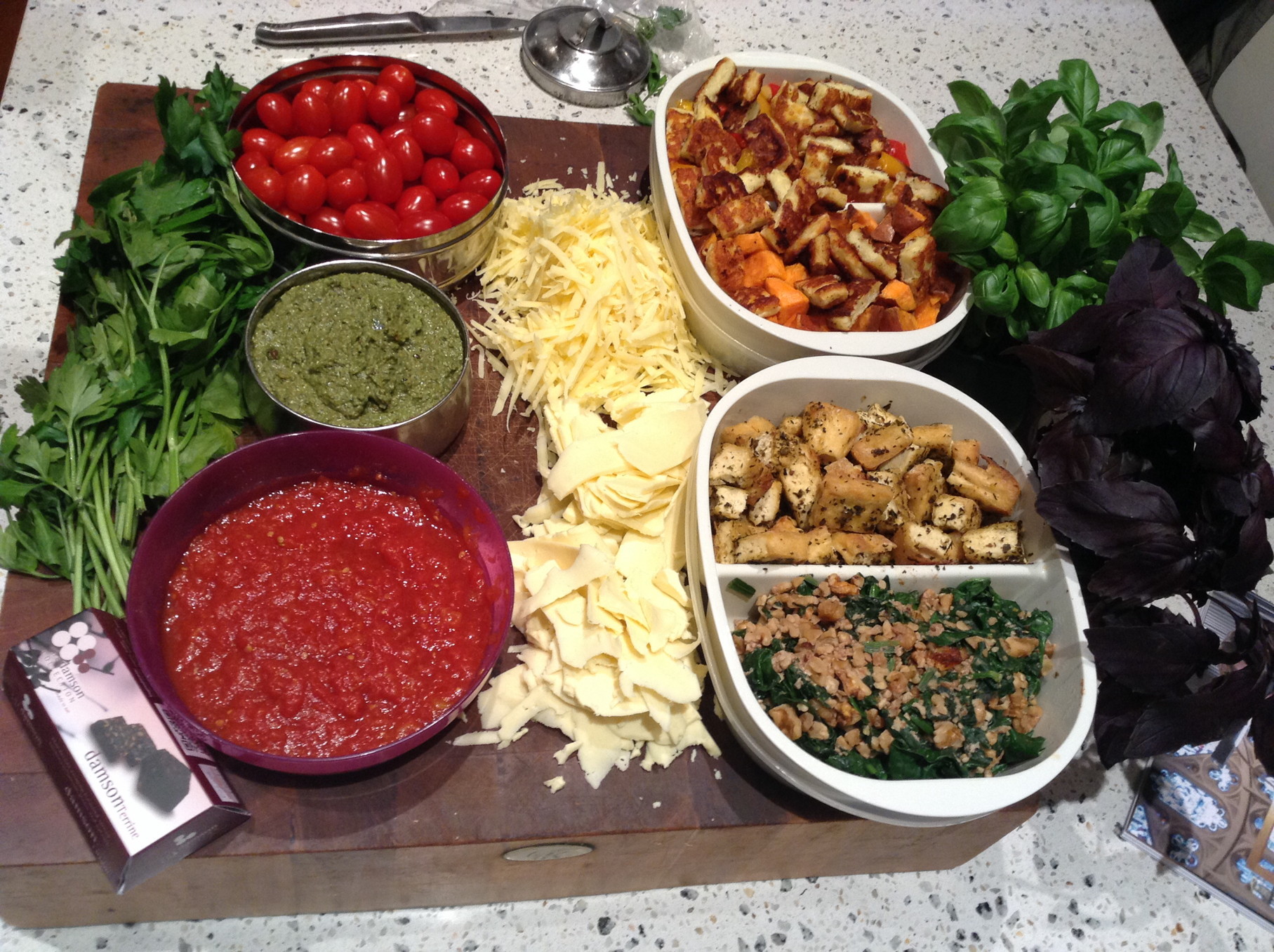
For our potluck tonight we had vegetarian pizzas with wholemeal pizza dough. Maree also made an incredible vegan chocolate torte decorated with flowers from the Three Kings Vine

pot luck 4 pot luck 2