Day 14 – Yoga Challenge

Terese

The Guru Sessions Mind Mapping 2015  – by Terese Mcleod

In Ali’s Guru Sessions at the start of 2015 we mind mapped our ways to what we wanted our 2015 to look like.  I used the solar system to map the different goals I wanted to achieve this year, so each planet became a specific goal.  I’ve landed on one planet and hovering close to some others, and, some are still in the distance! One distant planet I want to land on at the end this year is Iron Māori http://www.sportsground.co.nz/site/10827/35993/. A quarter marathon in Napier.

The Tool Kit (Kete) – The 40 Day Yoga Challenge

My map in place, I now went looking for tools to get to my destination planets.  Not long after The Guru Sessions, Ali created The 40 Day Yoga Challenge.  The challenge has many elements, the foundations of which are to eat sattvicly, practice yoga daily and keep a daily diary of food/fluid intake, daily rituals and participate in weekly challenge classes, etc. What I’ve noticed is that the huge benefit from these elements is that they are keeping me actively conscious, mindful and aware of my actions and choices.  Some other tools I’ve found are websites with information, finding sattvic food recipes and food outlets.  Some websites like Toi Tangata http://toitangata.co.nz/ and Tri Poneke http://triponeke.webs.com/ have been interesting tools as I head toward Planet Iron Māori.

Pure (a ritual incantation)

The practice of opening and closing a day with an incantation or karakia was normal when Māori lived traditionally.  Today it’s practiced when we stay at marae but doesn’t often get practiced in our day to day home life.  I’m learning a very complex one which sounds beautiful and has the rhythm of a gently moving river.  This is a morning pure to be recited as the dawn breaks, I’ve done it some days and it really does anchor my day ahead.

Meditation and the Moon

A challenge requirement is to spend 2 hours weekly in silent meditation.  My first meditation I decided to do at night under the full moon on Seatoun Wharf wrapped in a sleeping bag on a deck chair.  The Moon light felt like a Moon bath, soothing, cleansing and refreshing.  I tuned into the soundscape of Tawhirimatea (the wind) and Tangaroa (the sea) with my beloved islands, Matiu Somes, Mokopuna and Makaro Ward in silhouette.  I also naturally found myself tuning into the smell-scape, seaweed and salt being carried on the wind.  It was amazing how productive and restorative this silent space was.

Daily Yoga Practice

I attend three classes at Sadhana Yoga a week (Saturday, Sunday and Monday) and the rest of the week I use and at home yoga programme chart Ali created for me, throw on a yoga DVD or attend the Victoria University Rec Centre yoga classes.  It’s not ideal, I would prefer to take Sadhana Yoga classes daily!

marae

Te Herenga Waka @ Victoria University

Te Herenga Waka Marae at Victoria University is probably one of the most ascetically beautiful marae I have seen in New Zealand.  It hosts an enormous amount of events.  Core business are lectures, tutorials and seminars in the wharenui (pictured above).  Classes from across the university may hold overnight experiences there, graduations, tangihanga (funerals), international guests are hosted there, including the family of Mahatma Gandhi.

Part of the complex includes a wharekai (dining room) which caters for all marae events and also provides a cooked lunch every day for $5 to students and staff. My sattvic eating plan has been embraced by the marae cooking staff who have been catering my lunches, they also cater for halal, vegan, paleo, vegetarian and many other dietary requests.  The food is more than, what everyone else is having, with the meat taken off, but a considered meal plan.  I’ve had a range of salads, coleslaws, couscous, lentil and chickpea recipes.  My favourite has been Farali Pattice, a fasting food of the Gujarati’s. Faral means ‘fast’.  The patties are made with an outer covering of mashed potatoes and filled inside with spiced dry fruits mixture, coconut and peanuts and are baked.

food

Making Meals a Ritual with beautiful eating vessels

I love beautiful things and love ritual.  I love using things like these pretty eating sets to give a bit of flair to my meal rituals and I typically like eating with my right hand Indian styles.

tray

The Lab @ Victoria University

The Lab specializes in cold pressed fresh juices and smoothies.  It’s amazing to have food retail on campus with fresh food options!  My favourite juice is Red Aide, a blend of apple, beetroot, carrot and ginger, this juice reminds me of the one we had in Haridwar, India.  Here is the stunning Himalayan fresh juice recipe jam packed with flavour and vitamins.

smoothie

Ingredients:

1 large carrot + Handful of grapes +1 apple + piece of fresh pineapple +handful of fresh mint +

1 small beetroot + ½ orange + chunk of fresh ginger (not too much!).

My favourite smoothie from The Lab is The Avocado:

The Avocado

Avocado, banana, kale, cinnamon, vanilla with soy milk.

Closing remarks – a few weeks in

What’s struck me is how bright my eyes are and my body is reacting so positively to the challenge.  As a person who grew up and loved meat, chicken, fish and pretty much everything non sattvic, after two weeks of ruling them out of my diet and I don’t really miss any of it at all, in fact, I have been wondering if I will ever go back to that food!  I find that I am never hungry and my energy levels have improved remarkably.  The sattvic food is so interesting and can be full of flavour, I’ve started treating eating like a ritual rather than mindlessly and speedily eating rubbish kai.  The challenge is providing me with so many tools and we are learning how to use them within our 40 days and beyond.

Ngā mihi mahana

Terese Mcleod

ACC Petition is now at 195, help us push it over 200!

 Change ACC’s coding on Yoga (yoga is not a sport) please sign our petition appealing against yoga teachers paying higher ACC levies than fire fighters, police officers & dance teachers. Yoga teachers pay the same fees as workers crushing rocks in quarries.

We need over 200 signitures to make a real stand. Here are some of the previous posts.

Posted a comment on Change ACC’s coding on Yoga (yoga is not a sport) petition I‘ve been practicing for 15 years, and never hurt myself… seriously ACC, lets get educated.

Posted a comment on Change ACC’s coding on Yoga (yoga is not a sport) petition It really does defy all logic.

Posted a comment on Change ACC’s coding on Yoga (yoga is not a sport) petition In over 8years practicing Yoga I’ve never hurt or injured myself while doing yoga.

Posted a comment on Change ACC’s coding on Yoga (yoga is not a sport) petition Not only do I believe yoga by experienced teachers is not as dangerous as skiing etc, but it is often preventative and rehabilitive

Posted a comment on Change ACC’s coding on Yoga (yoga is not a sport) petition I support this petition. Yoga teaching should not be penalised, rather encouraged.

Posted a comment on Change ACC’s coding on Yoga (yoga is not a sport) petition Yoga doesn’t seem to be more dangerous than professional netball, or fire-fighting, so it doesn’t seem fair to be paying more ACC

Posted a comment on Change ACC’s coding on Yoga (yoga is not a sport) petition yoga is extremely useful.

Posted a comment on Change ACC’s coding on Yoga (yoga is not a sport) petition The ACC levy that I pay per year is highway robbery. I pay over $3,000 in ACC levies per year and yet I do not run regular yoga classes in New Zealand.
 Posted a comment on Change ACC’s coding on Yoga (yoga is not a sport) petition I have NEVER made an ACC claim for any injury acquired through yoga practice or teaching in 25 years of professional teaching and my ACC levey per.

.

Change ACC’s coding on Yoga (yoga is not a sport)

Day 13 – Yoga Challenge

sunlight

Ali offers her insights: The 40 Day Yoga Challenge obliges us to keep a daily yoga journal, recording our behaviours and experiences. However, keeping up with daily entries (on top of writing blog posts, attending to business and teaching yoga classes) is time-consuming. Sometimes, I find myself writing late at night. Although it is hardly ideal to catch up on journal entries retrospectively, writing in hindsight can offer constructive insights.

Accordingly, I realised that for the last three days (Day 10-12), my anatomical ‘sheath’, or ‘food body’, had been sustained almost exclusively by food and offerings (dana) provided by my students: Maree, Milan, Dipika, Jenny, Sue and Annabelle.

*** Blessings to these students! ***

The absorption of nourishment from dana offered with compassion, love and kindness, provides a deep sense of gratitude and self-awareness.  For me, it is like the mental appreciation of these offerings has been transformed into a deeply spiritual and beneficial experience.

One of the primary aims of Yoga is to harmonise the three ‘layers’ of the Yoga body.

Old texts, such as the Paiṅgala Upaniṣads 2:2-8,[1] refer to three layers of the Yoga body: material (sthula), subtle (sukshma), and causal (karana), which consists of five sheaths or ‘koshas’.

1. The ‘material’ body is made up of five elements:

  • Earth components of the anatomical ‘gross’ body is made up of bones, flesh, organs, cartilage and the like.
  • Water components consist of fluids, such as: blood, lymph, saliva, sweat, and urine.
  • Fire components relate to drives and desires: hunger, thirst, bodily heat, and sex drive.
  • Air components are composed of breath, movement and action.
  • Space/ ether is comprised of emotions

Each of these elements is subject to karmic influences. For example: if you have low iron in your blood cells, you may have been eating mainly processed foods, or avoiding leafy greens. This results in low energy. Similarly, if you offer wholesome food to a yogi or sadhu you may gain blessings and benefits from your devotional acts.

2. The ‘subtle’ body is made up of five motions (vayus) of life-force around the body:

  • Inward expansion of heart and lungs (prāṇa)
  • Downward elimination of waste (apana)
  • Digestion and absorption (samana)
  • Upward rising of breath, past the throat (udana)
  • Circulation to the limbs (vyana)

The ‘subtle’ body is also made up of five conscious actions:

  • Speech and articulation – vocal chords/ throat and ears for listening
  • Dexterity and clasping – hands feel through the skin
  • Movement – feet create a journey that shapes our lives and viewpoints
  • Excretion – anus and urethra tied in with smell and disgust
  • Sexual enjoyment – sex organs linked to pleasure, tastes

As well as five ‘inner senses’: mental determination, beliefs, memory, love, and dedication

3. The ‘causal’ body is made up of ‘five sheaths’ (koshas):

  1. Food sheath (Athānna-maya kosha) takes nourishment from the earth, forming the gross body
  2. Breath sheath (Prāṇa-maya kosha) take life-force from the air, forming actions
  3. Mental sheath (Mano-maya kosha) uses both outer and inner senses, forming perceptions
  4. Intellectual sheath (vijñāna-maya kosha) uses mental perceptions, forming intelligent understanding
  5. Spiritual bliss sheath (Ānanda-maya kosha) uses self-knowledge, forming spiritual bliss.

The aim of Yoga is to harmonise the three layers and five sheaths.

[1] S. Radhakrishnan, Principal Upaniṣads (Great Britain: HarperCollins, 2011 [1953]), 908-910.

Day 12 – Yoga Challenge continued …

Maree's toast

Maree reports:

12 days in to the challenge now and not far from half way. It was that realisation today that had me feeling a little sad and a little anxious rather than relieved.
Unpacking that reaction a little further I identified that the list of benefits I was experiencing on the challenge far exceeded any ‘negatives’. In fact, to date I can’t name one serious disadvantage living my new sattvic life.
I sleep better, anxiety levels have reduced. I haven’t experienced a ‘food hangover’, felt bloated or overfull; nor have I had any food related cramps. I feel in control of my nutrition choices rather than controlled by unconscious eating and too much food choice. My mood feels steady and I am less likely to react quickly with anger as my first response in some situations (ok, let’s name it – when driving!).
My energy levels are more consistent and I don’t struggle  post sugar food cravings as I once did.
For me these are quite dramatic and noticeable changes. And in only 12 days?
Those 12 days have also given me the space and focus (via the challenge journaling) to explore my feelings around eating meat and fish.  More on that later.
Attached is an easy, no special request required, sattvic lunch I enjoyed today at Cafe Polo. 5 grain toasted bread, avocado, vine ripened tomatoes, lemon.

Day 12 – Yoga Challenge

DCIM100GOPRO
“Between the banks of pain and pleasure the river of life flows. It is only when the mind refuses to flow with life, and gets stuck at the banks, that it becomes a problem. By flowing with life, I mean acceptance – letting come what comes and go what goes. Desire not, fear not, observe the actual, as and when it happens, for you are not what happens, you are to whom it happens. Ultimately even the observer you are not.”

– Nisargadatta Maharaj

Thanks to Shiv for sending in this quote …

6May

… Next Viv shares with us her afternoon insights:

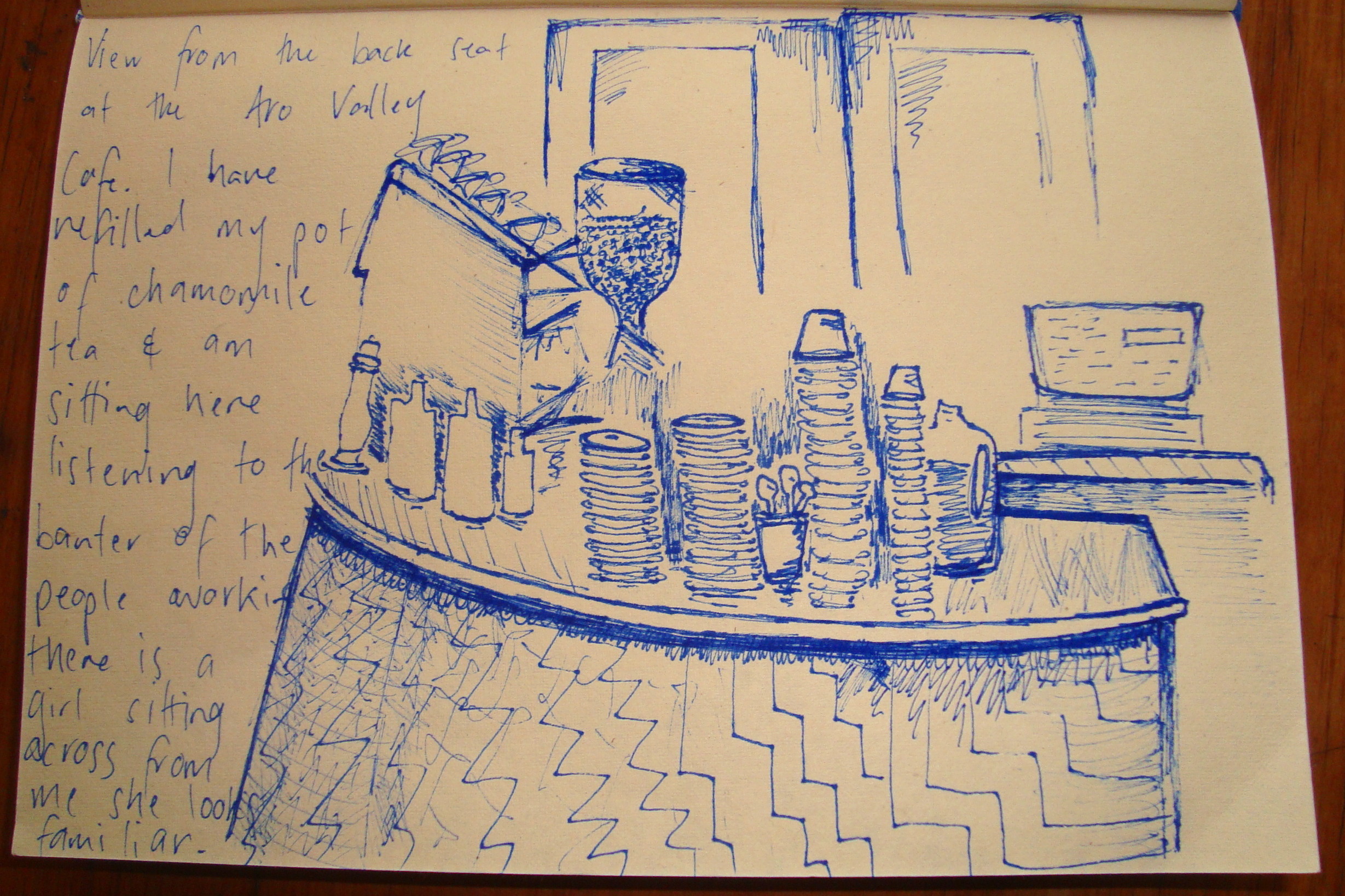
After a blustery and unsettling adventure in town today, I ended up at Aro Cafe with a cup of chamomile tea. Running out of reading supplies, I picked up my pen and drew what I saw in front of me. I spent about an hour drawing, which surprised me as I haven’t drawn anything in a very long time. I think the combination of having time for my creativity to grow out again, and focusing the time of the yoga challenge upon exploring and creating has reawakened my love of drawing.
Breakfast was: oat and millet porridge with almonds, cashews, flaxseeds, sesame seeds, sunflower and pumpkin seeds, topped with a bit of cream for that delicious factor. Oats soaked overnight in a bit of apple cider vinegar. Yum!

Day 11 – Yoga Challenge

annabelle dhal Annabelle’s dhal

Dhal is a staple of most Indian households, and is a favourite nutritional food of many vegetarians – especially those of us on the 40 Day challenge.

The word ‘dhal’ (which means to split) refers to split lentils, peas, chickpeas or beans.

Dhal is relatively easy to make and has two main steps. Step One normally requires cooking dry dhal with water, turmeric, ginger, tomato and salt for around 25-30 minutes. Step Two is a fried garnish using ghee or oil, called ‘chaunk’, which is added to the dhal near at the end of the cooking process.

Different families and traditions use a variety of ingredients for the chaunk, such as cumin seed, mustard seeds, fennel seeds, curry leaves, cinnamon stick, cardamom pods, and cloves. Onion and garlic, and dried chilies can be added for non-sattvic occasions.

Dhal is relatively high in dietary fiber, is high in iron and vitamin C, and also contains Vitamen A and calcium. A serving of dhal is 25% protein.

Ingredients

  • 1½ cups red lentils, rinsed and checked for small stones
  • 3-4 cups vegetable stock
  • 1 tomatoes, diced
  • 1 teaspoon chopped fresh ginger
  • pinch of Himalayan salt
  • 1 teaspoon turmeric power

Chaunk

  • 1-2 tablespoon ghee or oil
  • 1 teaspoon cumin seeds
  • 1 teaspoon mustard seeds
  • 1 teaspoons ground coriander
  • 1 stick of cinnamon
  • A pinch of cloves
  • 1 chopped green chili (optional)
  • 1 teaspoon chopped fresh garlic (optional)
  • 1 onion, finely chopped (optional)

Garnish

  • Juice of one lime or tamarind
  • Add chopped coriander to taste
  • Add more salt if needed

Some people prefer a slow cooking method to bring out the silkiness of dhal. However is time is an issue you can have a pot ready to eat in less than 30 minutes.

Day 10 – Yoga Challenge

fire fire b fire ali 5

There are three types of students (sādhakas), according to various yoga traditions:

  1. Lesser students, called a paśu sādhakas, are often bound by base and animal desires (paśu means animal). On the one hand, these students often are selfish, have uncontrolled appetites, and can be unclean in their personal behaviours. On the other hand, lesser students also crave the fine thing of life, get easily upset when they lose material possessions, are in the constant pursuit of happiness, sometimes seeing themselves as blameless victims of circumstance.
  2. The second type of student is the vīra sādhaka (virā means heroic). Vīra sādhakas are helpful in the world, and want to improve their own knowledge and self-awareness. They are ready to leap into action to help improve the lives of others. Heroic students are as satisfied in times of despair, as in time of happiness. They courageously evaluate their own weaknesses, and actively strive for self-improvement.
  3. The third type of student is the divya sādhaka (divya means virtuous, beautiful, charming, and wonderful). The divya sādhaka exhibits virtuous, divine qualities, sometimes reminiscent of a deity’s grace. The desire to self-improve does not factor so much into their primary motivations. Rather, virtuous students are occupied with experiencing the sweetness of transcendent reality, and revel in the presence of the divine.

Everybody has a mixture of the three characteristics: animalistic, heroic, and divine. However, at any one time, a student will be more firmly established in one characteristic than another, while progressing from one stage to the next.

When the divya sādhaka fully realizes the cosmic reality present in all aspects of universal existence, they become a spiritual teacher (divya acarya). Rather than taking pleasure in worldly matters the divya acarya seeks to spend more time in a deeply spiritual practice, away from the mundane business of the world.

sadhu

Each type of student will behave according to their temperament, and must follow their own path of development. Yet, in most cases, divya sādhakas and divya acaryas practice strict vegetarianism.

Nalini Kanta Brahma, author of ‘Philosophy of Hindu Sādhana’ quotes “What is meat for one is poison for another.”

The Kularnava Tantra states (http://www.bhagavadgitausa.com/kularnava_tantra.htm):

Who wants to all of a sudden give up eating meat?  The virtuous person creates specific dietary rules for others and suggests that one can eat meat and drink wine on certain occasions, but not at other times. Conversely, for her or himself, the virtuous person will give up eating meat and indulging sexual pleasure.

Meanwhile, the Srimad-Bhagavatam states (V.7.15.7 http://prabhupadabooks.com/sb/7/15/7):

“A person fully aware of religious principles should never offer anything like meat, eggs or fish in the śrāddha ceremony, and even if one is a Kshatriya (warrior), he himself should not eat such things. When suitable food prepared with ghee is offered to saintly persons, the function is pleasing to the forefathers and the Supreme Being, who are never pleased when animals are killed in the name of sacrifice.”

bread Jenny shares with us her delicious organic bread recipe:

“Since starting the challenge a week ago I have been trying to master my own organic bread. Now I think I’ve got it. Try this:

In a bowl mix:

  • 600gm flour ( My last batch I did 450gm wholemeal spelt flour, 150gm rye flour)
  • 1/2 cup rolled oats
  • 1/2 cup sunflower seeds
  • A handful of both chia and linseeds (or whatever you fancy)
  •  3 teaspoons yeast
  •   1 & 1/2 teaspoons salt
  •  1 tablespoon brown sugar ( its less than the 10% rule- you need a little for the yeast to grow)
  • 750mls warm water
                            

It will look like porridge!

Line a loaf tin with baking paper, and pour into the tin
Place in warm oven of 75C for 40 mins to rise.
Increase temp to 180C for a further 45mins.
I then lifted it out of the tin and returned it to the oven for 10-15 mins so the crust was crusty!
Cool and enjoy. Half batches work fine too if its just one of you.
Because it has no preservatives it does go stale quickly over a couple of days. I slice it and put it in the freezer for toast.
This is cheaper than the bought high grade organic bread- and just as good.

Day 9 – Yoga Challenge

full moon rising 2

Tonight’s full moon in Scorpio, rising in Wellington at 5:03 pm (99.5% full), represents remembrance and helps us shed light on old memories and past events.

The intensity of this moon, in conjunction with Antares at the red heart of constellation Scorpius (look East), also allows us to examine the connection between previous emotional upheavals and our current patterns of behaviour. The Scorpio moon shines a soft bright light into the dark recesses of our shadow selves, bringing hidden things to light so that we can recover the truth and move into healthier relationships with people who matter, food, consumption of material goods, and of course ourselves.

Simone reports: “Lately I’ve been thinking a lot about the benefits of a healthy diet, especially now, having increased my intake of green leafy vegetables. This is why when I see people with fish and chips I am glad I am not eating deep fried fat. That’s what keeps me committed on this 40 Day Challenge.”

Ali comments: Tonight I will be making a special ritual fire after sunset and sending cosmic protection and compassion to all the Challenge yogis and people on the yogic path. I will also be sending special cosmic blessings and gratitude to the kind the people who donated special things this week: Liz (flowers for the shine); Milan (dhal); Jo (Soap nuts); Tatiana (chocolate cake); Maree M (kombucha tea); Gillie (Bay of Plenty lavender); Sue (fresh fruit); Jenny (organic bread); and Mary (Visual diary and pen). Your generosity is a gift that will be shared for the benefit of the many.

DCIM101GOPRO  image7

Back to the Scorpio full moon: “The ruby Heart of Scorpius [Antares] is the 16th brightest star in our sky and one of the most gigantic stars known… both the Arabic and Latin names for the star Antares mean “heart of the Scorpion. If you see this constellation in the sky, you’ll find that Antares does indeed seem to reside at the Scorpion’s heart.” http://earthsky.org/brightest-stars/antares-rivals-mars-as-the-scorpions-heart

scorpio

Click to access May-east-2015.pdf

Lastly, in the Northern Hemisphere this full moon is known as the ‘Beltane’ full moon. Beltane is a Gaelic ritual fire festival celebrating the start of the pastoral season, which enhances fertility and growth of cattle and crops.

May we all burn away delusion and live in full cognition of our role as healers, helpers, teachers, and students of life.

Day 8 – Yoga Challenge

image15 P1030540

Wall classes … Reclaimed stolen bike! … Weekend in the Wairarapa … Challenge confessions …

image11 Annabelle's retreat

  • Wall Classes

Both yesterday and today, we hit the ‘wall’ and did some challenging postural adaptations. Wall classes are where all the postures are done against a hard surface. This form of yoga makes you realize just how difficult it is to achieve good postural technique. The wall works to support and strengthen the skeletal system, making it harder to cheat any posture!

  • Reclaimed stolen bike!

bike thief P1030543

 Ali reports: Today I was walking past the reprobates and vagabonds of down-town Kilbirnie and there was my stolen bike sitting right beside them at Countdown! It wasn’t even locked up. So I grabbed it, and immediately a scruffy busker ran over and said, “that’s my bike miss!” I stood my ground (all 5′ 2″ of me) and replied, “No its not, its mine, and I have given the CCTV footage of the theft to the Police if you want to take it any further.” The busker backed down and all the lowlife no-gooders looked down sheepishly at their rolly cigarettes. The good thing about bike thieves is that they often cursed with foolishness. It feels satisfying to have my blue myka bike back in my possession. Big thanks to Daminda at the Roxy for helping with the CCTV footage. And the techies at Burkes bikes who helped keep an eye out.

 image1 Annabelle's lunch

  • Wairarapa weekend.

Annabelle and Sara gave apologies to the Challenge group and did their yoga, silent contemplation and sattvic eating over in the beautiful Wairarapa. Thanks to Annabelle for sharing her pics! It is great to see you can stay true to the Challenge even when with friends on an away-break.

Also, for anyone visiting Greytown, over in the Wairarapa, you would be well advised to stop in for lunch at Food Forrest Organics, 101 Main Street Greytown. This place has an excellent organic store, and also an beautiful vegan café  with a huge back yard, where they grow organic produce. The food is stunning!

http://foodforestorganics.co.nz  

  • Confessions of our Challengers

With week one of the Challenge down, it was time for us to confess any transgressions. For the most part, people stayed on the righteous yogic/sattvic path (Terese was exemplarily)… however there were lapses that needed discussion. Only one person had to pay a penance.

You are what your deep, driving desire is. As your desire is so is your will. As your will is, so is your deed. As your deed is, so is your destiny. –Brihadaranyaka Upanishad

Day 7 – Yoga Challenge

DCIM101GOPRO DCIM101GOPRO

Ali’s morning meditation in Kilbirnie

This morning I did 30 minutes meditation concentrating on the dew drops on the grass. As I sat in the morning rays, the Doppler drone of traffic wove petrol fumes over the ocean’s background roar.

Sitting with eyes half closed, I also saw UV streams hitting my eyelashes. The visual effect of lash and light created opalescent strands of spectral colour, streaming, swirling, mesmerising. My mind drifted off to a memory of that Shiva temple in Bhubaneshwar, where priests refused my entry because I was ‘non-Hindu.’ Never mind that I was in sadhu garb, had a Guru-ji in Haridwar, taught yoga to survive, and was strict vegetarian … “Noooo, you no Hindu.”

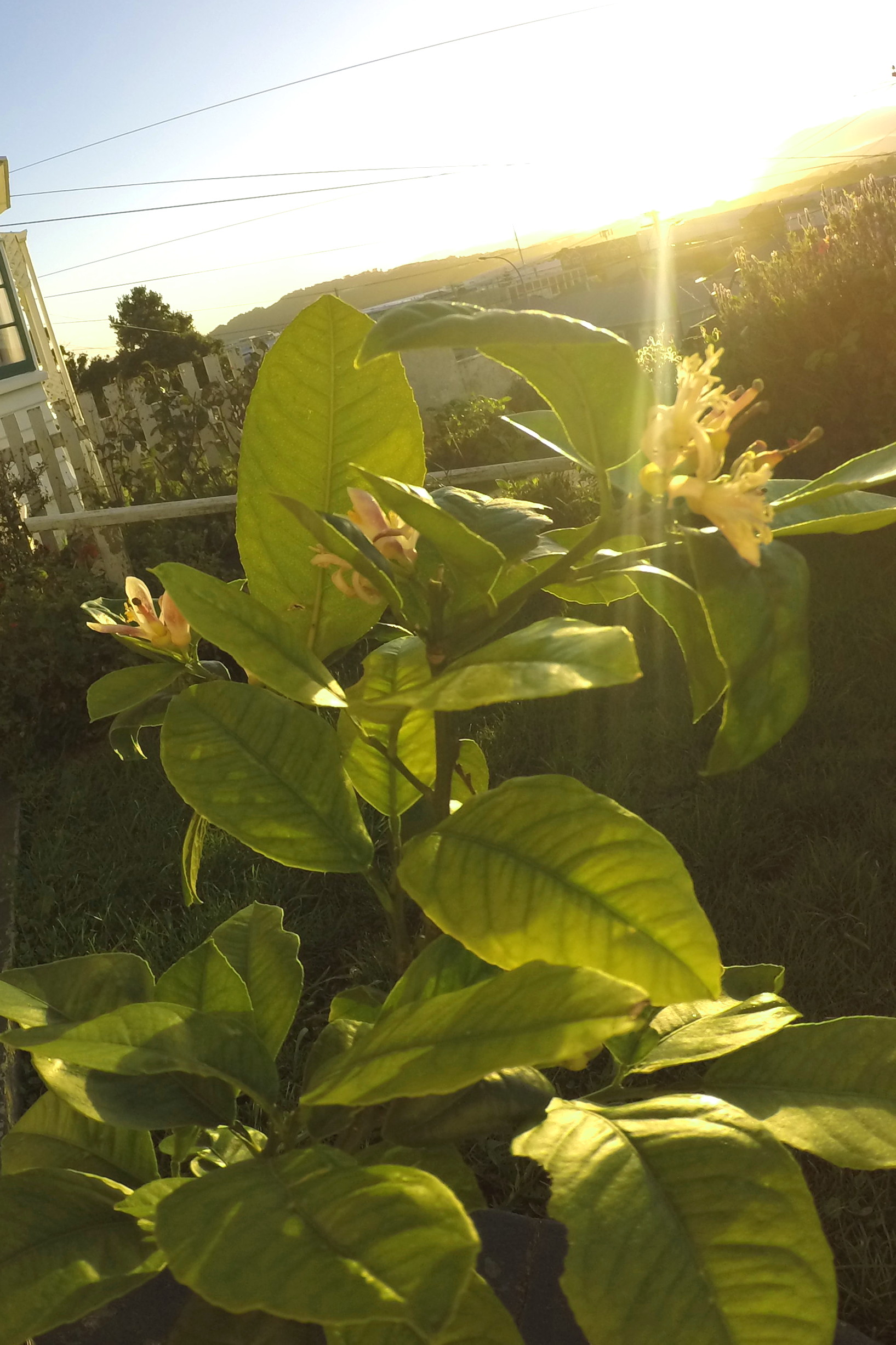
Back in Kilbirnie by my lemon tree, a little insect warmed its wings in the solar rays. Birds chirped in the spaces between the din. The sun burnt off the dew. I pulled my sadhu blanket tighter around me and wondered if the blanket, like the mind, also held memories of Indian travels past: wood fires, government buses, temple sanctums, Ganga’s flow, the grit and grime of Arakanshan Road, and the dust of pilgrimages past … and now the austere practices of Day 7 on our 40 Day Yoga Challenge.

DCIM101GOPROcobweb 4

2 cobwebs … Ali’s in the morning … Milan’s at dusk