International Yoga Day – EMPOWERMENT MEDITATION

med 12DCIM102GOPRO

Accessing the 7 Dimensions of Yogic Being —- by Ali —

Dear students, this teaching coincides with a special triangulation of events:  1) Matariki – the Māori New Year – celebrating the rise of Pleiades in the dawn skies – June 19th; 2) the Winter Solstice – the shortest day of the year, celebrates the returning of the sun from the Northern Hemisphere – June 21st; 3) the UN’s very first International Yoga Day – June 21st 2015 – bringing sādhana, the spiritual practice of yoga, to the attention of millions of people around the world.

This unique timing offers each of us the chance to realise our extraordinary potential as self-aware yoga practitioners in Aotearoa.

In particular, this special conjunction of events acts as a time-gate or portal, so we can look back at what we have experienced over the last year, and envisage what we aim to do in the next year. The timeline between the last Matariki Solstice and the next helps us redefine our long-term focus and commitment within the global yoga community. Matariki, the Solstice and International Yoga Day will forever be a trilateral ‘marker’ bringing together the yoga community of Aotearoa.

Teaching outline:

Scientists generally agree that dimensions are part of our perceptional reality.This teaching looks at how we can access and integrate different dimensions of our being, by looking at the world of possibilities beyond our ordinary 3-dimensional reality. Accordingly, I will illustrate and explain the perceptual realities of the 4th and subsequent dimensions in relation to our Yoga practice

0 dimension of yogic being

The zero-dimension is a single point in space. We often use a dot to symbolize this point of singularity. Interestingly, scientists tell us that the super-conscious matrix of 10th dimension is the same geometric formula to 0-D. This means that there is a full circle of dimensions in a single dot!

In yogic metaphysics the dot is called bindu or dṛṣṭi. For example, bindu is the ‘dot’ over the Oṃ symbol. The dṛṣṭi, on the other hand, is a single point of focus.

The bindu, or dot, represents the meditative silence that continues after the sound of Oṃ fades. Likewise, dṛṣṭi helps us develop single-pointedness by limiting the distracting power of Māyā’s illusion. In other words, the dot reduces multiplicity to a single point in space.[1]

Patañjāli’s Yoga Sutras state that integrated yoga practice (sādhana) helps to stop mental fluctuations, “Yoga Chitta Vritti Nirodha.” This means that meditation (the 7th limb of yoga) can help to still, focus, and quieten the mind.

Patañjāli’s 8 limbs of Yoga

·       Yamas (5 moral restraints)

·       Niyamas (5 spiritual practices)

·       Asana (physical postures)

·       Pranayama (breath control)

·       Pratyahara (withdrawal of the senses)

·       Dharana (deep concentration)

·       Dhyāna (meditation)

·       Samādhi (absorption in super-consciousness)

By diligently practicing the 8 limbs of yoga we eventually arrive at a state of super-conscious absorption. In Sanskrit this is called samādhi. One-pointed concentration helps us fast-track super-consciousness by focusing on a single point in space. When we focus on one point (for example: the brow, crown, heart, the end of the breath) we experience one-pointedness. This point is the perfect tool for meditation.

The 1st dimension of yogic being

In science, the first dimension is represented by a single line. The first dimension has length, without any width or depth.

In yoga, we can think of the first dimension within the context of yoga postures (asanas). For example, we can think about the vertical alinement of our hands in triangle pose (utthita trikonasana). Or, we can concentrate on our postural alignment of the spine (suṣumṇā) in seated poses (like sukhasana). We can also consider the length and alignment of our stance in poses like Warrior 2 (vīrabhadrāsana). 1-D measurements are a helpful tool in yoga.

Furthermore, the line, or first dimension of yogic being, can make us aware of yoga lineages. For example, my teacher and my teacher’s teachers are linked to my students through my teaching lineage. That means yoga students are connected to a long line of teachers.

Interestingly, 1-D measurements, often comply with quantum ratios. For example, a single line, or measurement, can be used to measure the proportions of our yoga body. Golden ratios, like the Fibonacci sequence, also make up the fabric of the multidimensional universe. Moreover, each additional dimension comes about by the adding a 90˚ angle. This means the universe is made up repeated patterns of fractal geometry. The yoga body can harmonize with fractal geometry when we become adept at aligning ourselves through the different planes of existence

The 2nd dimension of yogic being

The second dimension has length and width but no depth. Flat images represent a two-dimensional reality. This means, our second dimensional reality incorporates symbols, logos, slogans, Facebook pages, smart phone apps etc. These flat surfaces suggest a more complex reality, yet in actual face they lack intrinsic depth. You can’t smell the perfume bottle in the advertisement. You can’t reach out and touch a body part on a dating ap. More importantly, because images can be edited, filtered and digitally enhanced, they may also represent a false reality.

2-D images maybe highly aesthetic and beautiful, yet there may be no real substance behind the image facade. These shallow flat-world 2-D experiences leave plenty of room for interpretation, ego-consciousness and deception. The ‘selfie’ is the perfect example of the self in an idealized 2-D reality.

Even though smartphone apps and Facebook pages can offer multiple split-second snapshots of digital reality, our dependence on new technology may also prevent us from being adaptive and responsive in our lived 3-D and 4-D realities. The more that people in the modern world becomes reliant on flat-screen and touch-screen experiences, the easier it is for us to be mindless ‘sheep’ fed a constant stream of addictive illusion. Thousands of people might ‘like’ an aesthetically pleasing asana, on their touch-screen smartphone, but these 2-D realities do not express the deeper reality behind, around, and away from that image.

The 3rd dimension of yogic being

The third dimensional reality has relative length and width, and it also has depth. This is the reality most of us are accustomed to through the feed of our primary senses: sight, hearing, smell, taste, touch and cognition (6 senses).

Yet, our perceptional 3-D reality also has limitations. Our sensory interpretations are often encoded with cultural biases, resulting in preconceived notions of conditioned dualisms: mind-body, inner-outer, left-right, earth-sky, past-future, front-back etc. For example, many indigenous cultures see the past as being ahead and the future behind. From this point of view, we move ahead looking back to the past.

Luckily, yoga helps strengthen our minds by harmonizing and guiding us to deeper more subtle experiences. However, the deposits of samsara (lived experiences) keep crowding in, blocking the multiple lenses of perception. Unless we spend time clearing the mind through meditation, and deepen our relationship with our subtle bodies, sensory overload in inevitable.

Although three-dimensionality provides us with a spatial relationship to Earth and stars, these become heightened at special times like Matariki and the Soltices. Through these time portals we can start to see the cyclical patterns of lived time of the fourth dimention. Because we can easily forget what we were doing this time last week, let alone this time last year, special events create an imprint on our episodic memory, enhancing our temporal cognition.

The 4th dimension of yogic being

The fourth dimension is commonly through of as time. Time is used as a measure to help us to plot our position in the universal space. More specifically, our 3D spatial co-ordinates along the space-time continuum make up part of our 4th dimensional reality. An easy way to think about our 4-D existence is imagining pipeline of collective experiences, or a wormhole travelling through time.

The more we distanced ourselves from our 3D reality, the more we gain a clearer perspective of our 4D reality. By recreating a bird’s eye view of our life journey, let’s say through time-lapse footage charting our journey between A-B // we start to create a pipeline experience of our four dimensional being. Simply put, to experience our 4-D timeline we need a fixed A and B-point. For example, Matariki to Matariki is the perfect way to illustrate the pipeline (or wormhole) of time. To envisage a 4-D composite of yourself, we begin by charting the thread of your life journey between two fixed points in time.

However, because each new dimension adds a 90˚ angle, the 4-D body is not actually a straight line but rather a spiral, or helixical sequence in fluid space-time. This means that our 4-D lived-experiences work like a spiraling pipeline moving through space like a coil. As we revolve around on Earth, our circadian clock of day-night follows the seasons of the sun, as years become decades and lifetimes. We could simplify this 4-D self by calling it the ‘mortal coil’, spiraling through cosmic space-time.

This is why calendrical markers like Winter Solsitce, and celestial markers like Matariki, help us orientate ourselves within a past-future continuum. This striangulation of time acts like a shared portal, giving us time to reflect over the past year, and contemplate future possibilites of the next year. Everyone here can take this idea of the 4-D pipeline and apply to our yoga practice.

Be aware, however, the 4D self is not above being influenced by causal effect. For example: 1) personal choices and habitualized routines will affect future possibilities; 2) the influences of others and environmental conditions will sway us as well; 3) unexpected events and chance happenings also have an impact on our lives. These things impact upon us and influence the timelines and cycles of our possible futures. Sometimes, these effects radically change our trajectories, or life path, so it is important to be aware.

The 5th dimension of yogic being

The fifth dimensional self can be considered as a field of numerous possibilities. For example, we can think of the 5-D self as a network, or matrix with numerous possibilities, which can change according to our viewpoint of perspective.

All possibilities along all the probable timelines extending out from our lifeline may be thought of as the 5th dimension self. So rather than having a single 4-D timeline, the 5-D reality branches out in fractal potentials. Think about stepping out of our conditioned lives. Just for a moment imagine our childhood ideals of being an astronaut, our adolescent fantasies of reaching stardom, the wasted opportunities of our misspent youth, our adult ambitions or achievements, all of these threads are interwoven into a matrix of being. The 5-D self is not about who we are NOW, but who we are becoming, who we have been, and peoples’ impressions of our potential, which has been shaped by shared experiences.

Also, because we don’t have the current capacity to travel back through time we can’t see all the trajectories that these imagined possibilities might have taken, or where we might have ended up should we have chosen a different path. Theoretically however , the fifth dimensional self does have a type of record imprinted in the dark matter of deep space. Some people call this the akashic record, and it can be accessed through dreams, meditation, and special healing practices.

Also, we can enhance the possibilities of our full potential by sharing in the field of collective consciousness.  Although our 5-D self is strongly influenced by localized effects (such as our health, our family contacts, our societal involvement, our tribal status, our national identity, government policies, and environmental factors etc.), we also need to remain sensitive to future possibilities, honing our instincts and intuitions to pick up on morphic resonances and adaptive responses. What this means is, to achieve our full potential in the 5-D future, our network pipelines need to be free of obstruction. If our life journey is not in harmony with its environment things quickly break down and fall apart.

We can start to access the blueprint our full potential by mind-mapping, practicing contemplation and meditation, by brain-storming and through participating in think-tanks. Imagine if you had the brightest university students designing your optimal future using algorithms based on a full computation of all your dreams and potentials. Imagine what you could achieve if you had helpers on all levels of being networking to help us fulfill our 5-D potential. This is what it is like to be fully supported by the six dimensional universe.

The 6th dimension of yogic being

In the six dimensional universe, all the possible versions of everyone and everything, within all possible timelines, become actualized. We become a living blueprint operating within the vast matrix of our super selves. This means that the individual unites with its cosmic potential. This concept is sometimes referred to as ‘Cosmic Consciousness’, the ‘Universal Spirit’ or the god-self. Enlightenment practices, like devoting your life to spiritual existence allows the 6-D god-self to exist in a world of endless possibilities.

Numerous yogic, tantric and religious texts tell us that to reach this place we must practice meditation or dhyana. By liberating the mind from all disturbing thoughts, desires, and distracting emotions we reach a state of self-realization.

Through 6-D liberation, we become free from conditioned experiences and negative self-beliefs. We serve only our highest potential. We become free of karma and attachments. We align ourselves with our ‘god-mind’ and see everything as sharing the same cosmic blueprint.

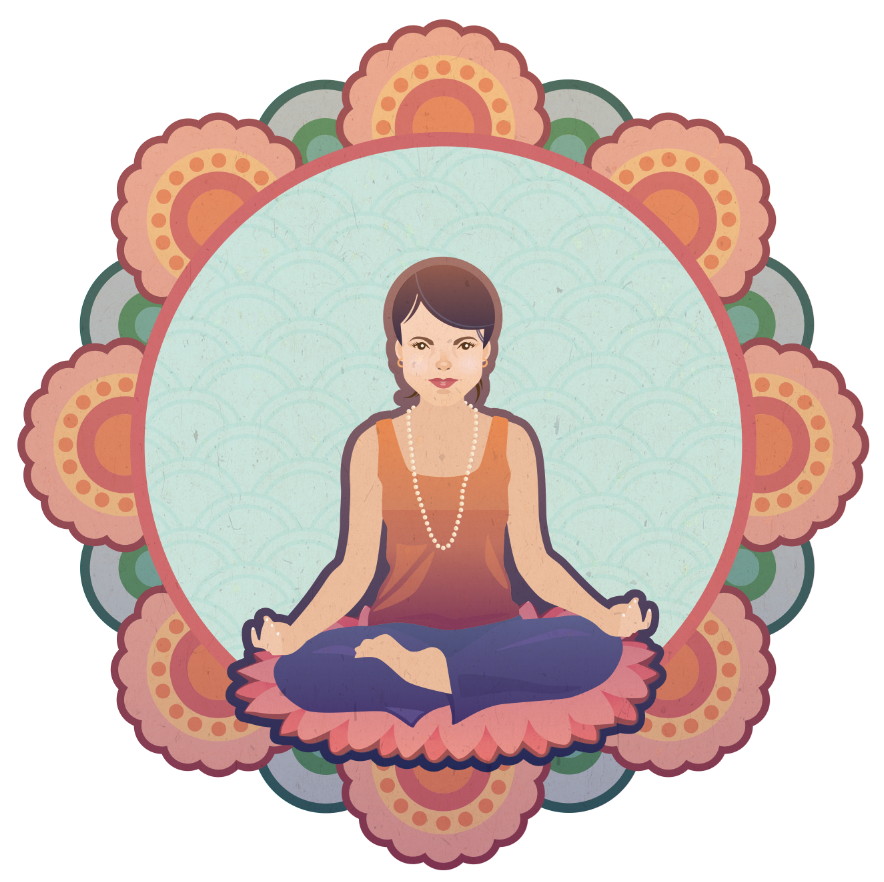
As we practice our special meditation, we visualize healing old pain and being empowered by our multi-dimensional consciousness. We open up to all possibilities. We become sensitive to our full potential. We remove the restrictions of time and ride the slipstream vibration of OM. We remove limitations and accept ourselves as we are. We weave positive relationships to those around us who help support our quest. We contemplate the idea of self-mastery which is harmonized with our most fullfilled life purpose.

  1. The dot is the brow or heart focus (0-D)
  2. Our spine is aligned (1-D)
  3. Our seat or foundation is set (2-D)
  4. We engage in mudras of hands, tongue, eyes (3-D)
  5. We look back, forward, inward, upward through time (4-D)
  6. We consider our full enlightenment potential (5-D)
  7. We integrate with our cosmic consciousness  (6-D)

 Enjoy your meditation!

[1] Various scholars of South-east Asian religions use the term bindu to support ideas within the complex metaphysics of Śiva-Śakti. See Beck, 1993: 82; White, 1996: 139; Rigopoulos, 1998: 173; Urban, 2001: 168, fn. 112; Flood, 2006: 126; Munoz: 2011: 126; Clark Ruff, 2012: 108-11; Mallinson, 2007: 28.

wand

DCIM102GOPRO

International Yoga Day meets Matariki and Winter Solstice – Sunday June 21st

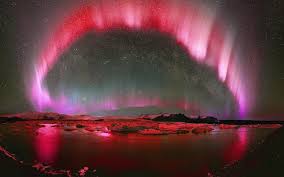
red aurora

Sadhana Yoga in Miramar, Wellington is presenting a special free event: The Seven Dimensions of Yogic Being. This special gathering coincides with a triangulation of three important events:  1) Matariki – the Māori New Year – celebrating the rise of Pleiades in the dawn skies on June 19th; 2) Winter Solstice – the shortest day of the year, celebrating the return of the sun from the Northern Hemisphere and the lengthening of the days (June 21st); 3) the UN’s very first International Yoga Day (June 21st 2015), which celebrates sādhana, the spiritual practice of yoga.

This unique timing offers each of us the chance to realise our extraordinary potential as self-aware yoga practitioners in Aotearoa.

Join us for a special teaching and empowerment meditation.

For more info contact Ali: sadhanayoganz@gmail.com

Mid Winter/ Matariki/ International Yoga Day — Sunday 21st June, 7.30pm

Sadhana Yoga's avatarNZ Yoga Centre - AOTEAROA

red auroar 2

Join us for the opportunity to fully awaken body and consciousness…

This year in New Zealand, the very first International Day of Yoga – Sunday 21st June – coincides with Midwinter Solstice and Matariki. To celebrate this fusion of Yoga and multi-dimensional mindfulness, Ali at Sadhana Yoga is offering a free event: ‘Empowerment Meditation’, Harmonising the 7 dimensions of being.’

activate your present awareness … reinvigorate your life purpose … review past resolutions … realise your potential … manifest optimal futures … deepen your yogic awareness …

To get a personal invite to this event email Ali at sadhanayoganz@gmail.com
THIS IS A FREE EVENT: All you need to bring is an enquiring mind and something comfortable to sit on (cushion/ foldout chair). Optionally, if you want to share light and inspiration, bring a beeswax or soya candle.

m7

View original post

What is Yoga?

ali 3

Yoga is essentially a spiritual discipline based on an extremely subtle science which focuses on bringing harmony between mind and body. “Yoga” also refers to an inner science comprising of a variety of methods through which human beings can achieve union between the body and mind to attain self-realisation. The aim of Yoga practice (sādhana) is to overcome all kinds of suffering that lead to a sense of  freedom in every walk of life with holistic health, happiness and harmony.   — United Nations International Day of Yoga — quote by the Ministry of Ayurveda, Yoga & Naturopathy, Unani, Siddha and Homoeopathy (AYUSH)


Kind attention Yoga teachers

As some of you know, I have been working tirelessly over the past 2 months on behalf of all professional Yoga teachers in NZ on an ‘Application for Review’, appealing to ACC (Accident Compensation Commission) to reclassify the ridiculously high Levy fees for Yoga Teachers in NZ.
I am also trying to get ACC to give Yoga teachers an independent Classification Unit and Bic code, thereby stopping Yoga teachers from being classified in the same group as Aerobics instructors and downhill Skiing instructors.
I have Statistical proof from the Official Information Act that Yoga has extremely low injury rates in comparison to Dance and Ballet teachers. Yoga teachers also make far less claims than sports like netball and football instructors (i.e. medium-risk sport is the group we are classified in). Yet as Yoga teachers we are paying one of the highest levy fees out of all New Zealand Industries. It makes no sense!
Next Sunday – June 21st – is the first UN International Day of Yoga. It is an important time to act. I  need you to spread the word and pressure ACC, our government Ministers etc.
Hopefully, my ACC application reduces Yoga teaching levy fees for Yoga teachers in the future, bringing us in line with similar teaching disciplines which have much lower levy fees – like Dance Teachers, Personal Trainers, and Fitness Centre Operations. Why should we be penalised like high intensity sports?
I appreciate that many of you have signed my online petition. This has been included in my Application. If you haven’t yet signed, please do and spread the word.
I hope to find some resolution soon.
There will also be a public submission to ACC in September, so hopefully we get another chance at effecting much needed change. Millions of dollars are being taken out of our collective pockets and are now lining ACC’s coffers. Let’s be aware of the penalties against us diligent hard-working yoga teachers.
Please contact me if you are prepared to help in some way.
Kind regards,

Mid Winter/ Matariki/ International Yoga Day — Sunday 21st June, 7.30pm

red auroar 2

Join us for the opportunity to fully awaken body and consciousness…

This year in New Zealand, the very first International Day of Yoga – Sunday 21st June – coincides with Midwinter Solstice and Matariki. To celebrate this fusion of Yoga and multi-dimensional mindfulness, Ali at Sadhana Yoga is offering a free event: ‘Empowerment Meditation’, Harmonising the 7 dimensions of being.’

activate your present awareness … reinvigorate your life purpose … review past resolutions … realise your potential … manifest optimal futures … deepen your yogic awareness …

To get a personal invite to this event email Ali at sadhanayoganz@gmail.com
THIS IS A FREE EVENT: All you need to bring is an enquiring mind and something comfortable to sit on (cushion/ foldout chair). Optionally, if you want to share light and inspiration, bring a beeswax or soya candle.

m7

20 differences between Yoga and Aerobics:

ali b

By Ali Hale Tilley ©  

  1. Yoga allows time for self-focus and meditation (… aerobics is all about action and exertion)
  2. Yoga Studios often have a tranquil ambience and are free of distractions (… aerobics studios play dance music at between 120 and 135 BPM and are often part of noisy Gyms)
  3. Yoga gives you 1:1 time to realign your body and mind (… aerobics teachers bark instructions through a head mic and tell you to feel the burn!)
  4. Yoga involves gentle stretching (… aerobic involves ballistic exercise)
  5. Yoga incorporates different breath techniques (… aerobics only has one breath technique i.e. panting)
  6. Yoga works on inner strength (…aerobics focuses on cardio-vascular and core strength)
  7. Yoga gives you time to stop and let it all go (…aerobics makes you keep on going even when your body tells you to stop)
  8. Yoga promotes a feeling of mindfulness (… aerobics is a fitness intensive)
  9. Yoga has a bicultural relationship with hauora – Te Whare Tapa Wha – the Māori philosophy of health and well-being (aerobics only covers physical health i.e. Te Taha Tinana
  10. Yoga promotes feeling centred and grounded (…aerobics promotes getting you up off the ground in Fitness Centres)
  11. Yoga is a healing art ( … aerobics is a high energy fitness workout)
  12. Yoga is a way of life ( … aerobics is a type of group fitness)
  13. Yoga is more gentle than dance and ballet ( … aerobics expends a similar energy output to dance and ballet)
  14. Yoga has teaching lineages – like T Krishnamacharya (Yoga has teaching trends like Taibo)
  15. Yoga’s mantra is ‘namaste’ (aerobic’s mantra is “no pain no gain”)
  16. Yoga includes a spiritual practice (… aerobics includes high impact practice)
  17. Yoga can help rehabilitate injuries (… aerobics has a high risk of causing injuries)
  18. Yoga is a holistic health practice ( … aerobics is not holistic, but specific)
  19. Yoga balances mind-body-breath (… aerobics is about getting up a sweat)
  20. Yoga has its cultural roots in India (… aerobics has its cultural roots in America)

I have presented these 20 differences between Yoga and Aerobics because tomorrow I will start working on my ACC Application for Review, to appeal against Yoga being classified by ACC as medium to high risk ‘Sports and Recreation Instruction’ (like aerobics).

Although I will be preparing this application single-handed, other yoga teachers and students have had their say about what they think Yoga is via my online petition, as well as in open forums during class.

Everyone who does yoga agrees that ‘yoga is not a sport!’

40 Day Yoga Challenge – Matiu Somes Island

Today the amazing Terese McLeod hosted the most magical and breath-taking day on Matiu Somes Island.

DCIM101GOPRO DCIM101GOPRO

Every part of the day was seamlessly organised, from our parking to our transport by the good humoured staff who run the Dominion Post Ferry, leaving from Queens Wharf.

DCIM101GOPRO  DCIM101GOPRO

We arrived on the Island, and were shown around and treated like VIPS.

DCIM101GOPRO  DCIM101GOPRO

The table was splendidly set and the food was outstanding – ‘Organic Island Bounty’.  The organic soup made from the island’s vege garden by Island staff and it was completely wholesome and  delicious.

DCIM101GOPRO DCIM101GOPRO

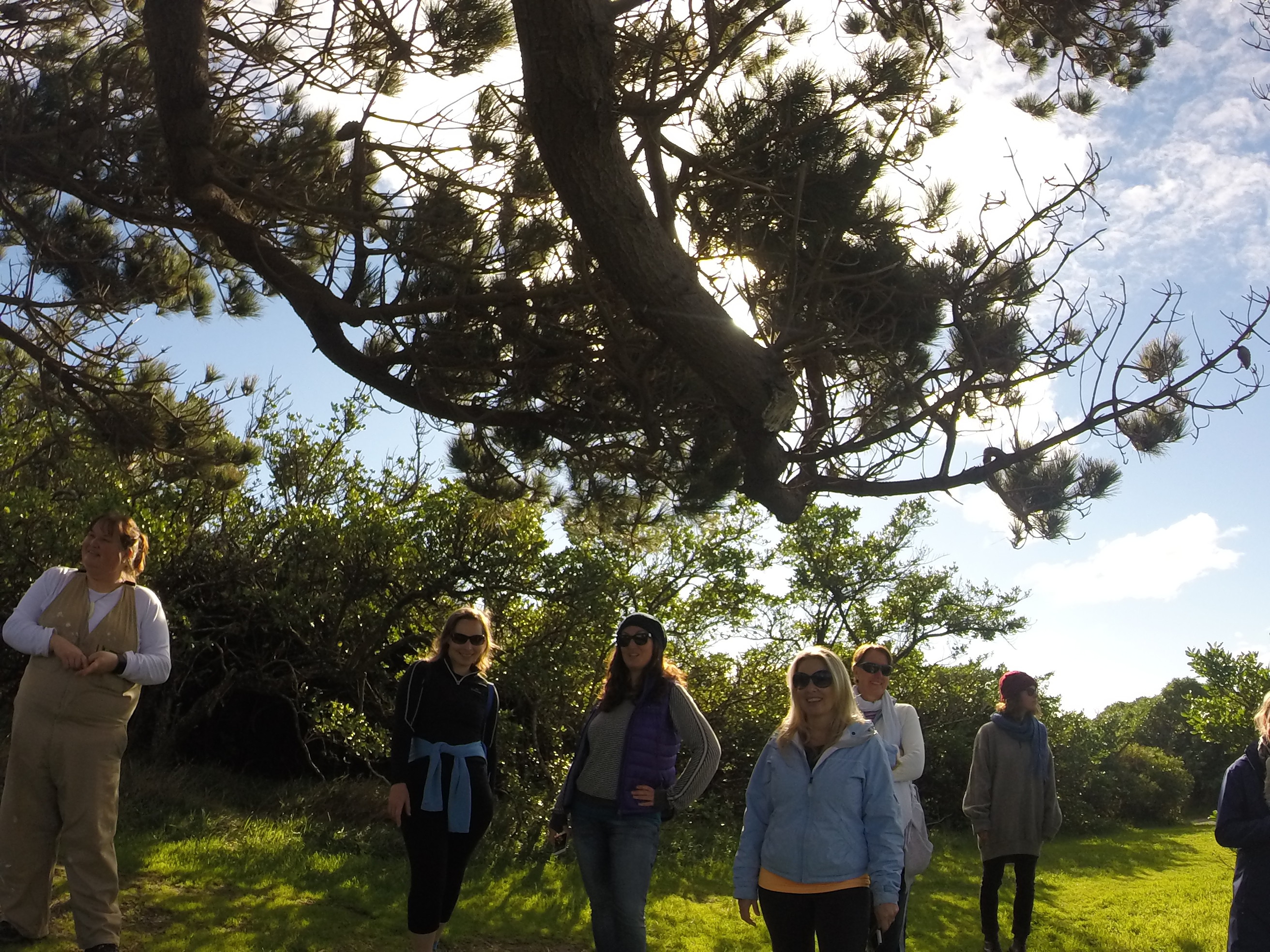
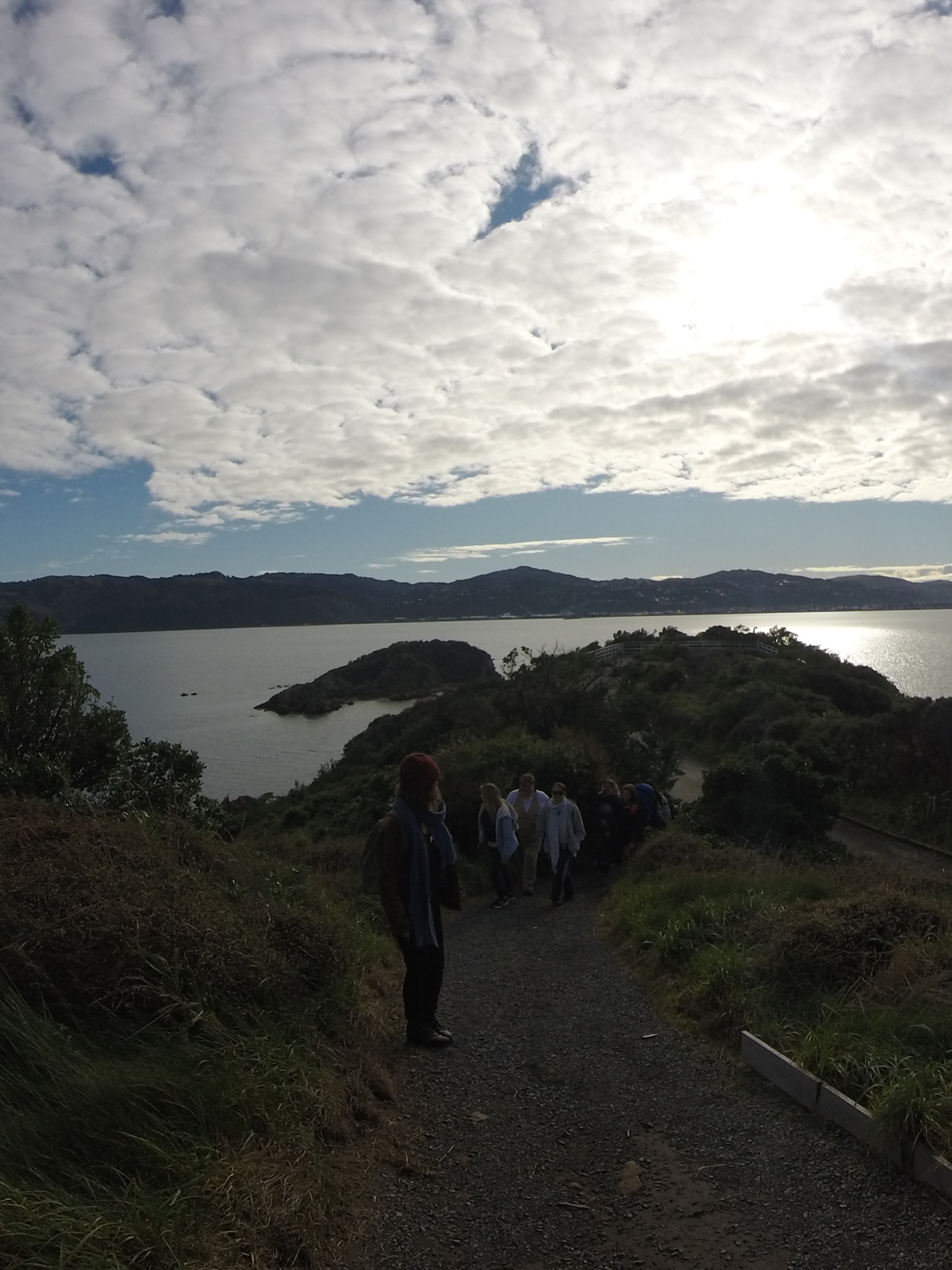
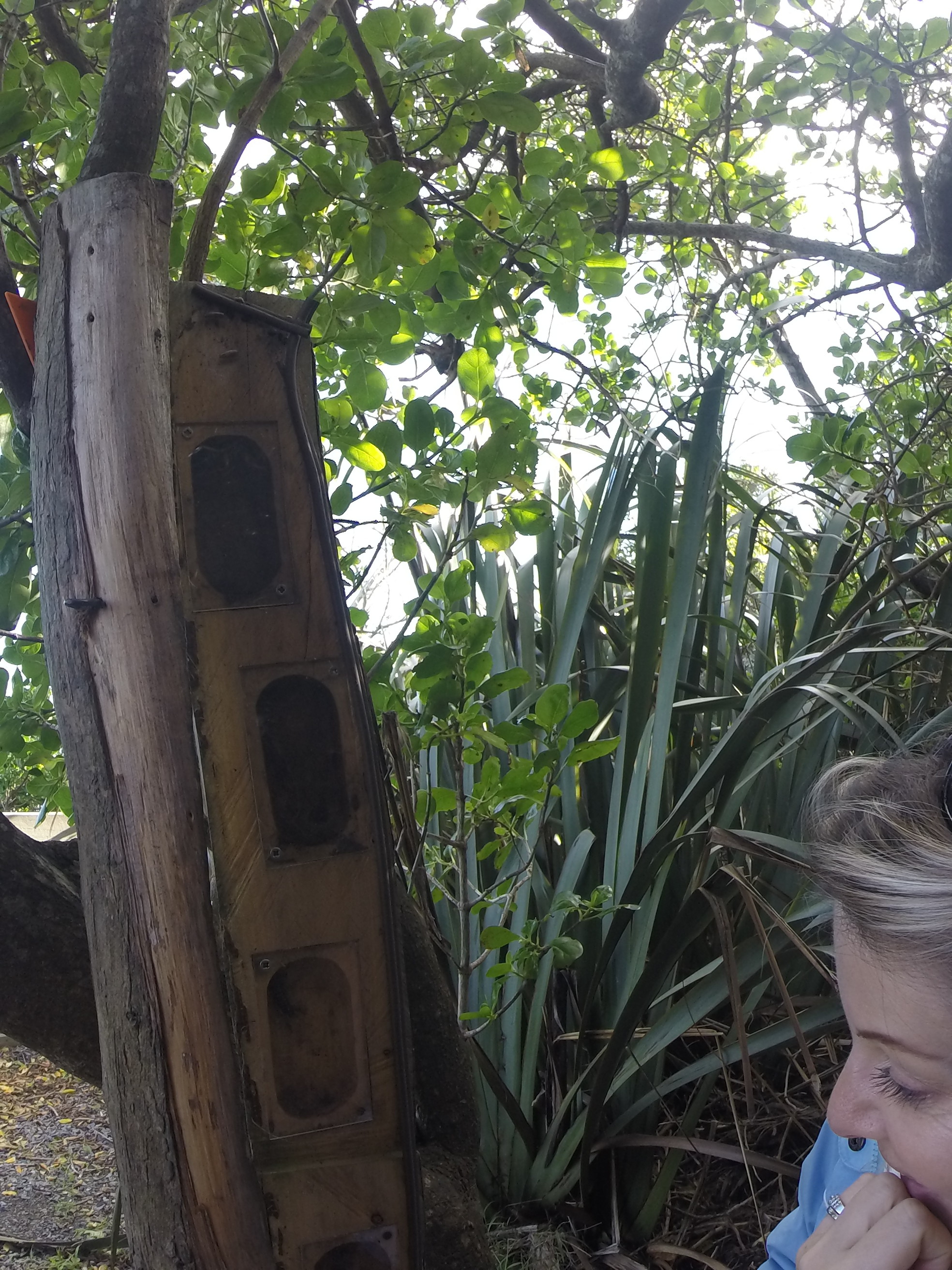
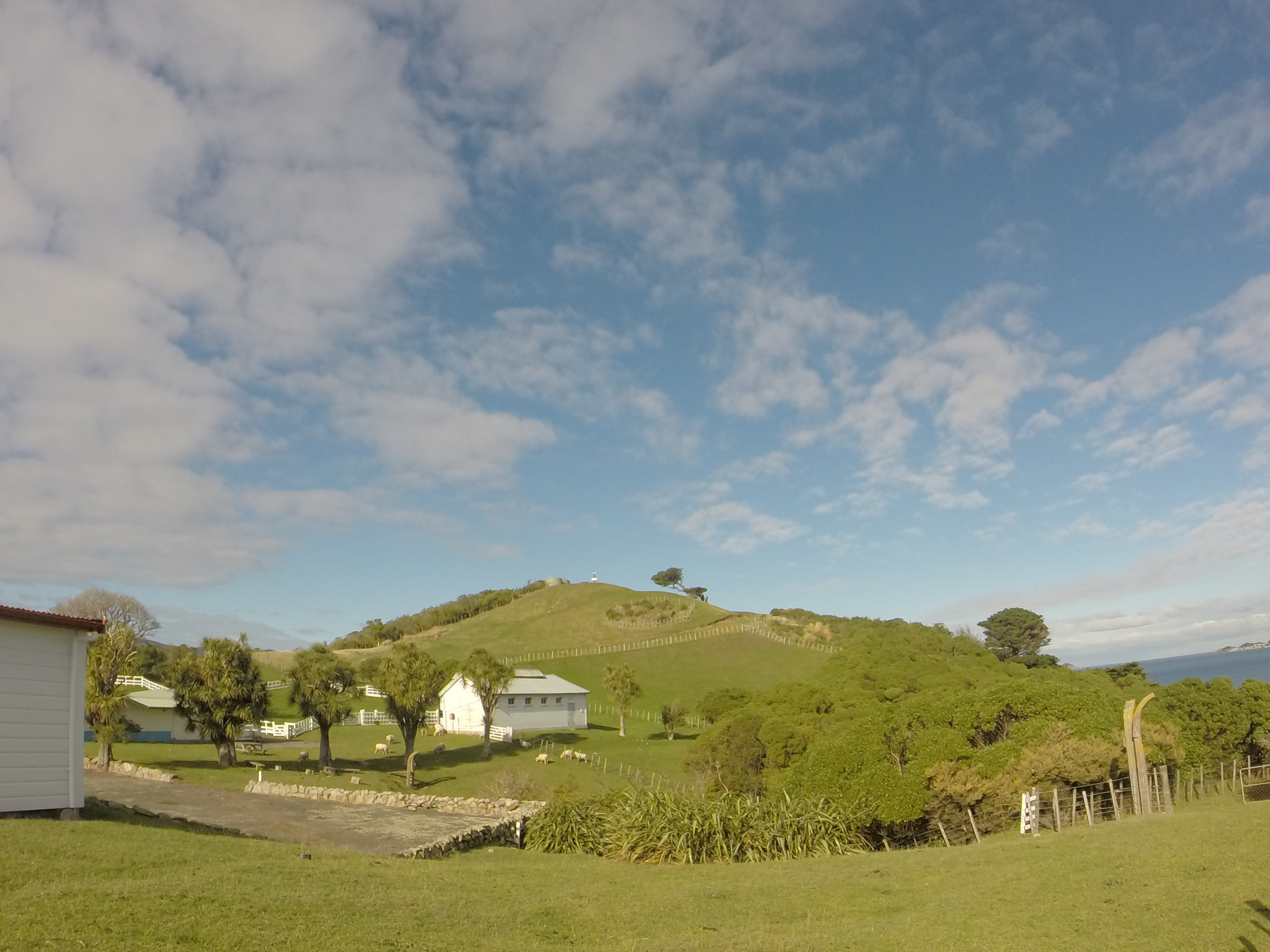
After lunch, we were given a special tour of the island. The DOC conservation programme and management of the natural animal and plant inhabitants is excellent.

DCIM101GOPRO DCIM101GOPRO

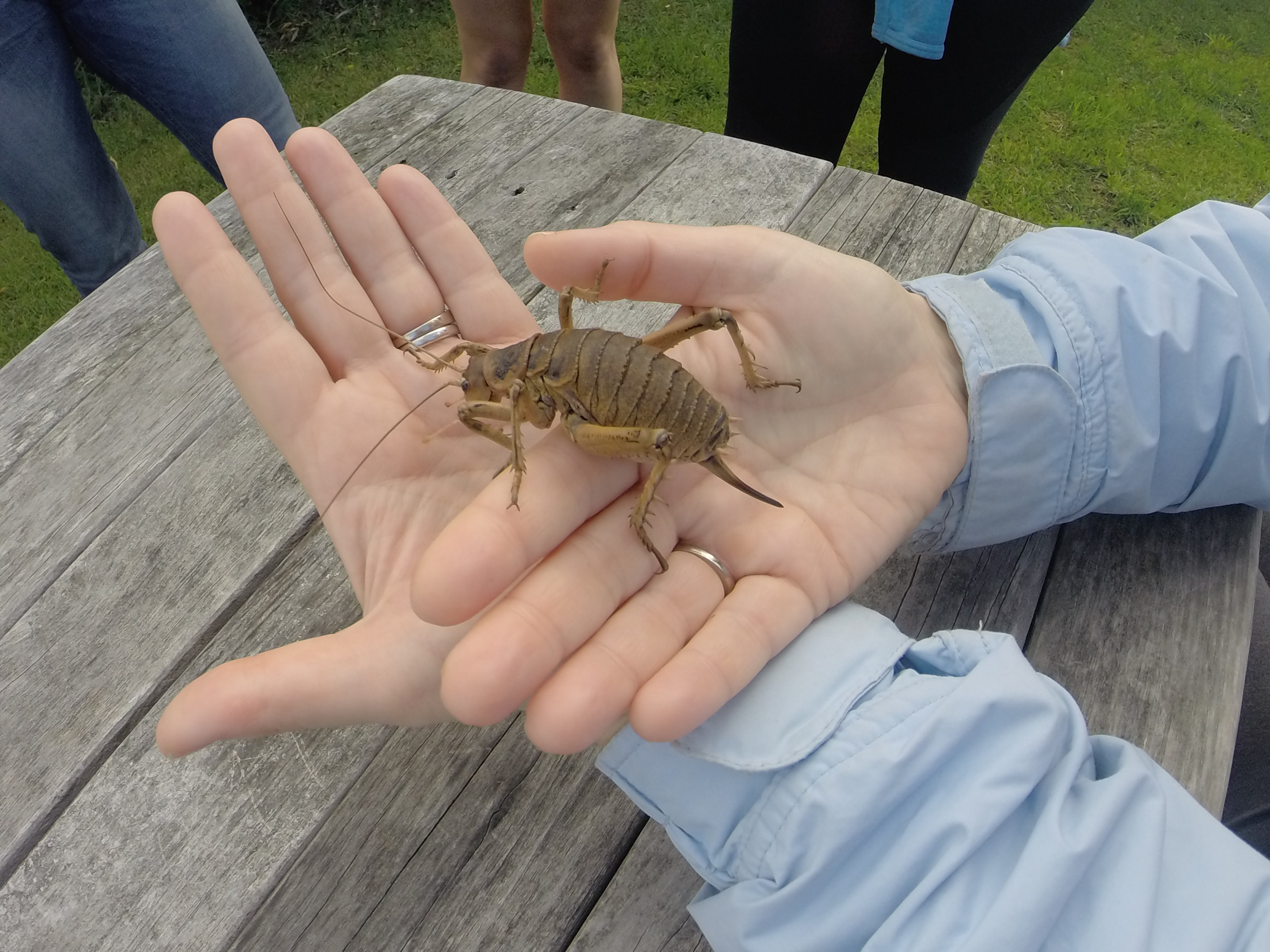
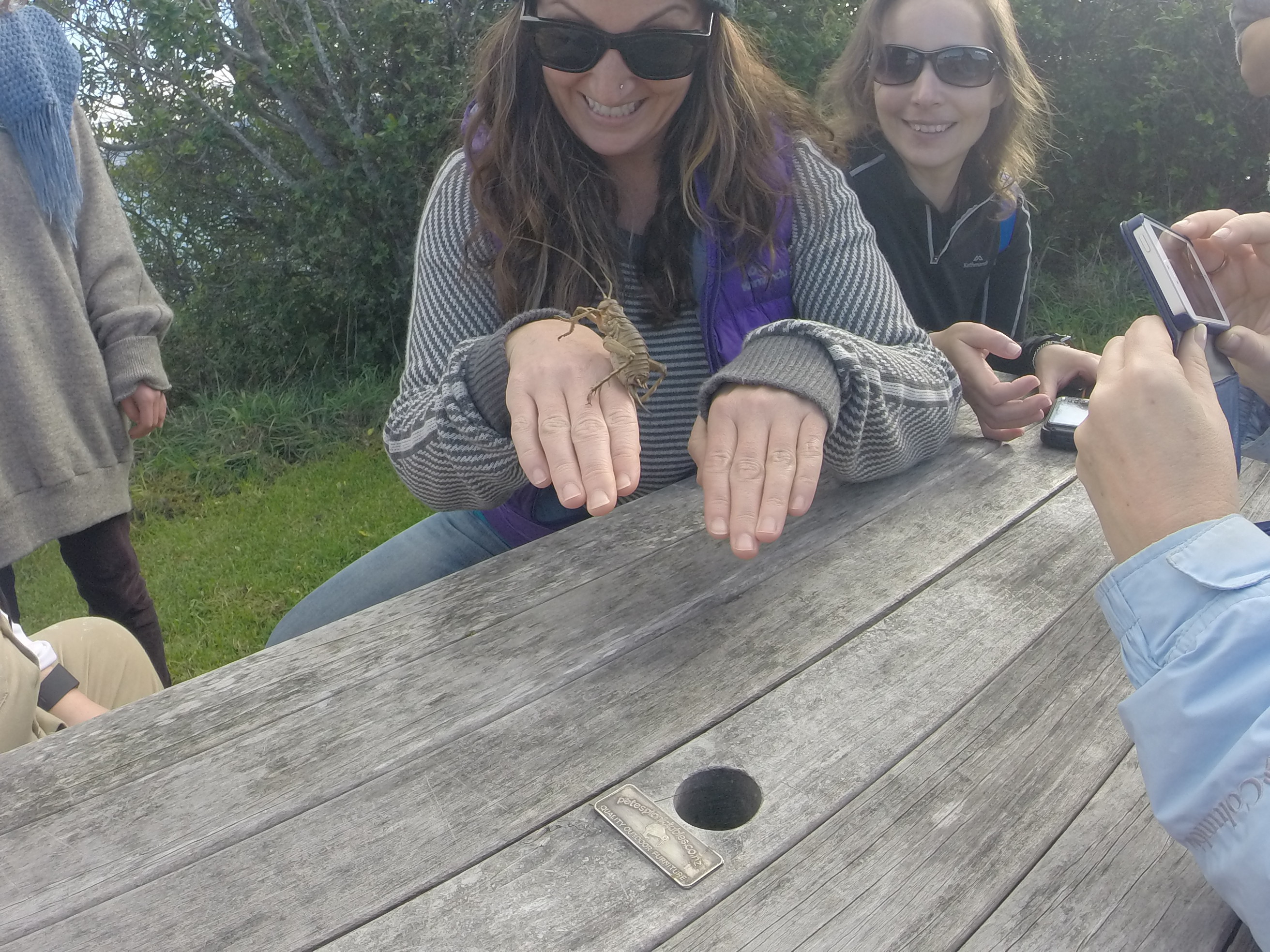
We got to hold a beautiful giant weta, we also feed the sheep. We saw plenty of kakariki and fantails flying around the native bush, and everything was in perfect harmony.

DCIM101GOPRO DCIM101GOPRO

Luckily too, the weather was warm, still and perfect.

DCIM101GOPRO DCIM101GOPRO

It was the most amazing time thanks to Terese and her inspired invitation

DCIM101GOPRO

Day 40 – Yoga Challenge

A challenge is a journey that takes you outside your comfort zone, and tests the individual’s courage and determination. On the journey, we all felt radiant and jubilant at the peaks, and defiant and weary and in the troughs. Yet every test of our resolve brought us closer to our personal truth. Not only did the challenge set new standards of yogic conduct, it also helped us explore the power of shared purpose.               Ali Hale Tilley

ali's india 042

Last night we finished our 40 Day Challenge sharing gifts, dispensing prizes, and enjoying good company of our inner circle of participants.

SASHalo beauty

Special thanks to Jess and Mat from Haylo Skin and Beauty for supplying gift vouchers for First Prize winner – Terese, and Second Prize winner Maree.  http://www.haylo.co.nz/

Special thanks too to everyone who brought gifts: Terese – SAS Port, Maree – home produce plum brandy, Andy – patchouli oils, Simone – India temple incense, Sarah – organic cheese, Annabelle for organic kiwifruit, Lillian gourmet tea and special matches (for the teacher), and Ali handwritten letters for everyone in the group.

It was a wonderful journey.

Day 39 – Yoga Challenge

Meet some of our yogi superstars who took part in the Sadhana Yoga 40 Day Challenge:

annabelle natarajasana 2  Yogini Annabelle was the original inspiration, asking Ali to run a 40 Day Challenge in the first place …

ali and stick Yogini Ali was the staunch ringleader

andy andy B

Yogin Andy … famous for saying “its only 40 days so I want to make a 100% effort!”

Maree  Yogini Maree … the golden light of splendid insights and culinary talents

sarah Yogini Sarah … fresh, easy-going, breezy

Simone Yogini Simone, sweet as sattvic pie, super talented artisan

varja yogini 2 Yogini Terese, kaitiaki of Matiu/Somes Island, interstellar explorer

Halo logo Haylo Skin and Beauty, Challenge sponsors

More Challenge participants will be added as photos roll in….

At the beginning of the Challenge people generally feared:

accidentally failing, binge drinking coffee and alcohol, staying on the strict vegetarian diet, getting enough nutrients, falling ‘off the wagon’, being hungry and craving forbidden food, managing the fast days, and doing yoga every day.

These fears played out as the days and weeks rolled on. Nonetheless, everyone experienced a much deeper level of awareness with their yoga practice and habitual behaviours.

Overall the Challenge was a great success and deep friendships were forged as a result.