40 Day Yoga Challenge – reflections on Day 1 & 2 by Srimala

srimala

Srimala (Maree) wrote:

Guruji!  Day One of the challenge ran like a dream.  All I needed in my day after our class and challenge kick off was a berry/banana/yoghurt/honey smoothie.  And that was after an early rise of 0440 in order to attend the [Anzac] Dawn Service.  Had I not been fasting I would have grazed from about 8pm until bedtime, pretending that was acceptable or that a slight craving meant by body required whatever pantry treat I was feeding it and then wake the next morning with food guilt – or a food hangover as I call it. Instead I awoke, did a quick mental stock take of the last hours before bed and realised I had no food hangover, no guilt or disappointment that I had mindlessly given my body unnecessary feeding.  What a wonderful way to rise and what a beautiful frame of mind to be in as I began my day.

Nourishment today [Day 2] was wholemeal toast smothered with banana, broccoli lightly sautéed in a lemon butter with almond slithers and later in the day a handful of raisins for sugar.  Roast pumpkin and chickpea curry planned for dinner followed by a smoothie. I was able to fill in my yoga journal with pride today. —Mxx

Meet Kyra … Amanda’s new yoga baby!

shivaratri 5
Beautiful Amanda (pregnant on the left, next to Srimala/ Maree) has just blessed us with a photo of her adorable baby Kyra. Kyra was fully present in Amanda’s tummy during the last 8 1/2  months of yoga at Sadhana Yoga Studio in Miramar. What a perfectly divine yoga baby … already practicing sleeping goddess pose (supta baddha konasana)!

Kyra

Amanda wrote:

Send my thoughts to the yogis and please thank them for there thoughts and energy. I am deeply grateful for the energy and space you provided, this supported me in remaining calm during the medical induction and spiritually whole throughout the process.

Much love and good energy to you wise womyn, may you be blessed with beautiful calmness and continued wondrous energy. X
‘The wound is the place where the light enters you’ — Rumi

Day 2 – Yoga Challenge

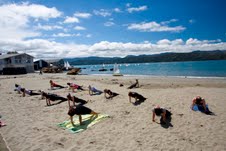
beach yoga 1beach yoga 7

“its only 40 days so I want to make a 100% effort!” — Andy

  • More recipes …
  • Invitation to Matui/ Somes Island
  • 2 hours of contemplative silence (mauna)
  • Tonight’s potluck dinner

More great recipes ideas …

simones smoothie

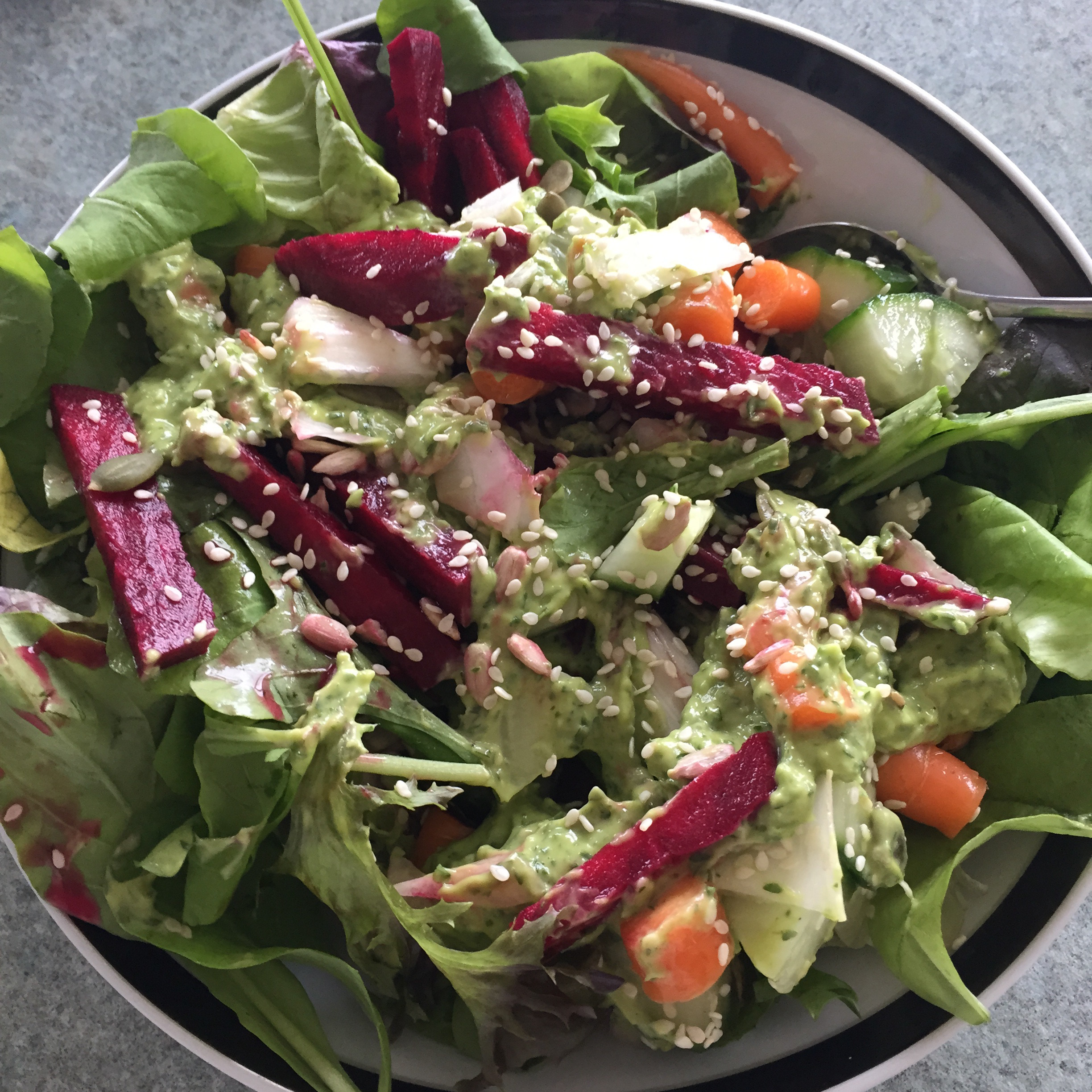
Simone’s delicious berry smoothie and Annabelle’s stunning green goddess salad!

Anabelle's salad

Annabelle’s delicious mixed salad & green goddess dressing recipe

Mixed green salad with raw beets, cucumber, carrots, fennel and lots of seeds and a green goddess dressing.

Dressing: avocado, parsley, lemon, apple cider vinegar, 1 clove garlic, pinch of salt and pepper

Invitation to Matiu/ Somes Island

Exciting news: Terese McLeod, kaitiaki of Matiu/ Somes Island (and fellow super yogi Challenger) has invited the group over for a lunch/picnic at the end of our challenge. We will also do a yoga class on the Island……

Terese says: The first ferry to the island leaves Queen’s Wharf at 10AM arriving to the island at 10:20AM and leaves the island for Queens Wharf at 4:25 arriving on the wharf at 4:45PM.  It’s my recommendation to make the most of the day as once you factor in the travelling time, climb up the hill, island gear shifts and a look around etc time goes.” 

2 hours of contemplative silence (mauna)

 Mauna– मौन – Taking a vow of silence means not talking with anyone so that we can contemplate mindfully and be present with the self. Today Ali will combine her contemplative silence with tidying up the kitchen and preparing food for tonight’s potluck. She will use the concept of bhakti (devotional activity) and put love and devotion into the preparation of an organic pear, walnut and fennel salad.

Tonight’s potluck dinner

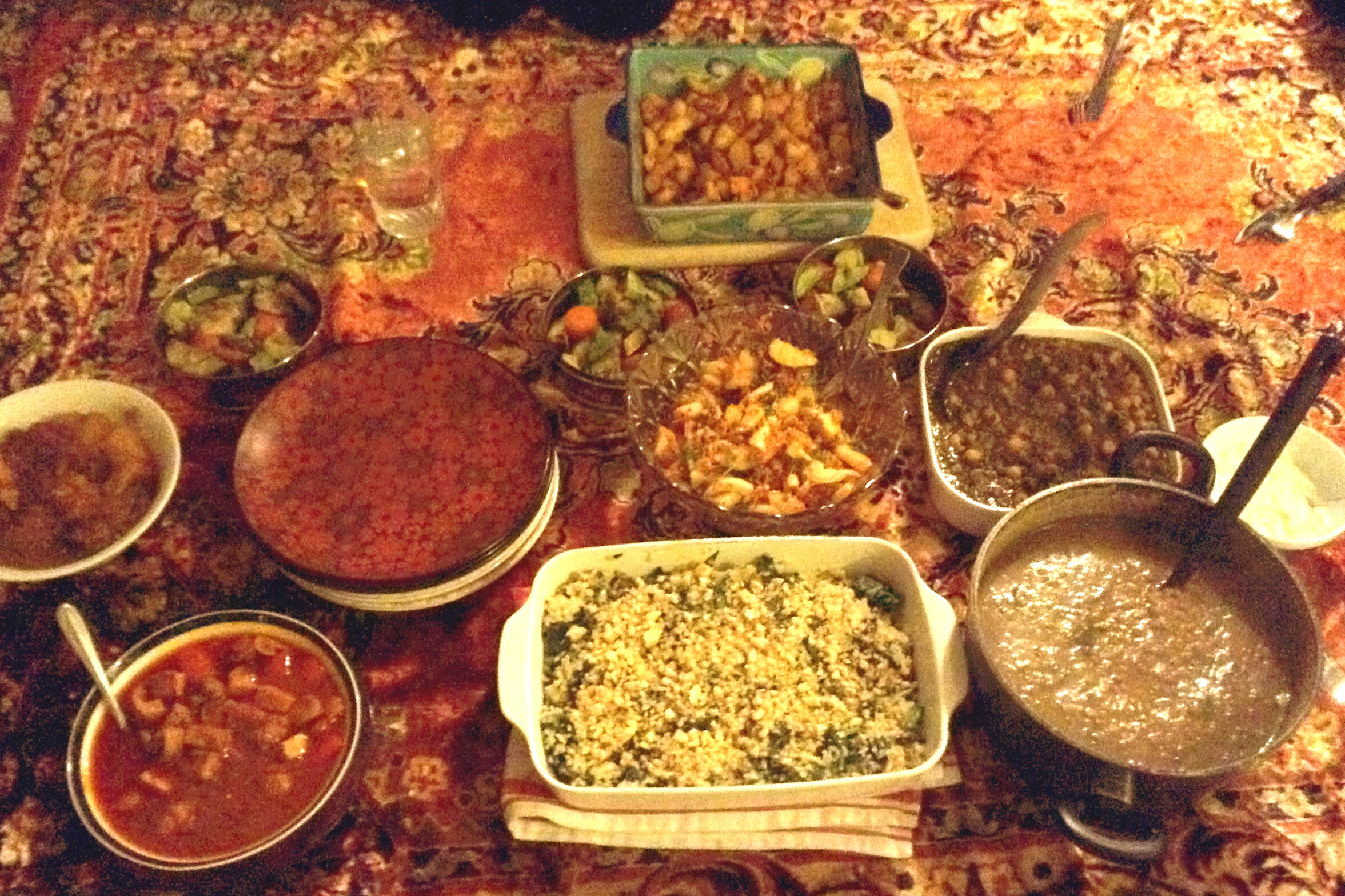
pot luck dinner

Simone shared details of our first ‘pot luck’ dinner:

“The first pot luck dinner was a fantastic feast filled with a variety of flavours. Each dish represented a wonderful mix and match of flavours and personalities: there was Andy’s curry vegetables packed the Indian spices; Sarah’s sautéed roast potatoes  with tangy yoghurt sauce; Vivienne’s unsurpassable yummy dhal; Terese’s wholesome steamed root vegetables; Annabelle’s chickpea and spinach masala, Simone’s [delicious] Cashew and Green Pilau, Ali’s completely organic carrot, walnut and fennel salad; and for desert Lilian made amazing date, cranberry and  cacao bliss balls. Annabelle hosted us all at her home with such a genuine welcome. We all had a wonderful time talking about yoga and religion.
Our next pop luck dinner with a Mexican theme will be hosted by Simone in two weeks time.”

Day 1 – Yoga Challenge

fruit

  • Recipes
  • Get-together debrief
  • Fears and concerns
  • Solutions and positive reinforcement

Recipe 1: Ali’s breakfast banana and chia seed smoothie

  • 250mls organic milk
  • 50mls probiotic yoghurt (gelatine free)
  • 1 organic banana
  • 2 organic kiwifruit
  • 1 tablespoon chia seeds
  • 1 tablespoon LSA
  • 1/2 tablespoon poppy seeds
  • 1 teaspoon organic honey
  • optional add cacao

Whizz up and drink. Delicious and nutritious!

Get-together debrief

Today was the first day of our 40 Day Yoga Challenge. 10 people met up for a special Saturday ‘yin’ class and stayed on for the initial Challenge debrief. The energy at the studio was candid and entertaining. There are some great characters on this super-yogi challenge!

Today, being a Saturday, was also the first day of our Yogic ‘fast’. Challengers are only allowed to eat/drink fresh fruit, fruit juices, nuts, seeds, organic milk, probiotic yoghurt, coconut water … i.e. all things light and sattvic.

Fears and concerns

Generally, people feared:

accidentally failing, binge drinking coffee and alcohol, being strict vegetarian, getting enough nutrients, falling ‘off the wagon’, being hungry and craving forbidden food, managing the fast days, doing yoga every day, balancing extremes.

Solutions and positive reinforcement

Ali has encouraged everyone to look at the Sadhana Yoga website’s ‘Yoga Challenge’ page, which is full of important information. She will also add information about successfully managing the fast days. Ali will also participate in a supermarket shopping educational with available members of the Challenge Team. 

The full group is meeting  again tomorrow night – Sunday 7pm – for a pot-luck vegetarian dinner at Annabelle’s place.  Thanks Annabelle! We will report back on the types of inspired dishes and recipes created by Challenge members, and hopefully have some great photos!

Recipe 2: Simple salad for a light lunch on our ‘fast’ day

Cut 2 fresh tomatoes, one avocado, one cucumber (yes its a fruit) into a bowl, sprinkle with pumpkin and sesame seeds. Add a pinch of Himalayan rock salt and drizzle with NZ lemons. Fresh and zesty!

Be part of the Challenge by sending words of encouragement or liking us on your Facebook page.

Thanks Haylo for Sponsoring our 40 Day Challenge

Haylo – Skin and Body – have given us some great prize vouchers for the people who complete the 40 Day Yoga Challenge at Sadhana Yoga

Halo beauty Halo logo Halo room

Located on the corner of Park Rd and Miramar North Rd, Miramar, Haylo Skin & Body has been in operation now for over 15 years!

Come and enjoy the relaxed atmosphere in our new Spa premises. Haylo now have four treatment rooms, a relaxation room and even expansion options so you can enjoy couples massage!

Haylo only use top quality professional products such as Dermalogica, Nimue and Bestow Skincare, Cozmetic Lab Makeup, Orly and Gelish Nailcare and St Tropez spray tan. These great products help us provide amazing results with your treatments.

If you’re looking for a fantastic experience away from the bustle and stress of the city, come and see us in sunny, friendly Miramar; they would love to see you.

Join our online petition protesting against ACC’s high levies for Yoga Teachers

ali in backbend
Help change ACC’s coding of Yoga Teachers, which puts us into a medium to high risk bracket.

Thank you to everyone who has signed this petition … over 60 and counting!

Here are some of the latest posts:

Posted a comment on Change ACC’s coding on Yoga (yoga is not a sport) petition As a professional yoga teacher with thousands of hours of training and over a decade’s experience, I actually use yoga as a rehabilitative tool with…


Posted a comment on Change ACC’s coding on Yoga (yoga is not a sport) petition I’m so grateful Ali brought this to our attention. Let’s unify (yoga defined) to create better understanding & a fair platform for yoga businesses….
 

Posted a comment on Change ACC’s coding on Yoga (yoga is not a sport) petition Yoga definitely should not be classified by ACC in the same league as skiing and snowboarding. Yoga can also be used to heal injuries and rehabilitate…
 

Posted a comment on Change ACC’s coding on Yoga (yoga is not a sport) petition it is absurd to catergorise yoga with ski & snowboarding instruction yoga has been proven to benefit many health problems in our society today and if…
 

Posted a comment on Change ACC’s coding on Yoga (yoga is not a sport) petition yoga is a form of rehabilitation for injuries. I’ practice yoga and get more benefit from it then downhill skiing.
 

Posted a comment on Change ACC’s coding on Yoga (yoga is not a sport) petition I am a trained yoga teacher with a diploma in yoga teaching. In the 7 years I have been teaching none of my students have been injured through…
 

Posted a comment on Change ACC’s coding on Yoga (yoga is not a sport) petition the levy placed on yoga teachers is ridiculous, in comparison to the levy placed on dance teachers, personal trainers and sport coaches.
 

Posted a comment on Change ACC’s coding on Yoga (yoga is not a sport) petition Thank you for your support. Please post this on your Facebook pages, mention it to other Yoga teachers, and shout it from the rooftops. Why are our…
 

Posted a comment on Change ACC’s coding on Yoga (yoga is not a sport) petition yoga is not a sport!
 

Posted a comment on Change ACC’s coding on Yoga (yoga is not a sport) petition ACC need to update their thinking and coding as for the last 30 years of practice and teaching, yoga had never resembled a sport to me.
 

Posted a comment on Change ACC’s coding on Yoga (yoga is not a sport) petition It makes no sense.

Here is Ali’s article:

Yoga Teachers bend over backwards to pay ACC levies

By Alison Tilley

According to ACC, “Yoga instruction” is as risky as ski and snowboarding instruction, kick-boxing instruction and teaching high-impact aerobics.

This means that irrespective of qualifications, experience levels, or teaching methods, Yoga teachers are pigeon-holed by ACC − without specific industry classification − into the Levy Risk group of ‘Sports and physical recreation instruction’ (CU 84500), paying $1.37 for every $100 earned in ACC levies.

Meanwhile, dance and ballet teachers – a category that undoubtedly includes hip-hop, pole-dancers & twerking instructors – only pay $0.26 for every $100 earned. The same low fee applies to Fitness trainers who teach ‘diet, exercise and lifestyle factors’ under Adult community education. Likewise, Personal health and fitness trainers pay a lower levy of $0.40 per $100.

Ironically, according to ACC, it is less risky to work as a racing dog trainer than to teach downward dog.

Nonetheless, Yoga instruction seems unfairly coded in terms of the rest of New Zealand. For example: sedentary lawyers and accountants in high stress jobs pay $0.04c; ACC workers and plastic surgeons pay $0.06; massage therapists $0.18; prostitutes $0.40; traffic police pay $0.44; fire-fighters $0.92; and professional netball players pay $1.31.

In fact, the only people paying higher ACC levies than Yoga teachers are professionals in high risk jobs such as rugby players, dairy farmers, motor racing trainers, and tow truck drivers.

In contrast to ACC’s risk assessment of NZ’s Yoga industry, the Australian Bureau of Statistic (ABS), which informs both the ACC and the Australian and New Zealand Standard Industrial Classifications (ANZSIC), regards ‘Yoga’ as a relatively gentle heath and relaxation activity:

“Yoga is an ascetic discipline, a part of which, including breath control, simple meditation, and the adoption of specific bodily postures, is widely practised for health and relaxation.”[1]

Also, according to the ABS, Yoga has been assigned a relatively low metabolic (MET) value, ranging from 2-4 (as per the Australian Health Survey, cat. no. 4364.0.55.004). Yet, Kickboxing and Aerobics have MET scores ranging from 8-10.

ACC uses the ABS website and ANZSIC Classification Units (2006) as a basic framework to code the activities of New Zealand workers. For example, Yoga teaching is classified by both ANZSIC and ACC under Adult (Community) Education and Training (coded under Class 8211, or CU84500). Yoga instruction is regarded by these institutions as the teaching of a non-vocational skill. Yet, unlike Dance Teacher, Yoga does not have its own coding and is lumped in with Community Sports instruction.

I have queried this medium to high risk classification of Yoga with both ACC and ANZSIC.

A spokesperson from ANZSIC replied saying:

“ABS would recommend taking a ‘case by case’ approach to classification of these businesses – for example, if a business describes itself as specifically teaching physical exercise or training skills for clients to take away and apply outside the context of the service they provide, their productive inputs would be considered to align more with Class 8211. Conversely, if their focus is to provide a service helping clients to achieve personal targets or goals within the context of classes or individual sessions, then they are considered to be providing a personal service (Class 9539).”

Although I – and many other qualified, experienced Yoga teachers – have the skillset to adapt and personalise each class for our clients’ safety and wellbeing, ‘Yoga’ is still considered by ACC a ‘non-vocational’ form of Sports and Physical Recreation instruction. This same code is assigned to  sporting activities, such as community squash, netball and rugby. What is more, ACC will not consider changing Yoga Teachers’ high levy fees without legal review, or applications from the New Zealand public (the next submission is in September 2015).

While some could argue that the reported increase in injuries from “fad yoga” has put the entire New Zealand Yoga industry into a medium to high-risk levy group;[2] a recent study by Loren M. Fishman (et al.) suggests that “poor technique or alignment, previous injury, excess effort, and improper or inadequate instruction were the most commonly cited causes of Yoga injuries.”[3] This means that qualified Yoga teachers may be taking on the ‘karmic’ debt of risky clients, and paying high premiums to cover inexperienced, unqualified teachers.

At the same time, ACC, keen to promote their WorkSmart programme (paid for by New Zealand’s working public), have produced a range of “Ready made” stretch sheets, which encourage workers from different industries to practice one-size-fits-all stretches. However, none of ACC’s WorkSmart stretches offer any contraindication guidelines, which may  prevent people with high blood pressure, pre-existing back, neck or rotator cuff injuries from  further harming themselves. Likewise, people who are over-weight, have mobility and balance issues, and women who are pregnant are given no stretch modification to work with in ACC’s WorkSmart Ready made stretch sheets.

Is it that ACC deems Yoga instruction a medium to high risk ‘non-vocational’ activity that can be largely side-lined by promoting unsupervised stretching under the publicly funded WorkSmart banner? Or do they genuinely believe Yoga is a risky type of Sport, like community netball?

Numerous scholarly studies show that carefully instructed Yoga helps improve practioners’ physical and mental health.[4] However, unless experienced, qualified Yoga instructors make a stand and challenge ACC’s in-group biases, Yoga instruction in New Zealand will stay coded as a ‘non-vocational’ skill, rather than a specialised, personalised service with measurable health and fitness benefits.

My next steps are to: 1) submit an application for independent review, which will be looked at by ACC’s Legal and Commercial Team; 2) gather Statistics for Yoga and comparative injuries under the Official Information Act 1982; 3) and, review information that ACC uses to calculate levies based on injury prevention prevalence for the yoga industry.

This is bureaucratic battle has been both time and energy consuming. In the meantime, any Yoga teachers or member of the public who wish to sign the online petition or query their own levy assessment can contact the ACC Business Service Centre on 0800 222 776 or email business@acc.co.nz.

Many thanks for your time and consideration,

Ali

40 Day Yoga Challenge … 2 days to go!

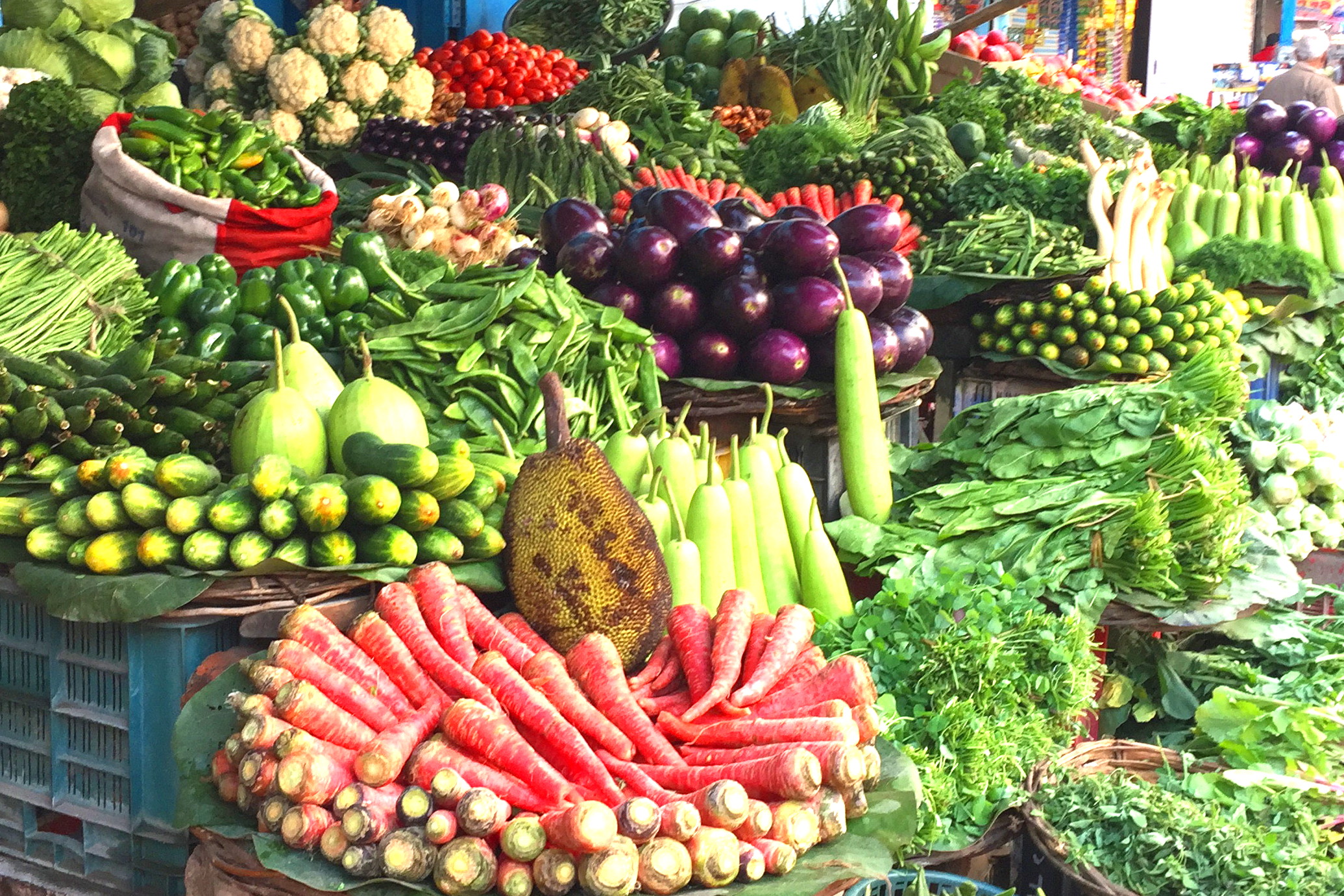
fresh vege

Imagine doing yoga every day for 40 days … eating a strict sattvic vegetarian diet … fasting on fruit, juices, and nuts once a week, taking in 2 hours of silence once a week, limiting onions, garlic, salt, and alcohol … keeping a daily yoga journal …

Have you given up yet?

10 brave super-yogis will be embarking on a 40 Day Yoga Challenge this Saturday. We will be posting daily accounts of highlights, meltdowns, insights and triumphs. Why not join us in support by following our progress and posting encouraging comments.

ali and the group

Non-harming – ahiṃsā

 P1030199

 Ahiṃsā and Karma

Each action, especially those that cause harm and injury, have a karmic effect that  can psychologically damage both the instigator and the recipient. 

Ahiṃsā means that we refrain from inflicting harm on all living beings, be it through negligence, ignorance, or even wilful intention. We stay vigilant of our dominant urges, taking full responsibility for our actions and their outcomes.

Inflicting harm, or engaging in violent acts are never adequate solutions for any difficult or challenging situation. The practice of ahiṃsā means gaining mastery over our base impulses, and controlling the use of force through humble and gentle means. As Gandhi explains:

“Nonviolence is the law of our species as violence is the law of the brute. The spirit lies dormant in the brute and he knows no law but that of physical might. The dignity of humans requires obedience to a higher law-to the strength of the spirit.”

Moreover, to advance on the yogic path individuals should take a vow of non-violence and non-harming and apply it to personal and interpersonal relationships. 

Yet, ahiṃsā is not just limited to non-injury. Swami Sivananda also said that “Ahimsa is positive, cosmic love. It is the development of a mental attitude in which hatred is replaced by love. Ahimsa is true sacrifice. Ahimsa is forgiveness. Ahimsa is Sakti (power). Ahimsa is true strength.”

 When we succeed in practice of ahiṃsā we develop strong willpower, more intimate and loving friendships, and a heightened responsibility of engaging in kind speech and caring, compassionate actions.

“Ahimsa is a comprehensive principle. We are helpless mortals caught in the conflagration of himsa [harm or violence]. The saying that life lives on life has a deep meaning in it. Man cannot for a moment live without consciously or unconsciously committing outward himsa. The very fact of his living – eating, drinking and moving about – necessarily involves some himsa, destruction of life, be it ever so minute. A votary of ahimsa therefore remains true to his faith if the spring of all his actions is compassion, if he shuns to the best of his ability the destruction of the tiniest creature, tries to save it, and thus incessantly strives to be free from the deadly coil of himsa. He will be constantly growing in self-restraint and compassion, but he can never become entirely free from outward himsa.” — Mahatma Ghandi

Being vegetarian in a ‘fomovore’ world …

Penny the Pig

“A fomovore is a carnivore who fears they will miss out by not eating meat…” Ali Hale Tilley (4 days out from the 40 Day Challenge)

Adult vegetarians can easily get their necessary iron and minerals from cooked kidney beans or chickpeas, legumes (such as peas, lentils, peanuts), baked potatoes with the skins on, dried fruits (like raisins) and nuts, vegetarian cheese (such as feta, and mozzarella), whole and enriched grains (like wheat or oats), and leafy green vegetables (like broccoli and kale). Vitamin C, which is found in many fruits and veggies, enhances the absorption of iron and minerals.

Also, vegetarians can easily get the right amount of protein from eating a variety of protein-rich sources such as quinoa, nuts, peanut butter, tofu, beans, seeds, soy milk, grains, cereals, and vegetables. The average adult woman requires around 45 grams of protein per day.  The average man requires 55g per day. Many health foods can be combined together to form the right amino acid balance. For example:

  •  Chickpeas, sesame seed paste (tahini), olive oil and lemon juice make hummus, which can be eaten on whole wheat as an excellent protein source
  •  Mung bean shoots, nuts and seeds can be put in a delicious vegetarian stir fry, with or without tofu
  • Quinoa makes a great warm salad when combined with roasted roots veges and fresh beetroot
  • Homemade buckwheat pizza with mozzarella, made with lashings of fresh herbs and tangy tomato sauce, goes down a treat with most people
  • Black-eyed peas and vegies make up mouth-watering Mexican tortillas. Add vegetarian cheese if you want to bump up the flavour
  •  Sunflower seeds and fruit as a snack are an excellent protein source
  •  Lentils and wholegrain pasta can be combined to make Italian spaghetti
  • Organic baked potatoes with skins, filled with corn and cheese are packed filled with protein and nutrients, especially with a green side salad
  • Non-gelatine yoghurt can be added to milk, LSA & banana to make a great energy booster.

Children who are vegetarians can get the right nutrients needed, especially if they follow diet that allows some animal products, like eggs and milk. This type of ovo-lacto vegetarianism can provide growing children with enough calcium, vitamin B12, and protein.

Ali and Rabbit

On the other hand,  children and adults who eat a vegan diet will need to increase their consumption nuts, nut milks and seeds to gain the nutrients needed to maintain good health.

For more information on Vegetarian eating for children see:

http://kidshealth.org/kid/stay_healthy/food/vegetarian.html?tracking=K_RelatedArticle#

Lastly, the beautiful little child in this video makes great case for vegetarianism … fomovores take note!

40 Day Sadhana Yoga Challenge

Challenge yourself to

40 DAYS OF YOGIC LIVING

DSCF0063

Our 40 DAY SADHANA YOGA CHALLNGE  has 5 parts:

  • A physical challenge – Minimum of 30 minutes of yoga every day
  • A nutritional challenge – a strict vegetarian diet using Ali’s 85+10+5% rule
  • A mental challenge – sattvic fasting once a week, a strictly limited alcohol intake, no synthetic drugs or food (see avoidances)
  • An emotional challenge – Daily yoga journaling (shared with the group on Saturdays).
  • A spiritual challenge – two hours of contemplative silence once a week

annabell meditation

Main Dates

  • Start Up Class

Saturday, April 25th, 11:00am at Sadhana Yoga Studio

We will kick off our 40 Day Sadhana Yoga Challenge with a specialist yoga class, followed by a social gathering strategizing how to get through the next 40 days following a strict yogic lifestyle. This is a great opportunity to get to know your fellow challenge participants so that you can each offer encouragement along the way.

  • Weekly pot luck dinners hosted by willing participants

Every Sunday at 7.30pm you can welcome fellow challengers to your house for a potluck vegetarian dinner. The host will offer the venue and everyone will pitch in with setting up at the beginning and tidying up at the end (including dishes!). This team effort counts as a session in Karma Yoga – the yoga of mindful and dutiful action!

  • Halfway Class

Saturday, May 16th, 11.00am at Sadhana Yoga Studio This special class allows us to share our experiences and review our progress to date.

  • Final Party Class

Wednesday, June 3rd, 7.30pm at Sadhana Yoga This will be the last class of the 40 Day Yoga Challenge and participants will be celebrating in everyone’s success by sharing our experiences and choosing a prize winner.

To register for the 40 Day Yoga Challenge ask Ali to email you a Commitment Form. Read it, sign  and email it back to Ali at sadhanayoganz@gmail.com

Here is how it works:

  1. Register by emailing or expressing your interest and Ali will email you a Commitment Form which you will sign and return.
  2. Joining the Challenge is FREE, although each class taken at the studio will either be deducted from your pass or you pay as you go.
  3. To show you are serious and to keep you on the straight and narrow path of yoga you need to pay a cash-deposit of $20.
  4. Once you have paid your $20 deposit, Ali will email you a copy of your Yoga Journal template, which you can print and collate.
  5. If you complete a full 40 days (following the 5-part challenge) your deposit will be returned to you on the final day and you will enter the prize draw.
  6. Please be advised – this deposit will not be refunded if you forfeit the challenge or break your commitment code.
  7. On a positive note, any non-refunded deposits will go towards buying provisions for Guruji’s ashram in Barsana/ India!
  8. Think of how pure and bright you will be at the end of 40 days!

westeners

Vegetarian sattvic diet

In traditional yoga, there are of three kinds of diets: Sattvic diet, Rajasic diet and Tamasic diet. Sattvic foodstuffs included: organic milk, whole grain (oats, wheat, cereals), butter, vegetarian cheese (no animal rennet), all vegetables (except garlic, onions, mushrooms and eggplant), honey, organic or local fruits, naturally dried fruits like dates, nuts and seeds. Rajasic foodstuffs include: fish, eggs, meat, chillies, coffee and tea. Beef, wine, garlic, onions and tobacco are Tamasic foodstuffs. They fill the mind with anger, darkness and inertia.

Saturday Fasting – We will fast for 6 consecutive Saturdays drinking only herbal teas, milk or nut milks, organic yoghurt, honey, coconut water and eating fruits, organic fruit vegetable juices, seeds and nuts.

Alcohol – Tuesday, Wednesday, Saturday & Sunday are alcohol free days. Participants may drink a limited amount on Monday, Thursday & Friday. Women should not exceed 3 units in one sitting (9 units total per week). Men should not exceed 4 units (12 units per week).

Our 40 day yogic diet will follow Ali’s 85% + 10% + 5% rule

85% of each serving should include …

  1. Most vegetables (minimising or abstaining from onions, garlic, mushrooms and eggplant).
  2. Whole grains, especially oats, whole wheat, and brown rice
  3. Beans, lentils, peas, tofu,
  4. Herbal teas (minimising caffeinated teas and coffee)
  5. Any type of fruits, especially organic and/or locally produced fruits – including tomatoes, avocado, and lemons.
  6. Preparing and cooking with care, giving gratitude before eating

Up to 10% of each meal servings can include …

  • Organic and/or local dairy products: organic milk, butter, vegetarian cheese (no animal rennet), yoghurt (no gelatine), cream
  • Raw nuts and seeds, (not salted)
  • Cold pressed oils such as sesame, sunflower, and olive oil
  • Raw sugar, honey, molasses, agave syrup
  • Sweet spices, like cumin, coriander, cinnamon, cardamom, mint, basil, turmeric, ginger, nutmeg, fennel

Up to 5% of meal servings may include rajasic foods

  • Garlic, onions, leeks, chives
  • spicy foods or salty foods
  • Lightly fried foods
  • Eggplants (aubergines)
  • Tinned foods, except naturally canned organic beans, lentil, tomatoes and fruit
  • Chocolate or caffeinated drinks – coffee, tea, green tea
  • Alcohol
  • Mushroom(tamasic)

Rajasic foods are those that a stimulating effect, leading to irritability and competitive tendencies.

Strictly avoided

  • All meat and fish of all types, including eggs (NB soaked chia seeds make a great binding agent as a substitute to eggs)
  • Non-vegetarian cheese or halal gelatine
  • Animal fats or margarine
  • Deep  fried foods
  • Processed, refined and/or artificial foods with artificial colours and preservatives, including artificial sweeteners (chewing gum, breath freshers)
  • White flour and white sugar
  • Microwaved foods
  • Soft drinks – cola or energy drinks
  • Tobacco and synthetic drugs
  • Fast food from fast food restaurants

Why not join our 40 day Sadhana Yoga challenge today?

The final day for enrolment is Thursday April 16th.